Graveler Lab
A lab for lakeFS's Graveler: write an experiment in YAML and watch every commit drawn as SSTable ranges over the keyspace, rewritten or shared.
In early access for subscribers until 22 November 2026. Subscribe to run it now.
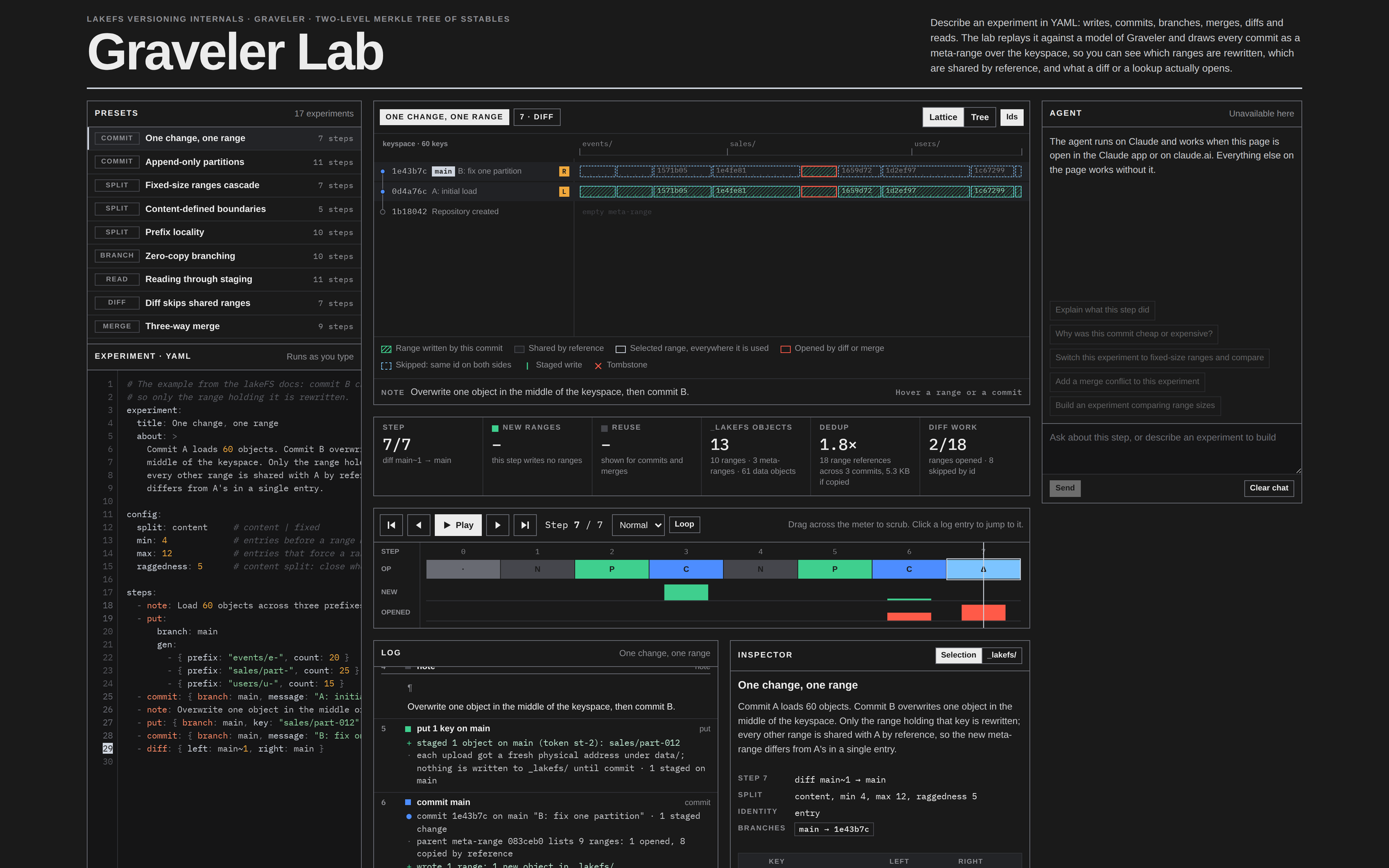
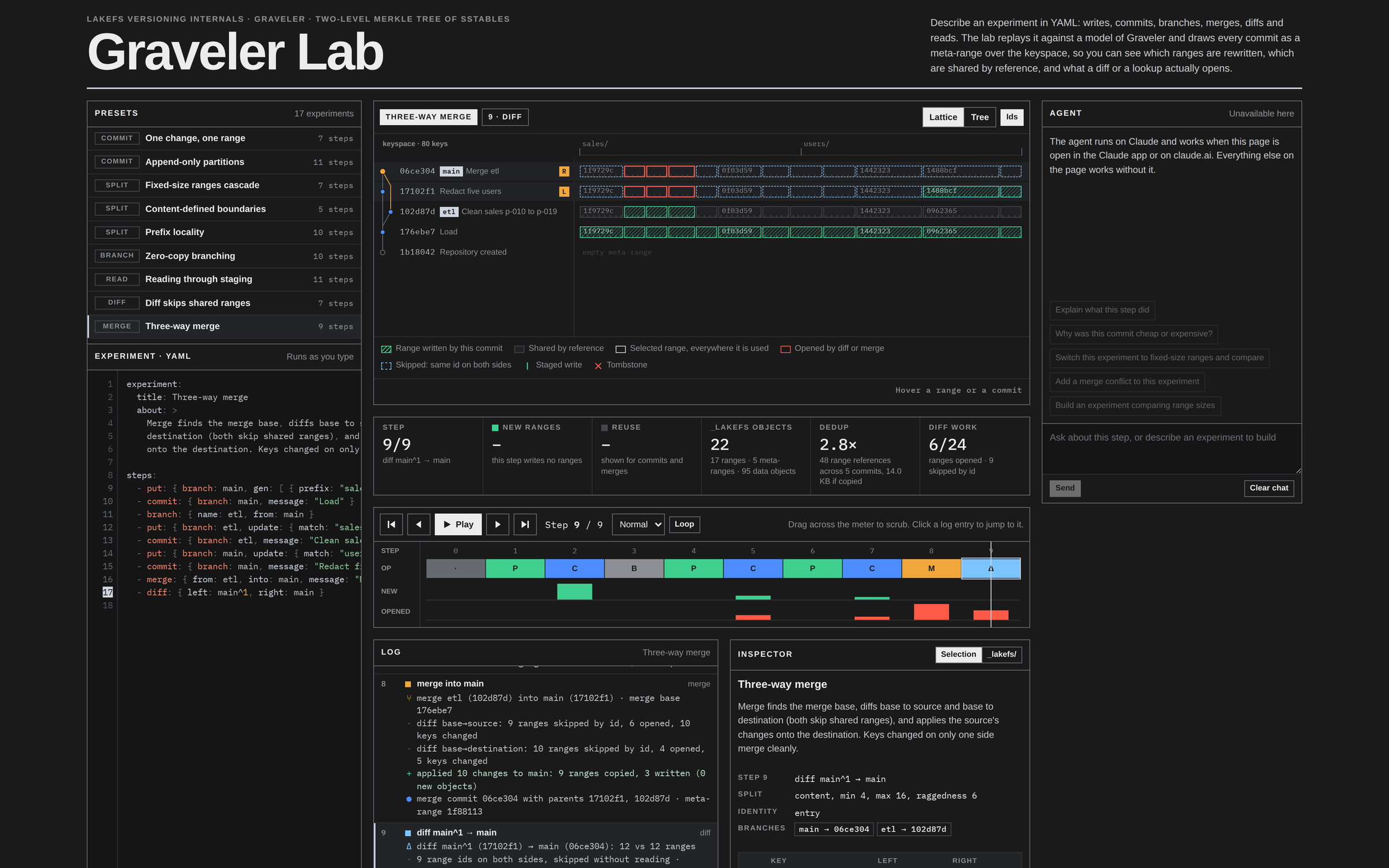
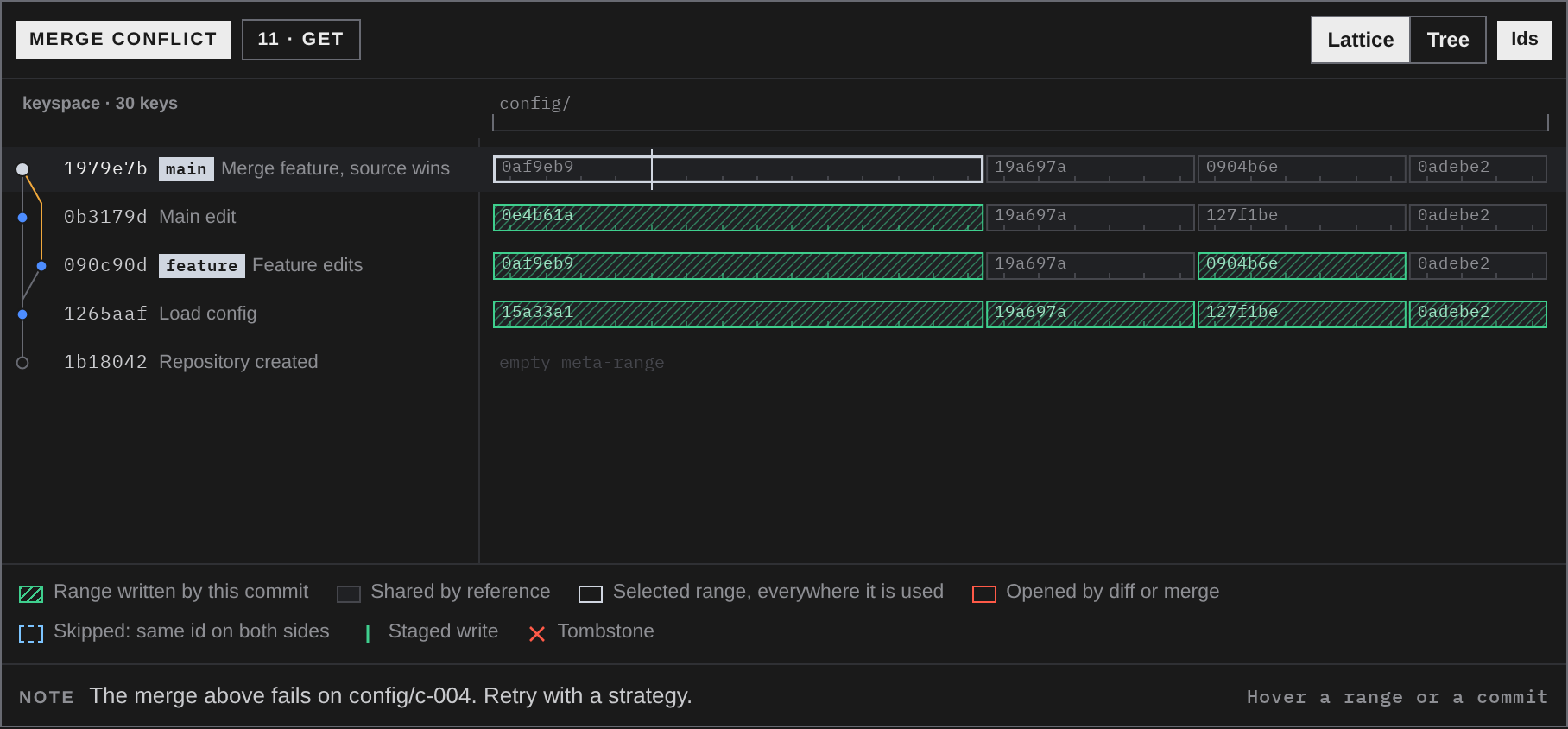
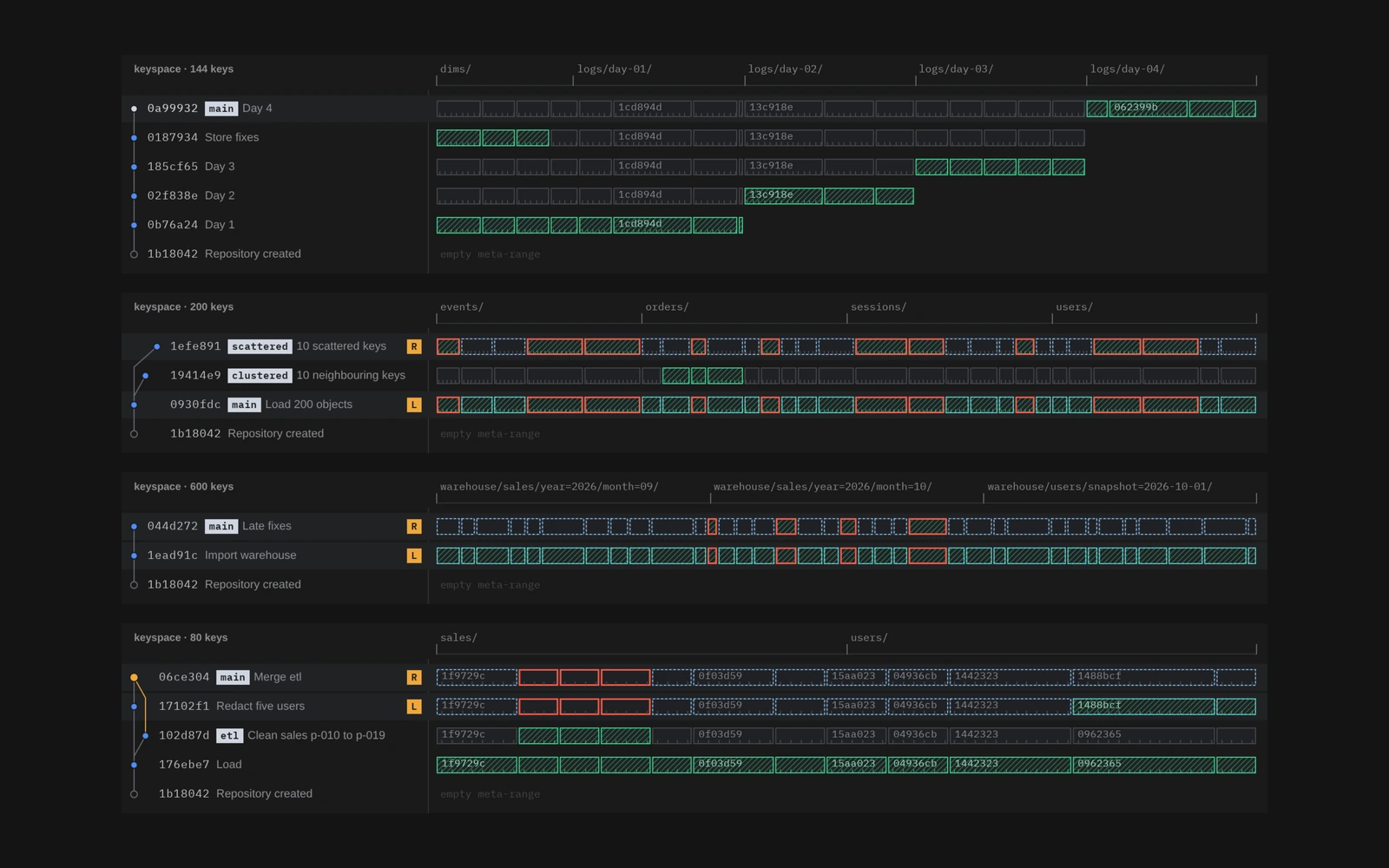
Subscribe →A lab for the versioning engine inside lakeFS. Describe an experiment in YAML (writes, commits, branches, merges, diffs and reads) and it replays against a model of Graveler, drawing every commit as a meta-range of SSTable ranges laid over the sorted keyspace. You see which ranges a commit rewrites, which it shares by reference, and what a diff, a merge or a lookup actually opens.
- Runs as you type: the YAML editor reruns the experiment on every change; step through it, play it at three speeds, or scrub across the step meter.
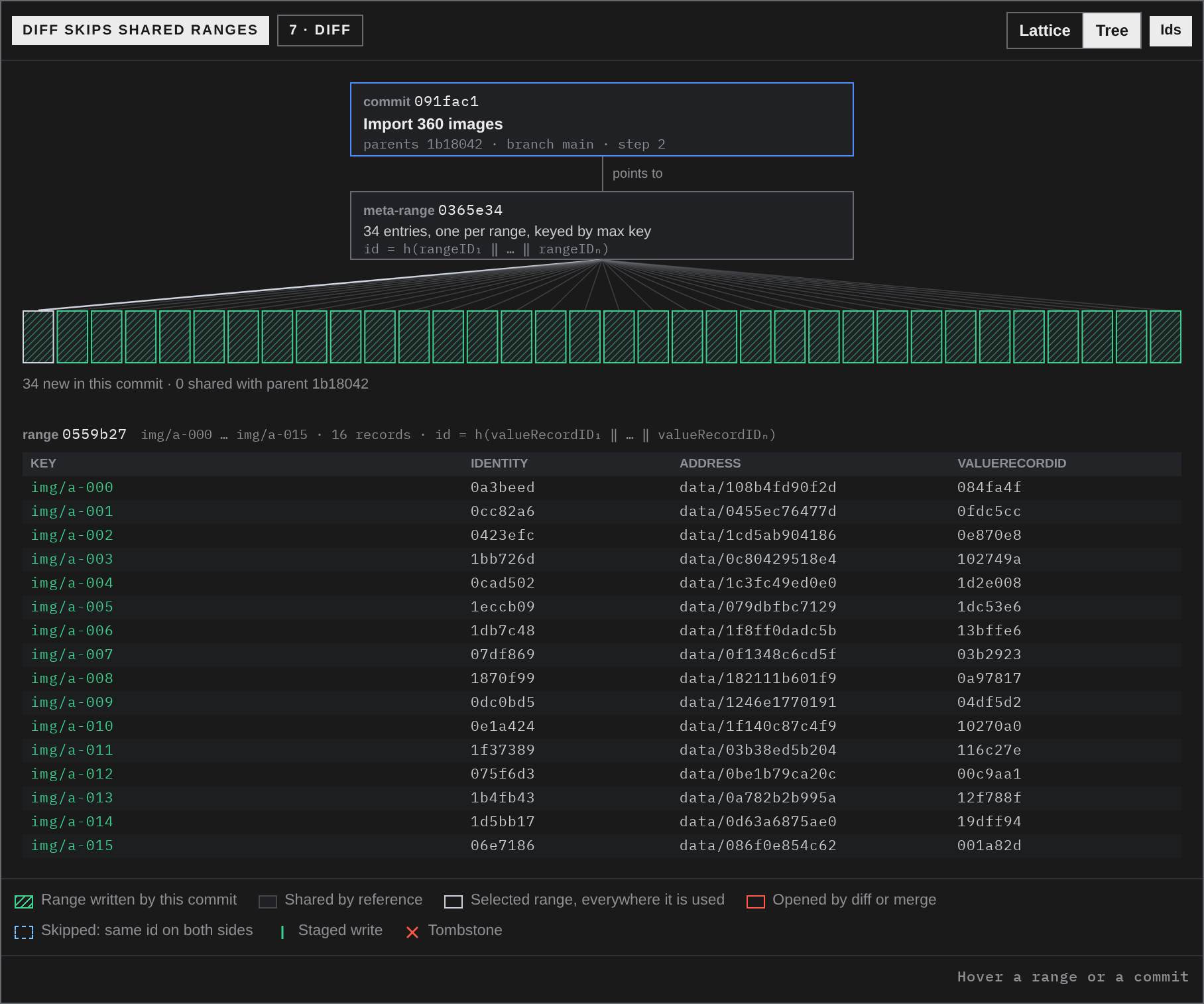
- Two views: the lattice shows every commit as a row of ranges; the tree shows one commit as commit, meta-range, ranges and records, with ids, identities and addresses.
- Numbers for every step: new ranges, reuse, objects under
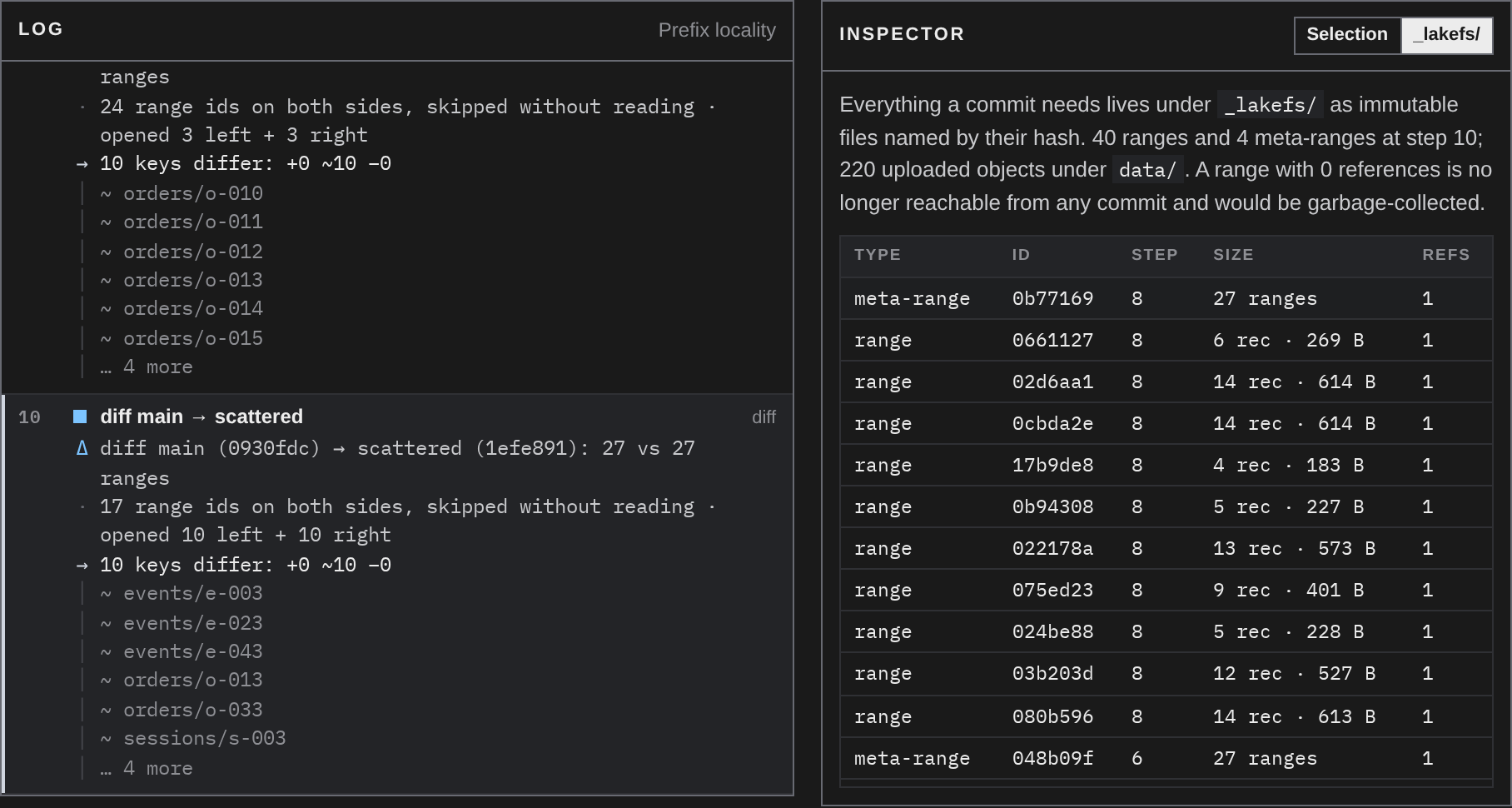
_lakefs/, deduplication, SSTable size, diff work and lookup hops. - Inspector and log: select a range or a commit to see where it is used, or list every object in the store with its size and reference count.
- Split rules and identity: compare content-defined and fixed-size range boundaries, and identity by entry or by content.
- An agent that sees the step you are on, explains it, and writes or edits experiments for you (it needs the hosted runtime; everything else works without it).
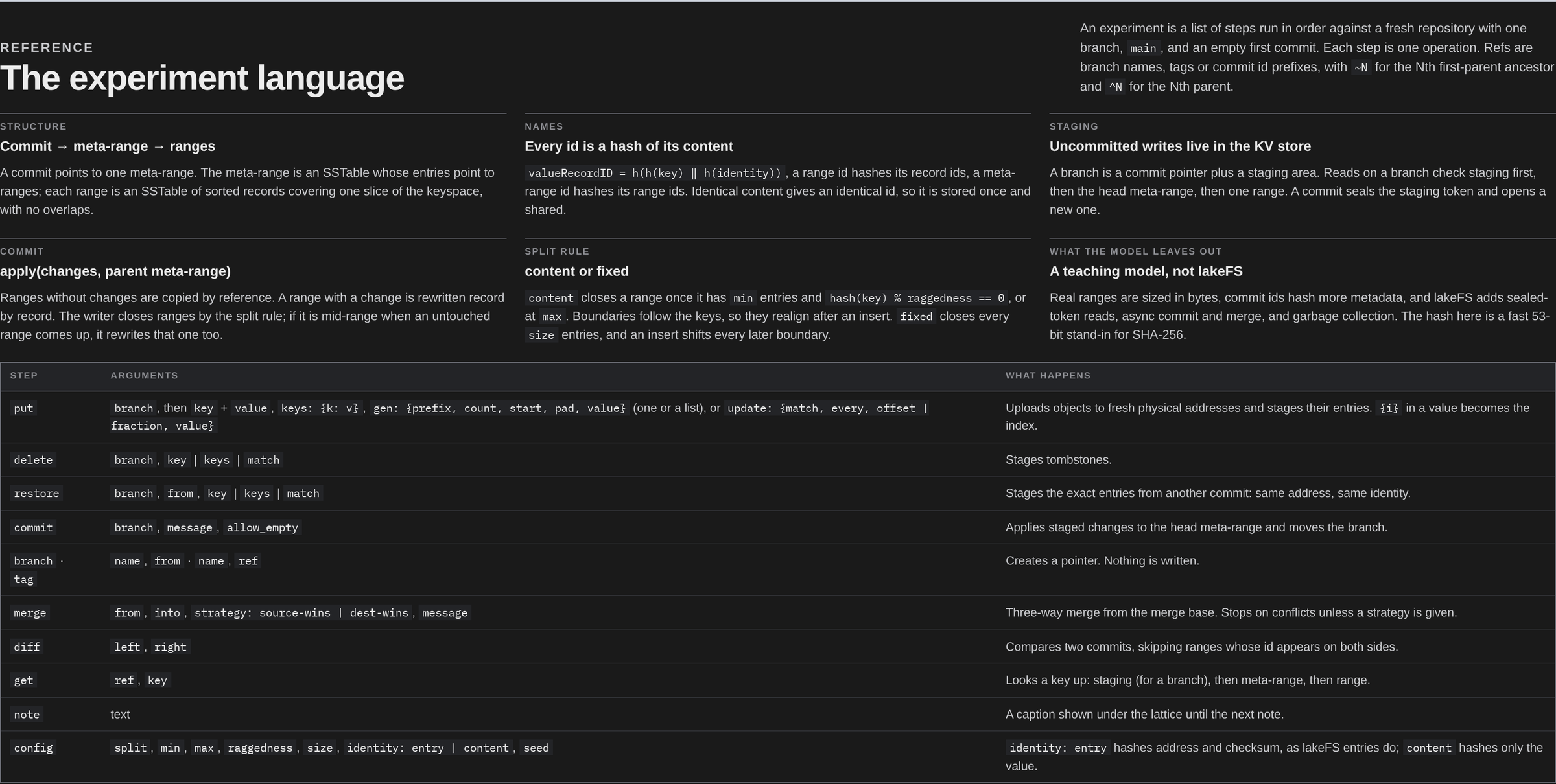
Seventeen experiments come with it, from One change, one range (the example from the lakeFS docs) through Zero-copy branching, Diff skips shared ranges, Three-way merge, Merge conflict, Deletes and tombstones and Bulk import, to an empty Sandbox. A reference for the experiment language is on the page. It is a teaching model, not lakeFS: ranges are sized in entries, and a fast 53-bit hash stands in for SHA-256.