Kiln Studio
An IDE for LLM post-training programs: write SFT, DPO and RL pipelines in JavaScript, see them as a graph, catch leaks, watch a simulated run, and export code for Unsloth, TRL, prime-rl, verl or PyTorch.
In early access for subscribers until 22 November 2026. Subscribe to run it now.
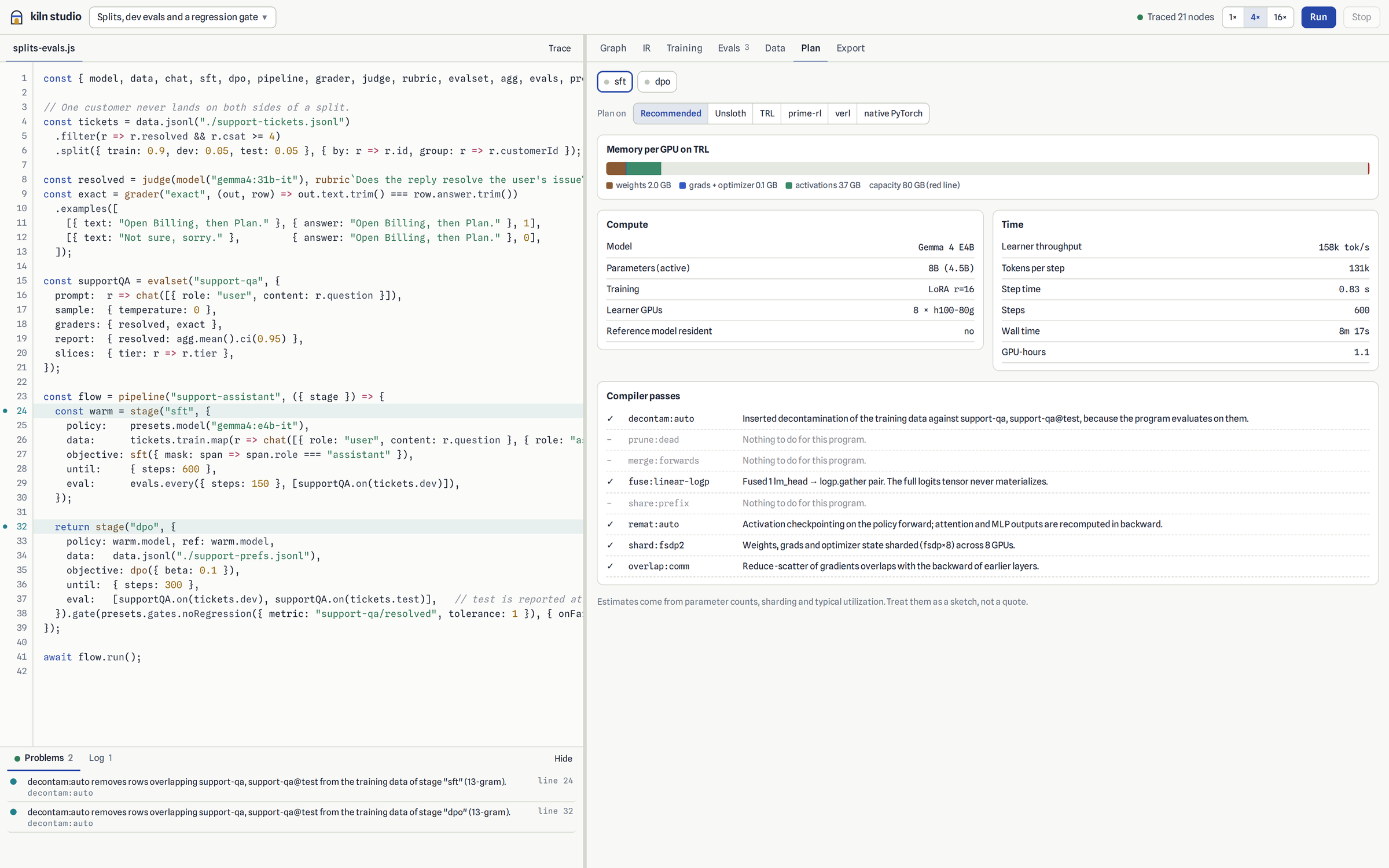
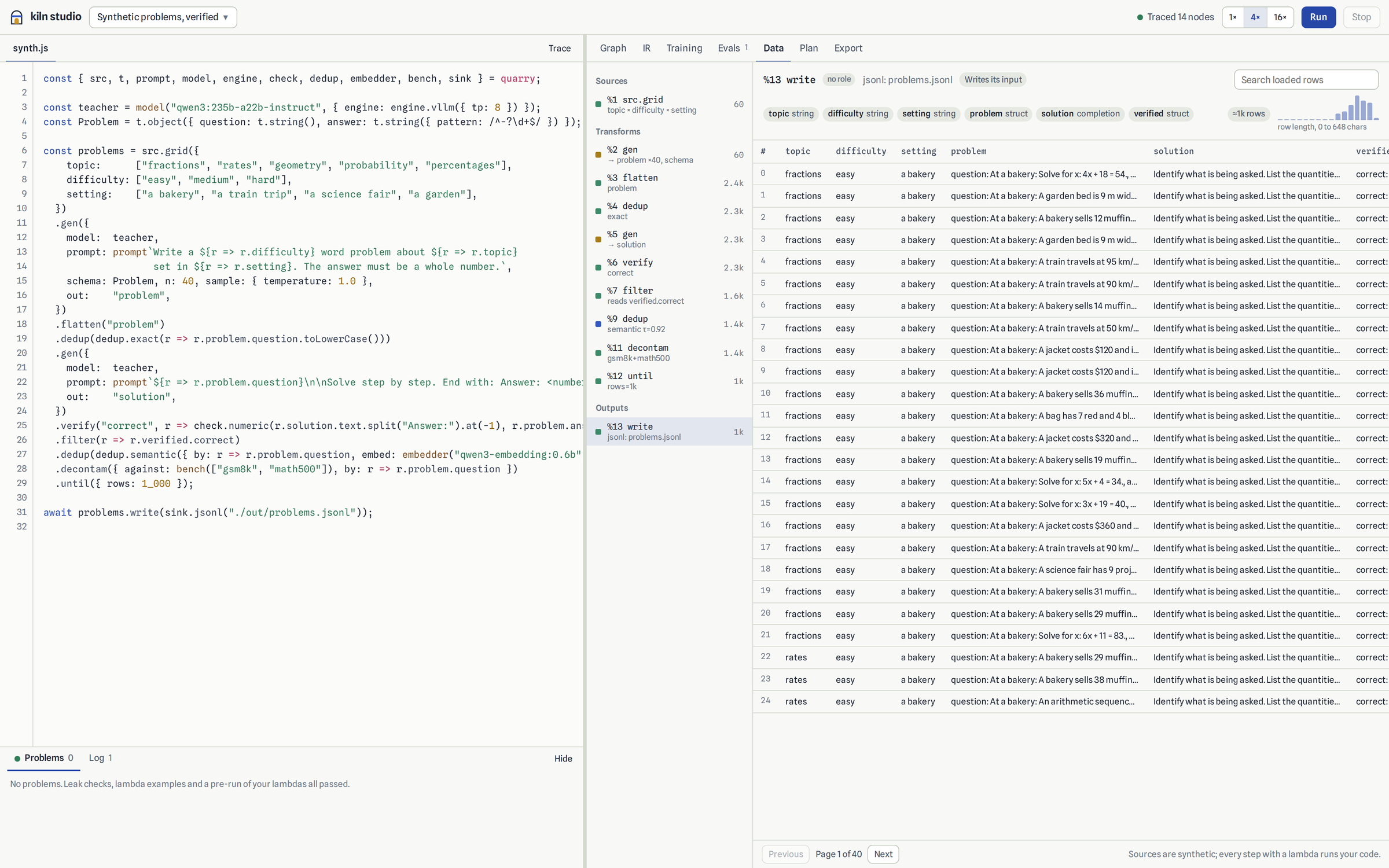
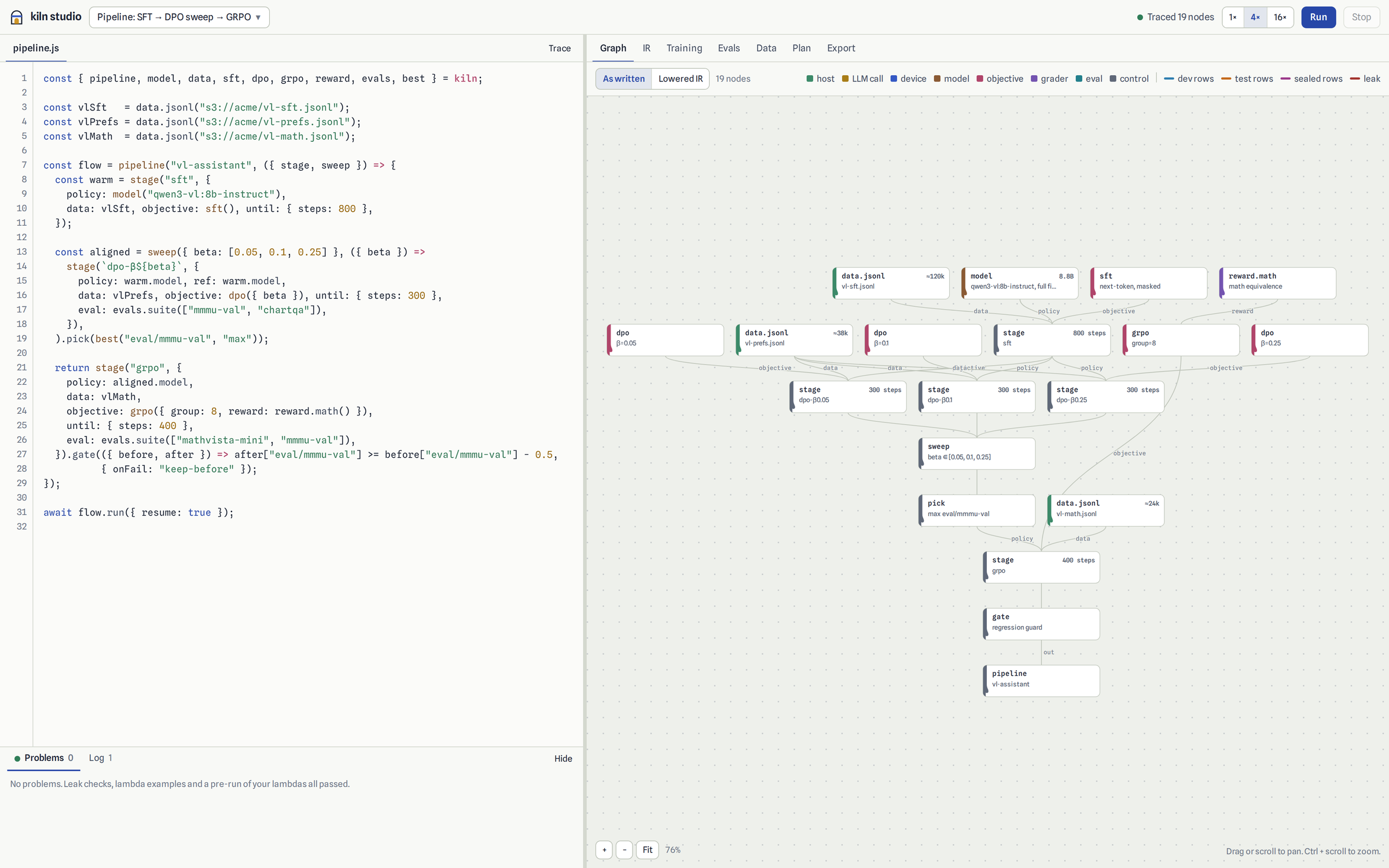
Subscribe →An IDE for LLM post-training programs. Write a training run in a small JavaScript language (kiln for training, quarry for data), and the studio traces it into a graph, compiles it, checks it for leaks and mistakes, and runs a simulated version so you can watch it train. It is a prototype, separate from Kiln Workbench: that one is a compiler workbench for GPU kernels, this one is about SFT, DPO and RL pipelines.
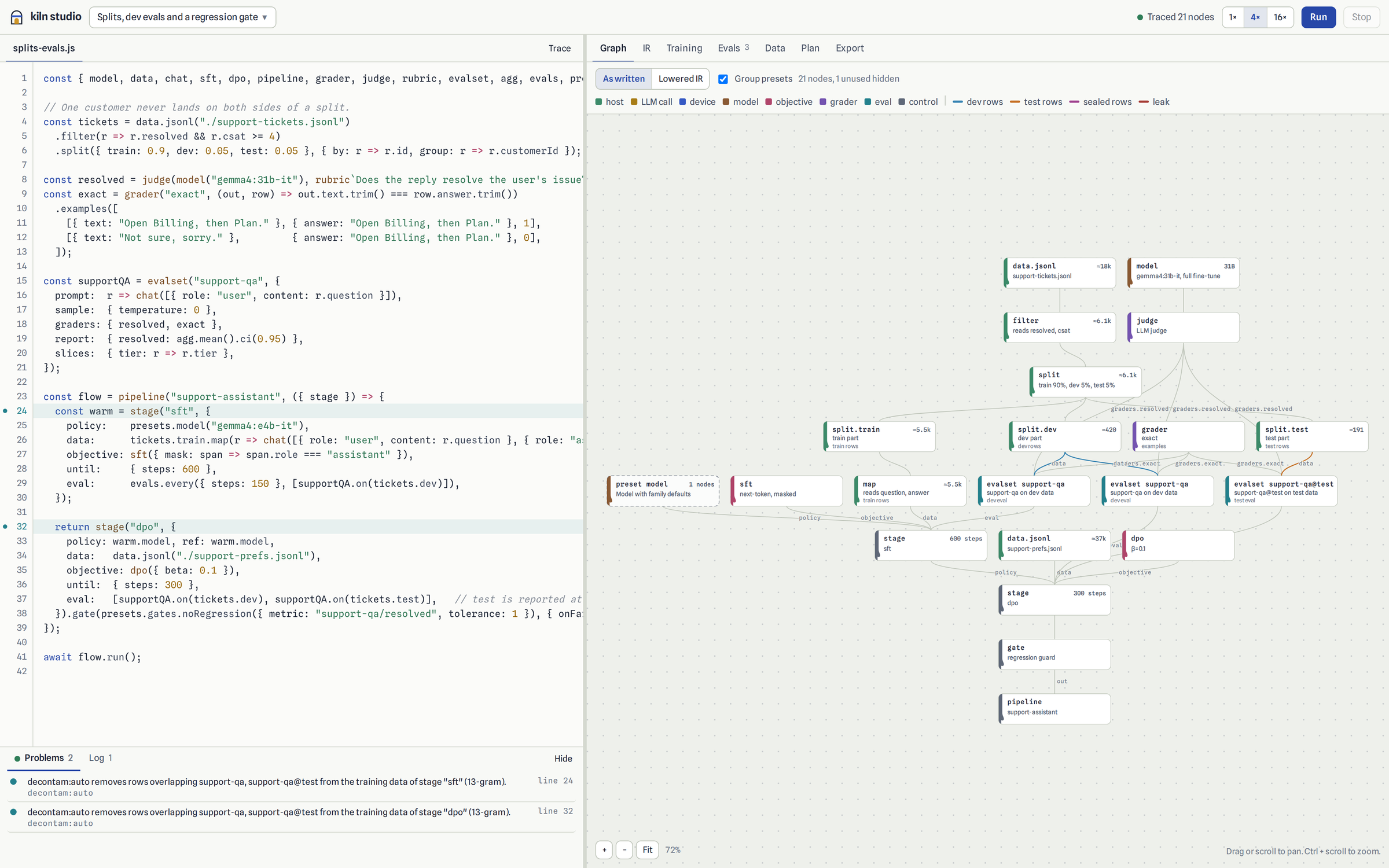
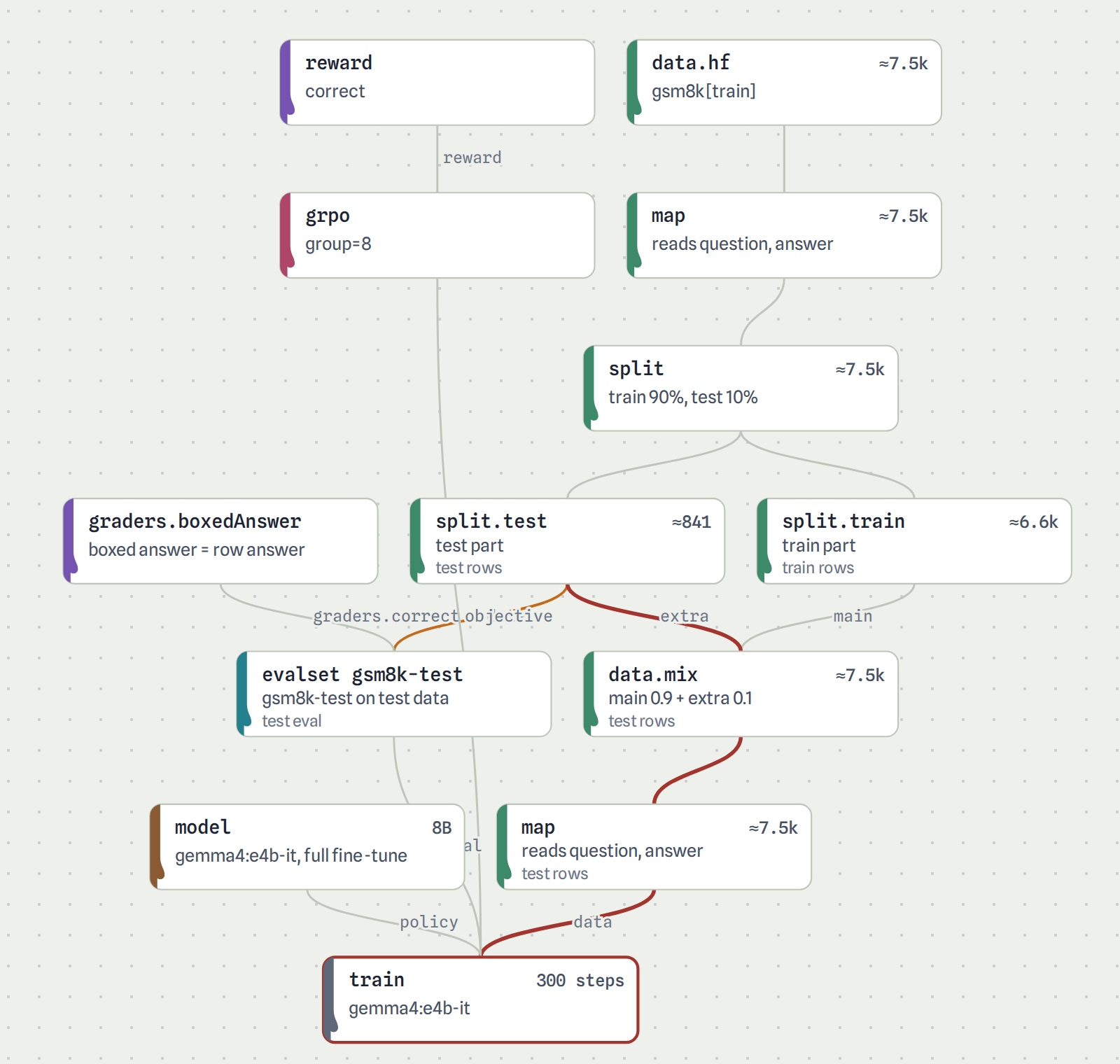
- Programs as graphs: SFT, DPO, GRPO and DAPO objectives, rewards, graders, LLM judges, evalsets, splits, stages, sweeps and gates become a colour-coded graph, as written or as the lowered IR, with dev, test and sealed rows drawn as their own edges.
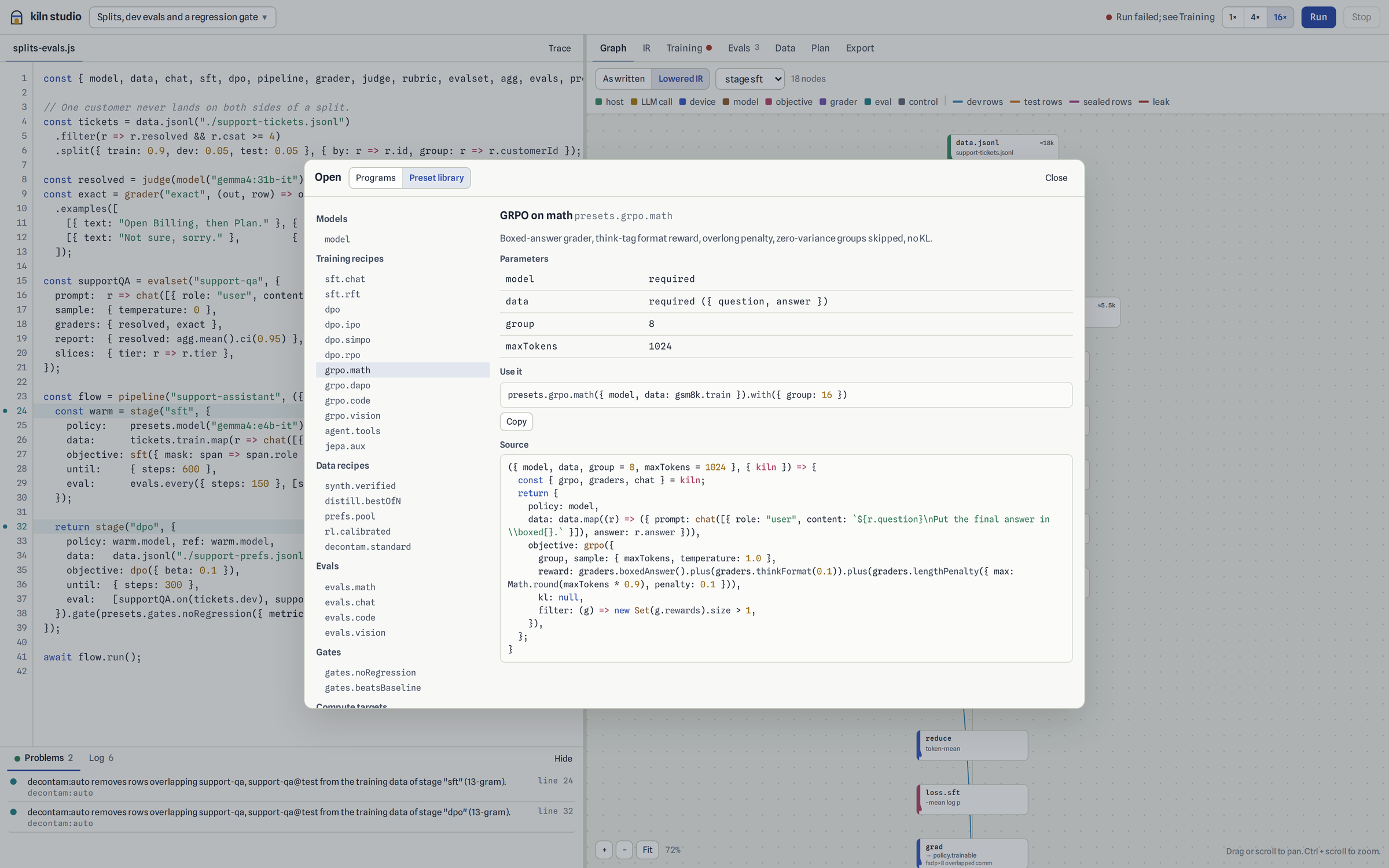
- Problems before you run: it flags test rows that reach training data, early stopping on a test metric, rewards that throw, and inserts decontamination against your evalsets.
- Plan: memory per GPU, compute and wall time on a chosen backend, and the compiler passes that ran (fusion, activation checkpointing, FSDP sharding, communication overlap).
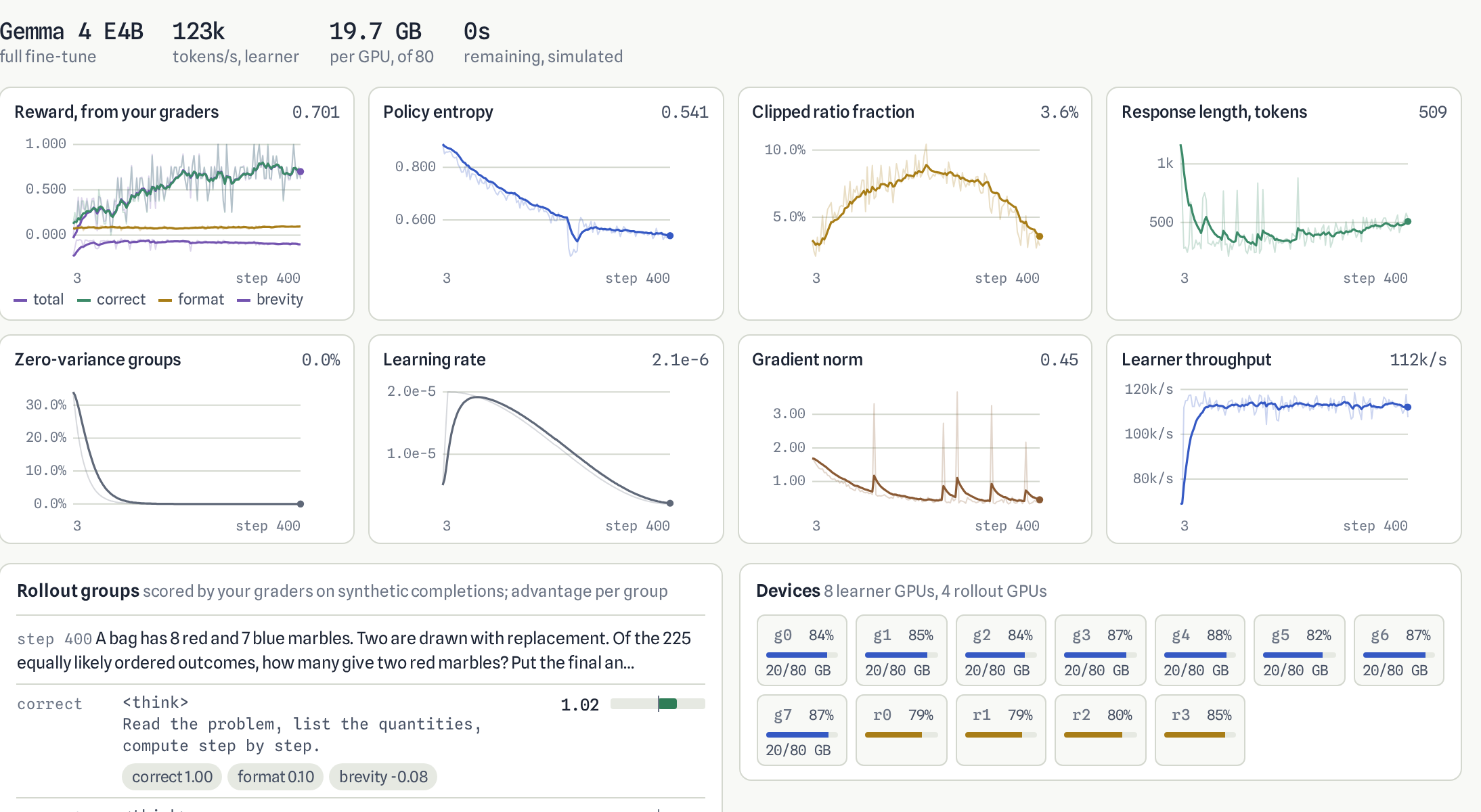
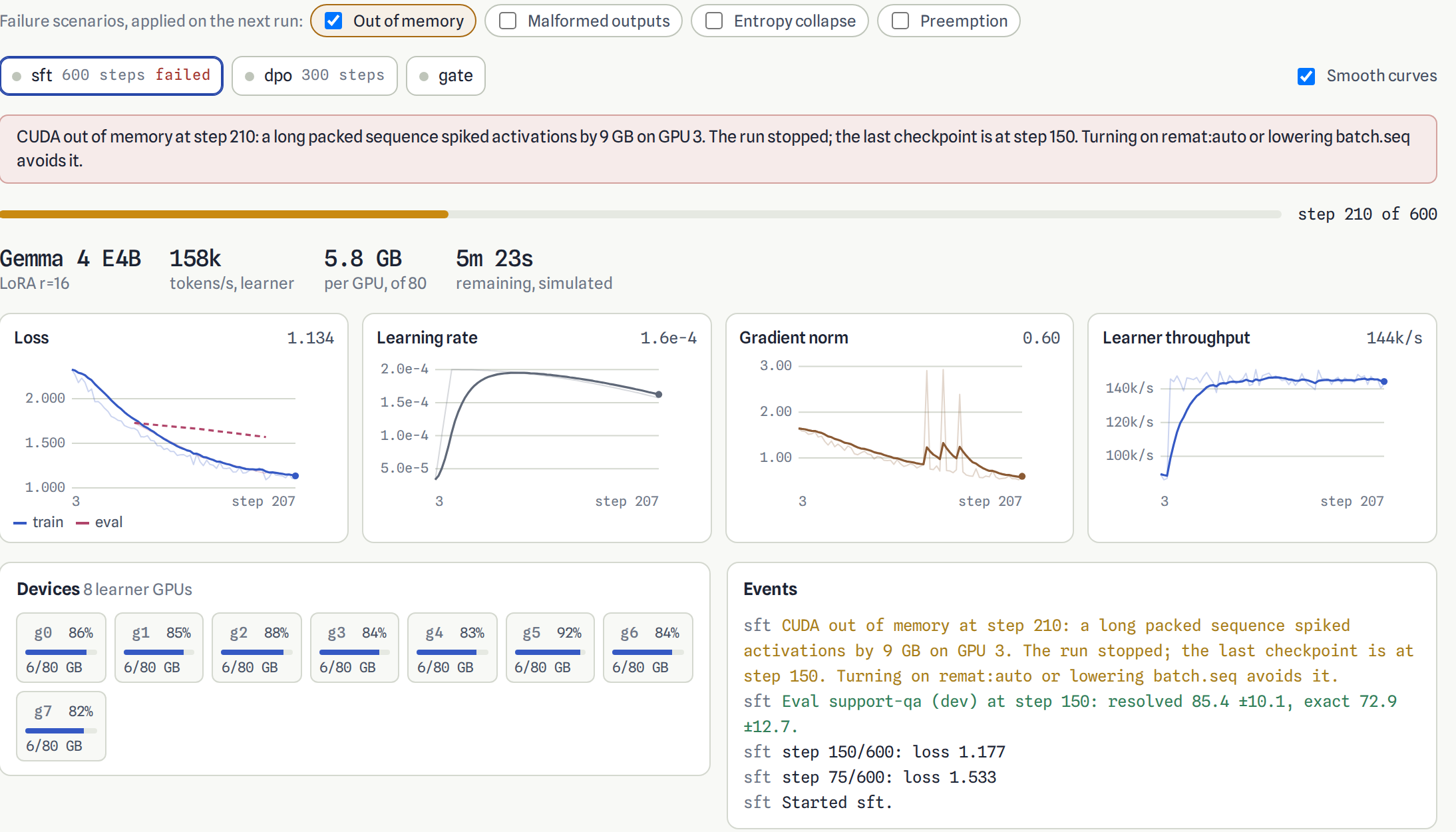
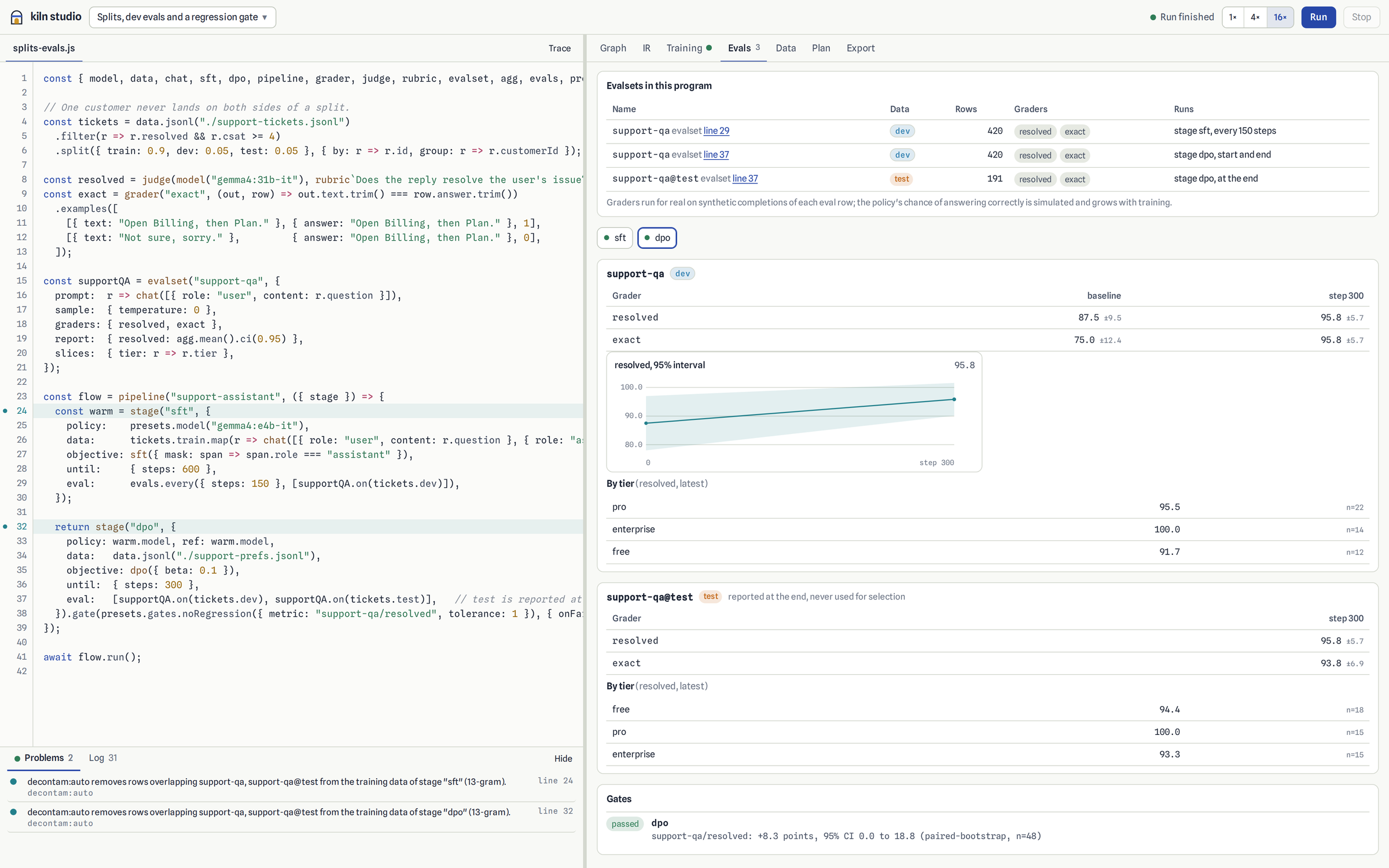
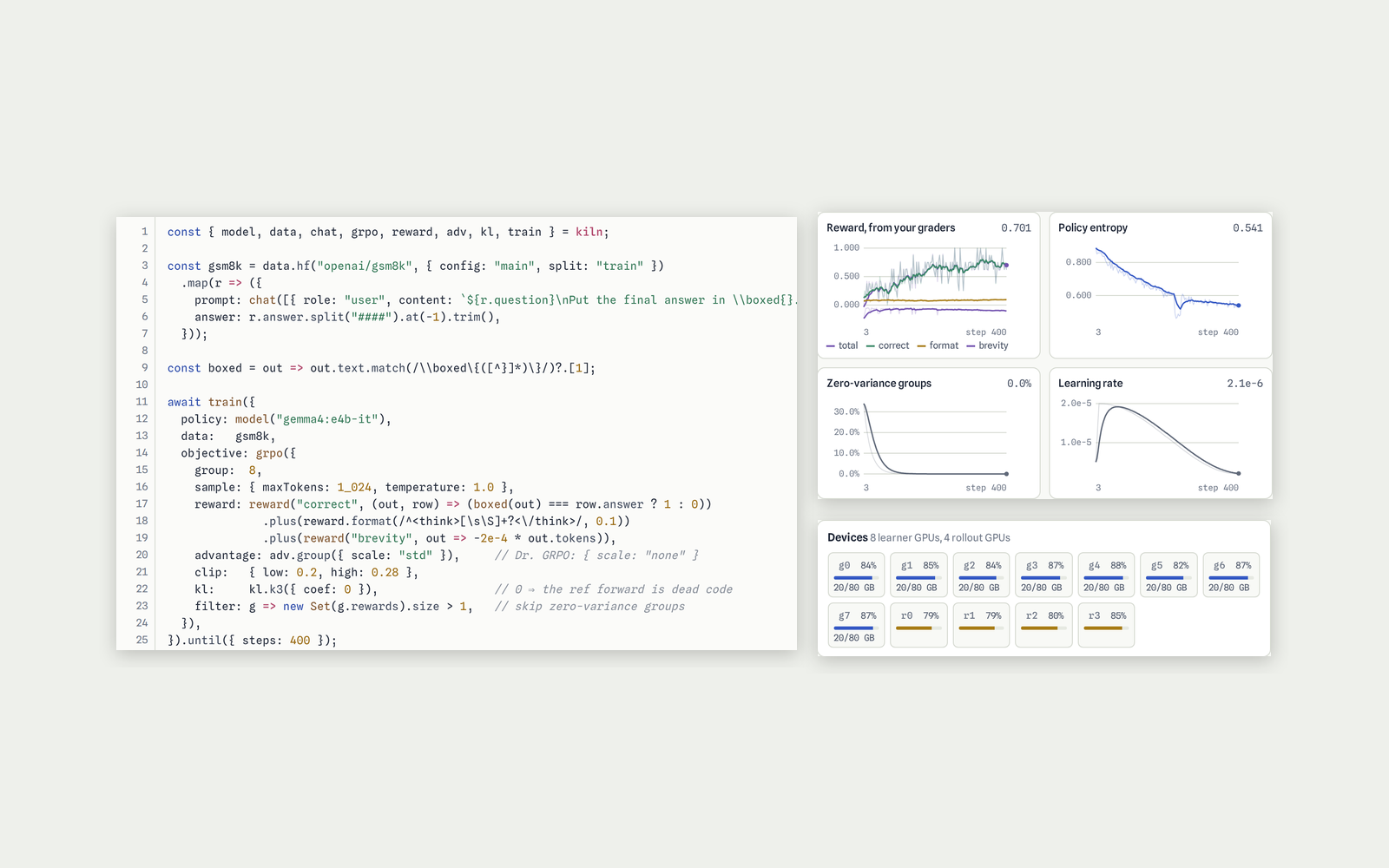
- Watch it train, then break it: a simulated run at 1×, 4× or 16× with reward, entropy, loss and throughput curves, rollout groups scored by your graders, per-GPU utilisation, eval results with intervals and gate decisions. Inject out-of-memory, malformed outputs, entropy collapse or preemption and see what happens.
- Data recipes: generate problems with a teacher model, verify, deduplicate and decontaminate them, and browse the rows at every step.
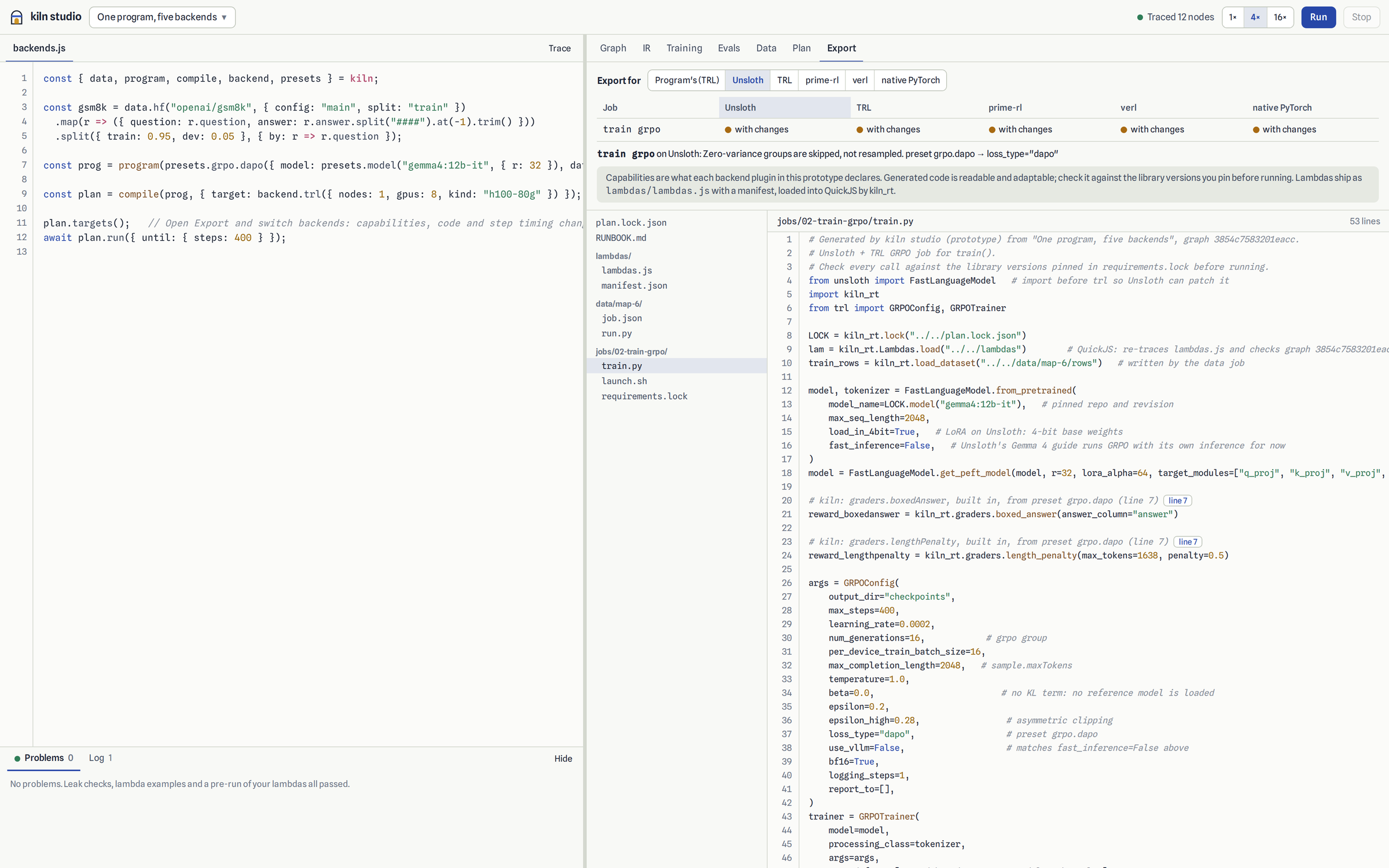
- Export: generated, readable code for Unsloth, TRL, prime-rl, verl and native PyTorch, with a lock file, a runbook and your lambdas bundled for the runtime.
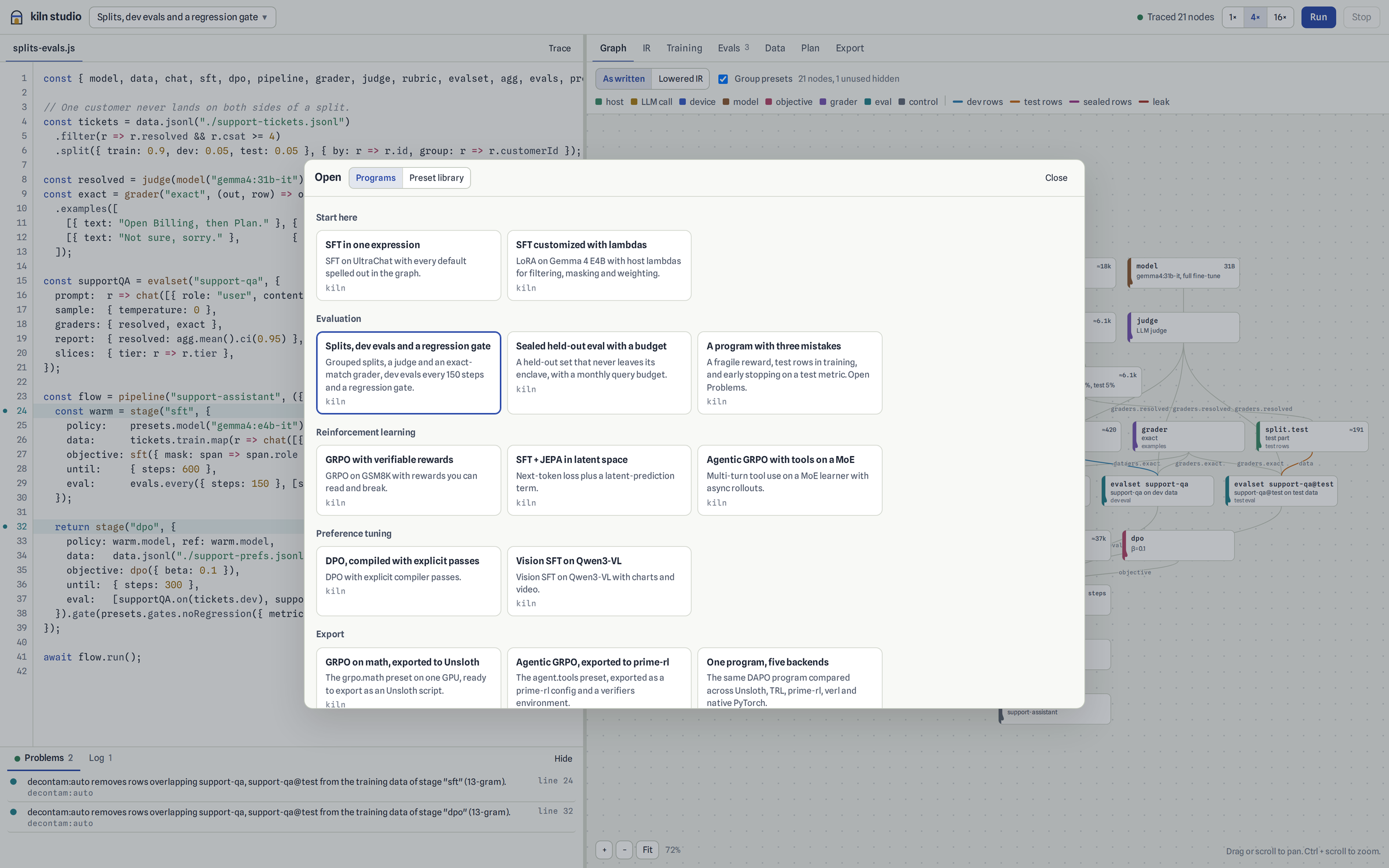
Twenty example programs come with it, from SFT in one expression and a program with three mistakes to agentic GRPO with tools on a MoE, distilling traces with best-of-n, a rejection-sampling fine-tune loop and one program on five backends, plus a library of presets for training, data, evals, gates and compute targets.
Training runs are simulated in the browser; graders run on synthetic completions. The interface uses Spline Sans and Spline Sans Mono from Google Fonts (SIL Open Font License), React, htm and Acorn.