Lattice Arcade
Twelve game screens drawn entirely in shaders for a two-screen handheld, from a Mode 7 world map to a shattering pause menu, each one playable on a single scrolling page.
In early access for subscribers until 22 November 2026. Subscribe to run it now.
Subscribe →Twelve kinds of game screen, each one drawn entirely in fragment shaders and playable, on one long page. Every section has a two-screen handheld in it, rendered at the original DS resolution of 256×192 per screen, and a page-sized background that carries the same world past the edges of the device.
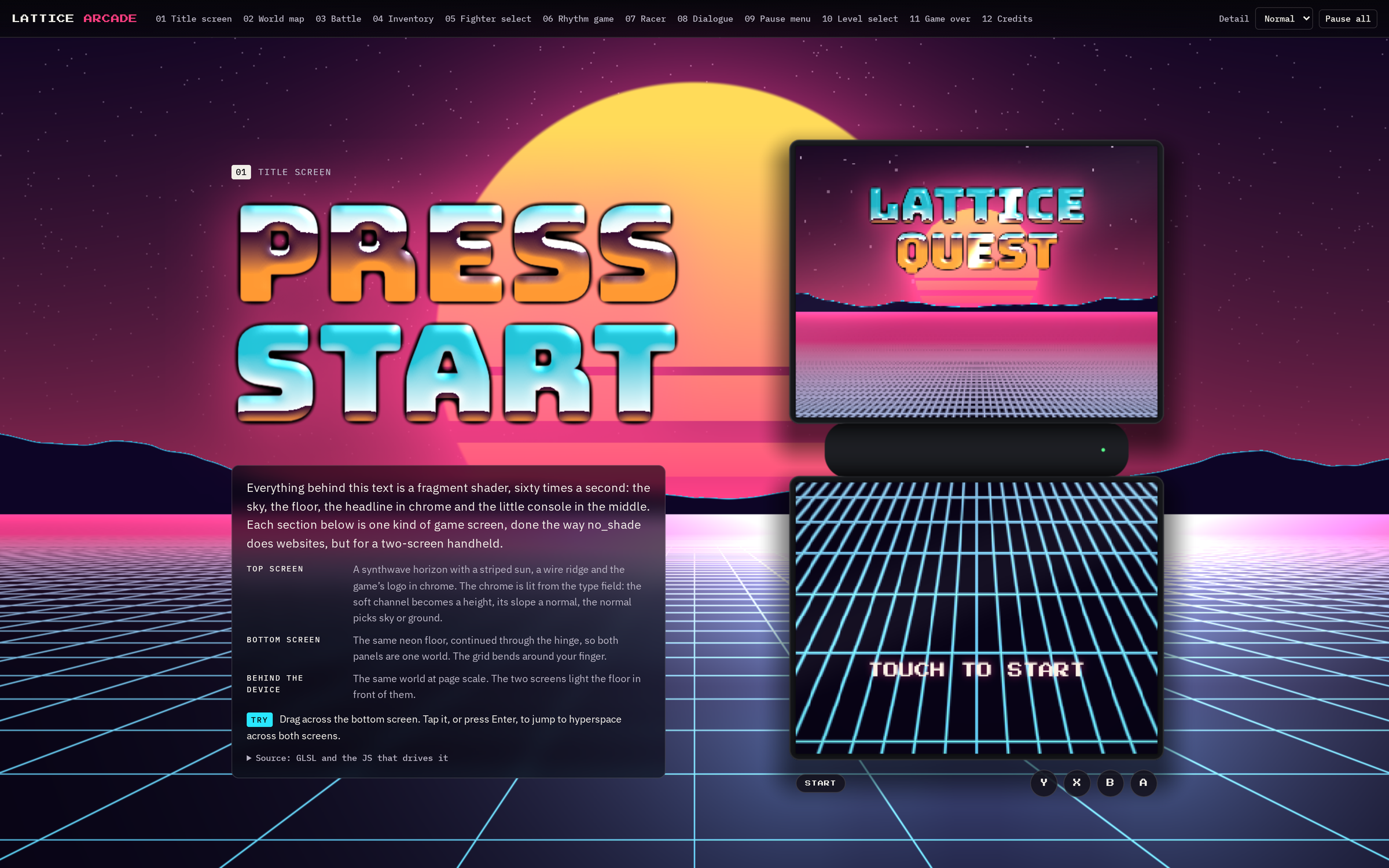
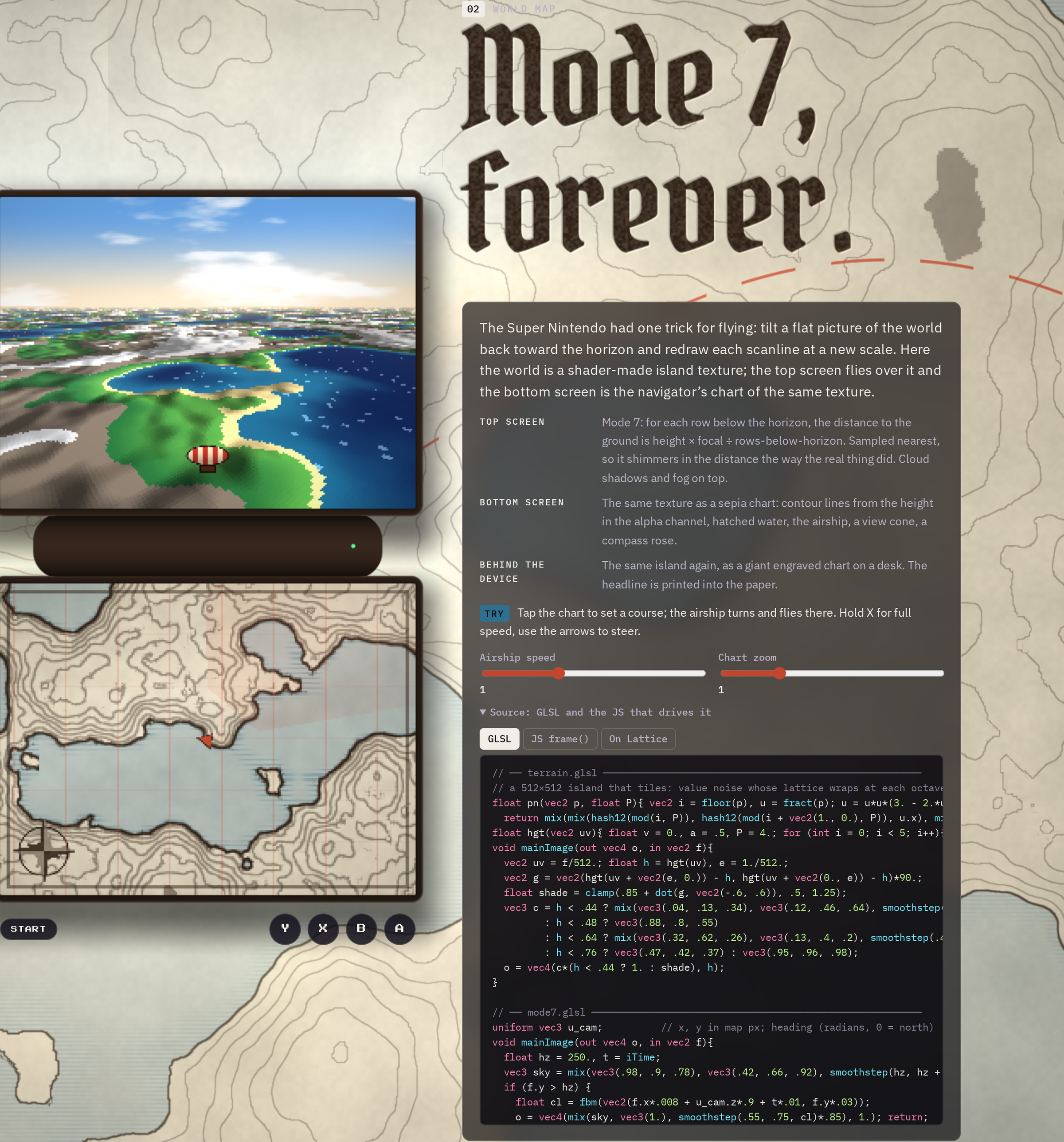
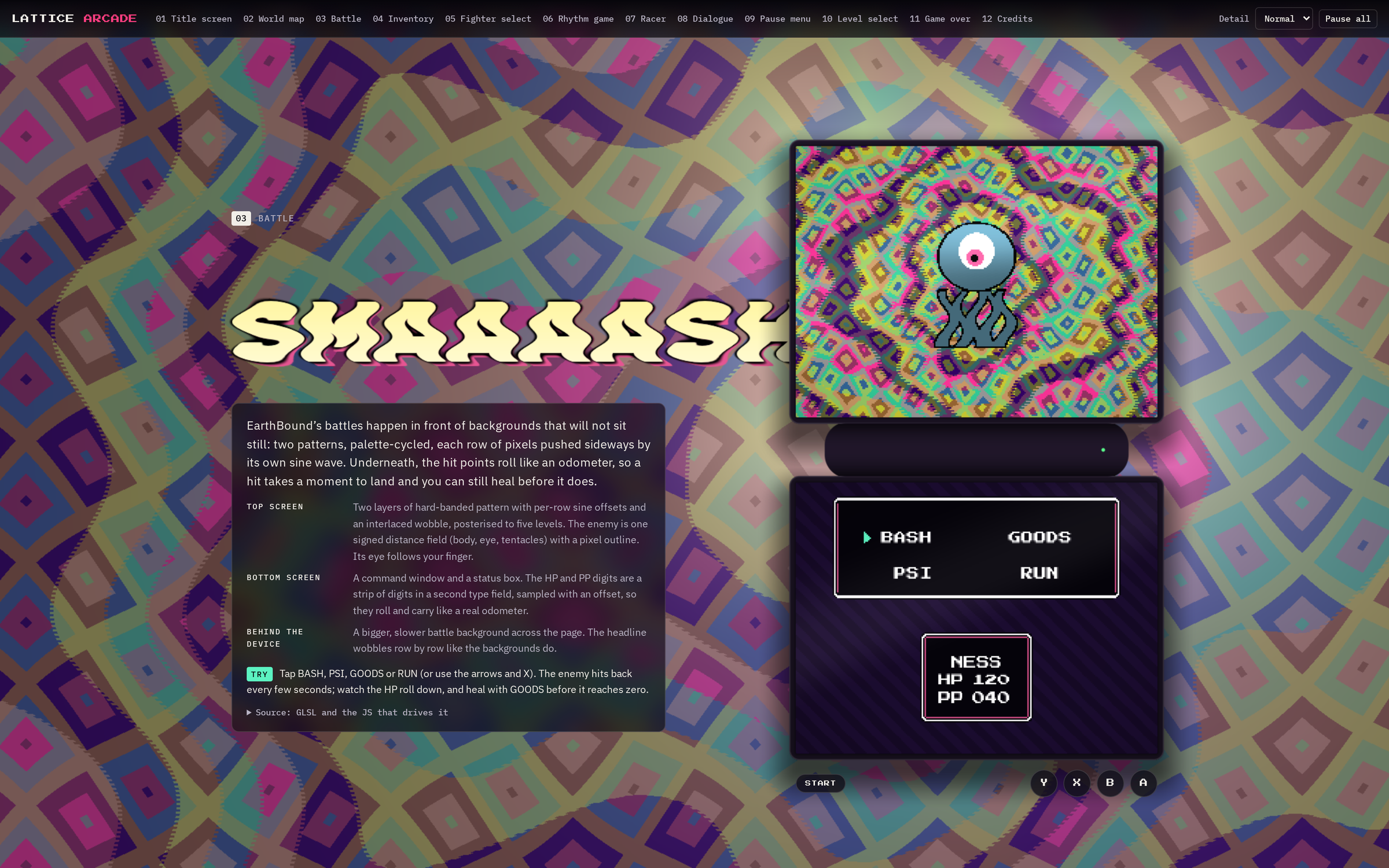
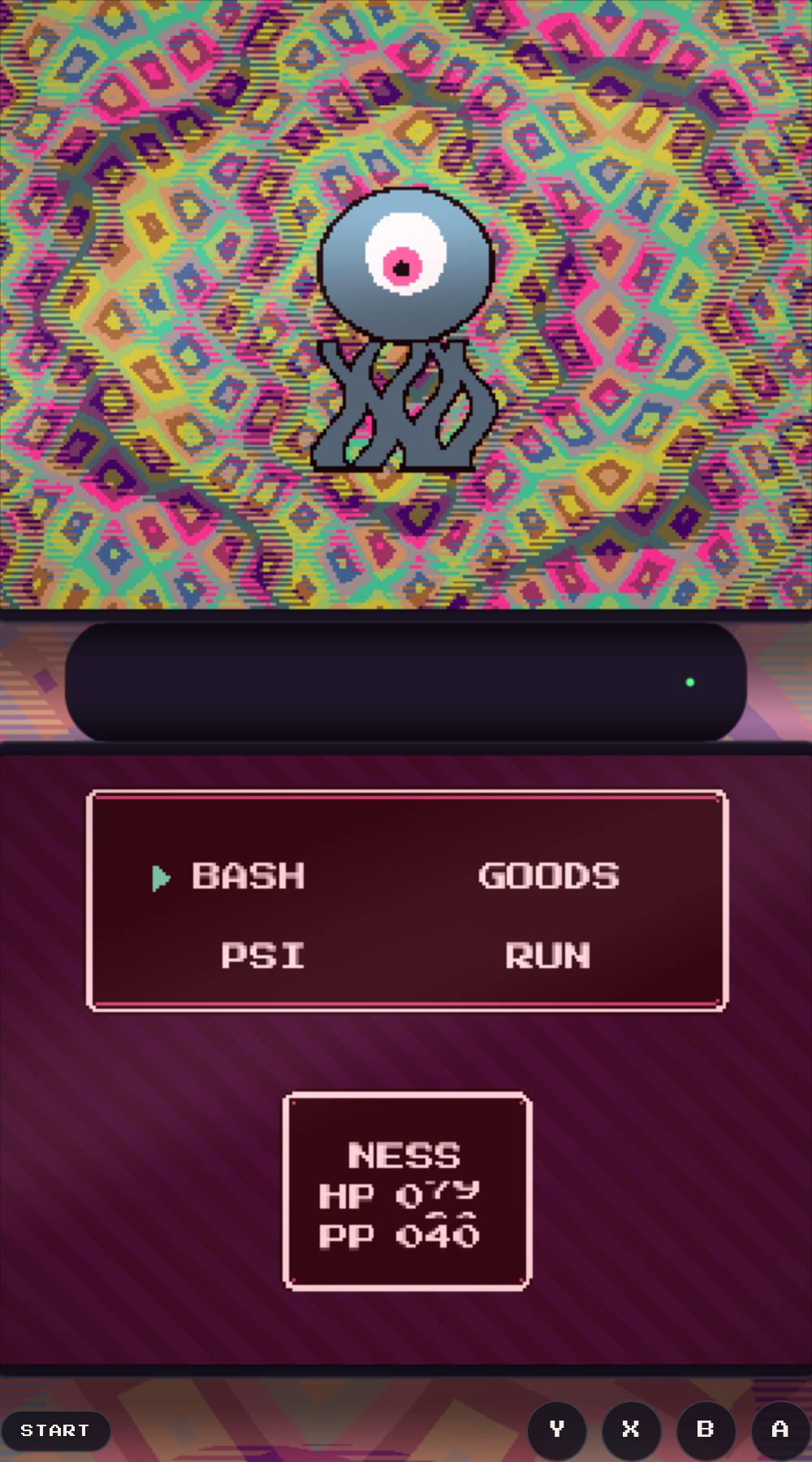
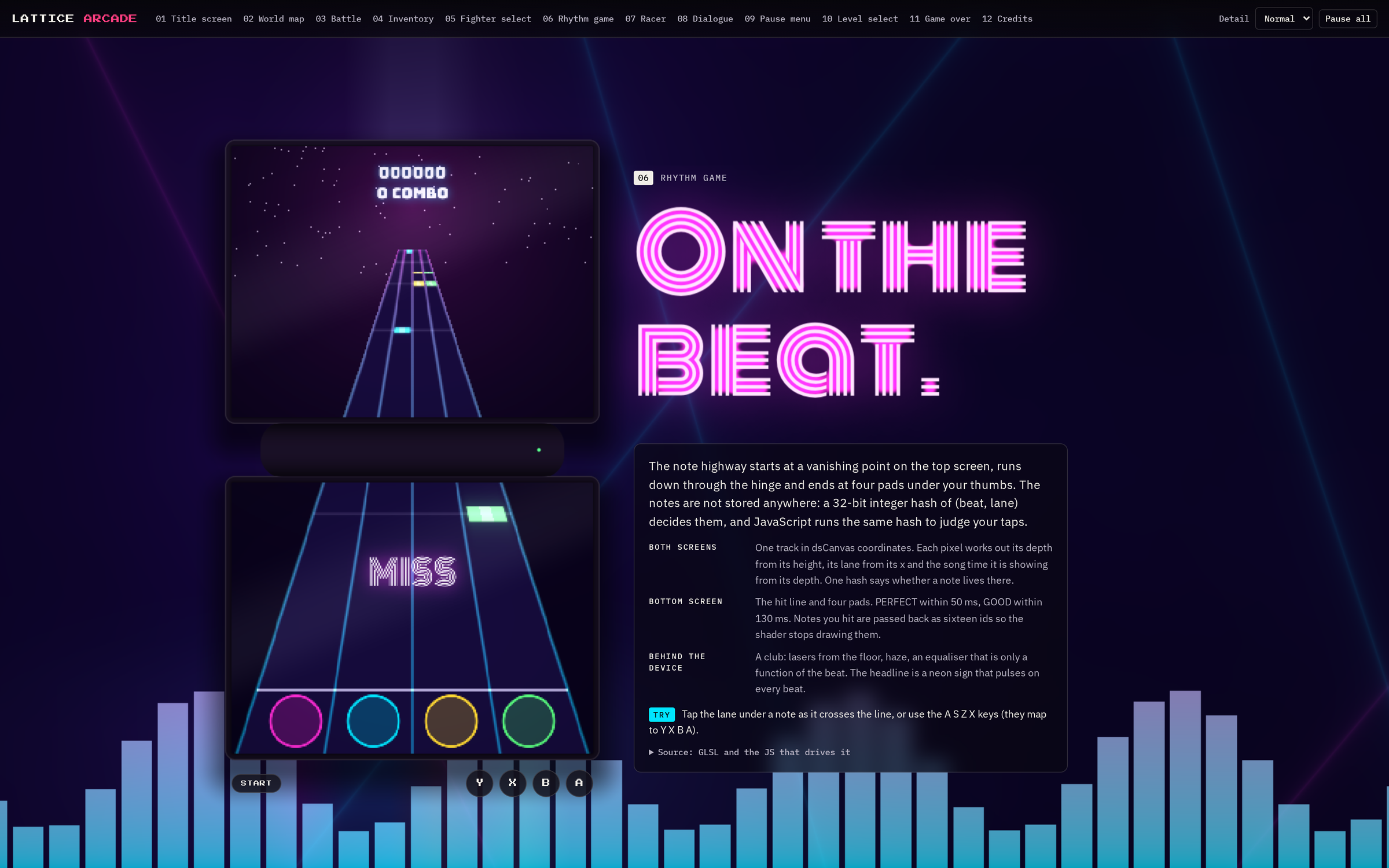
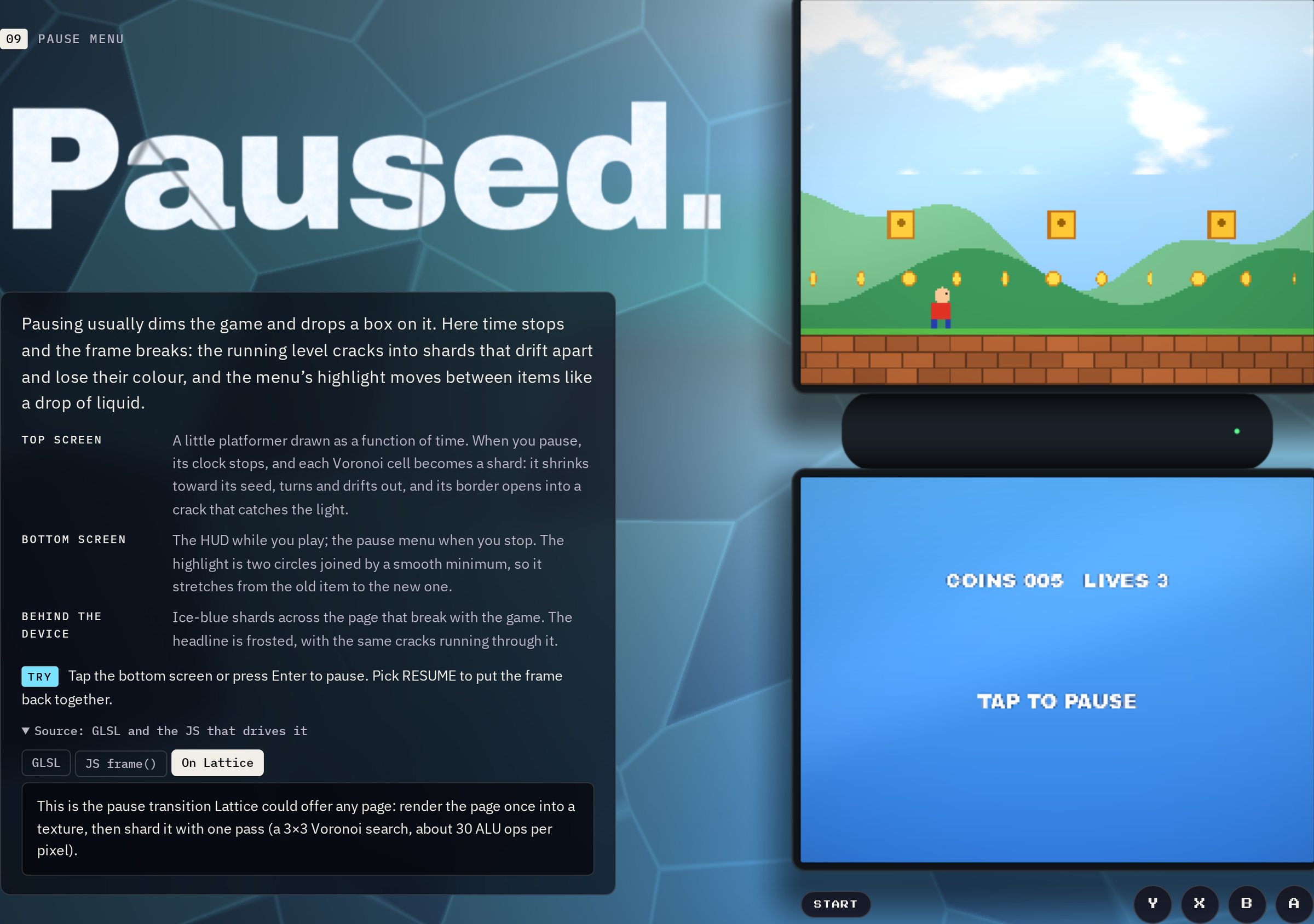
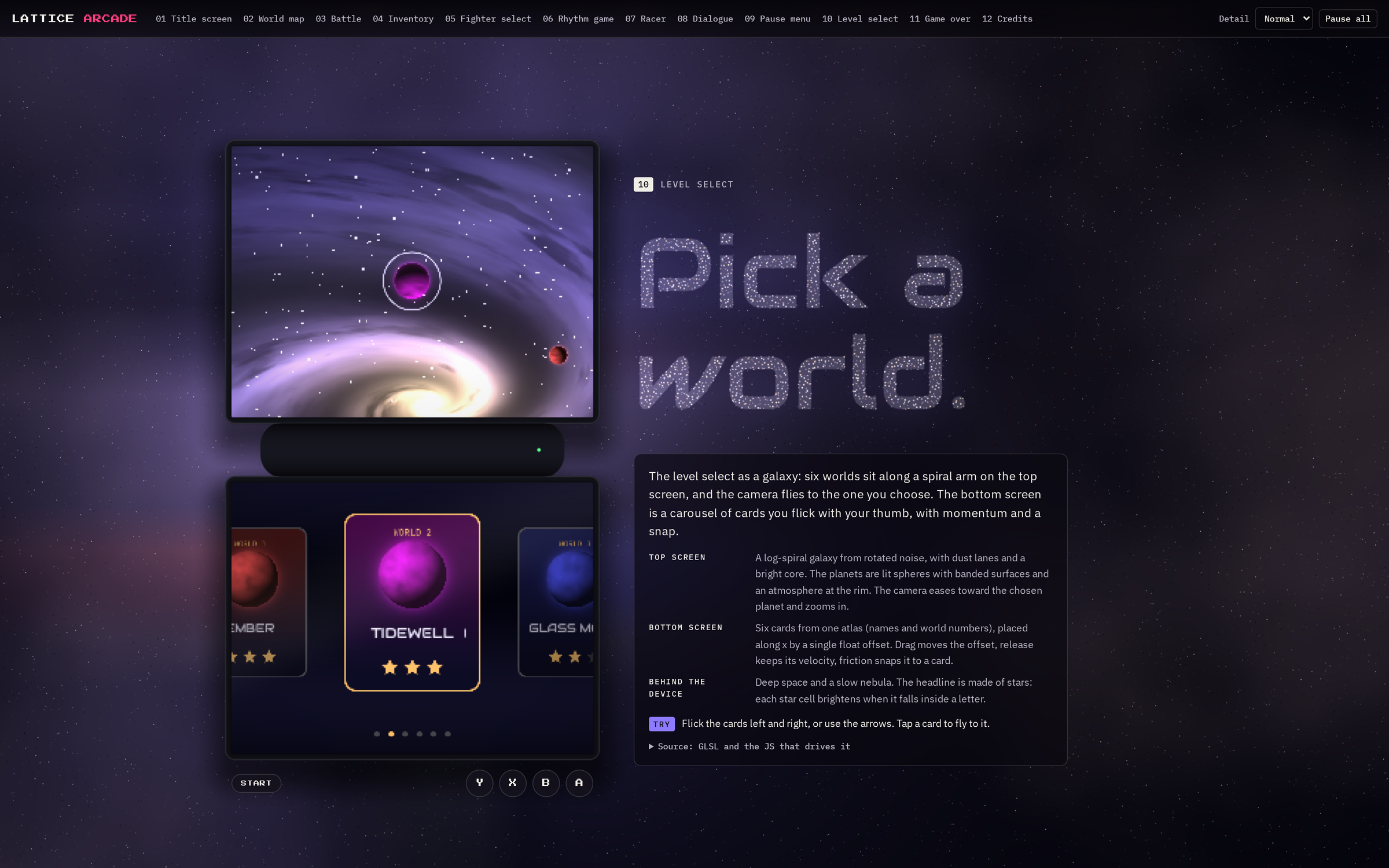
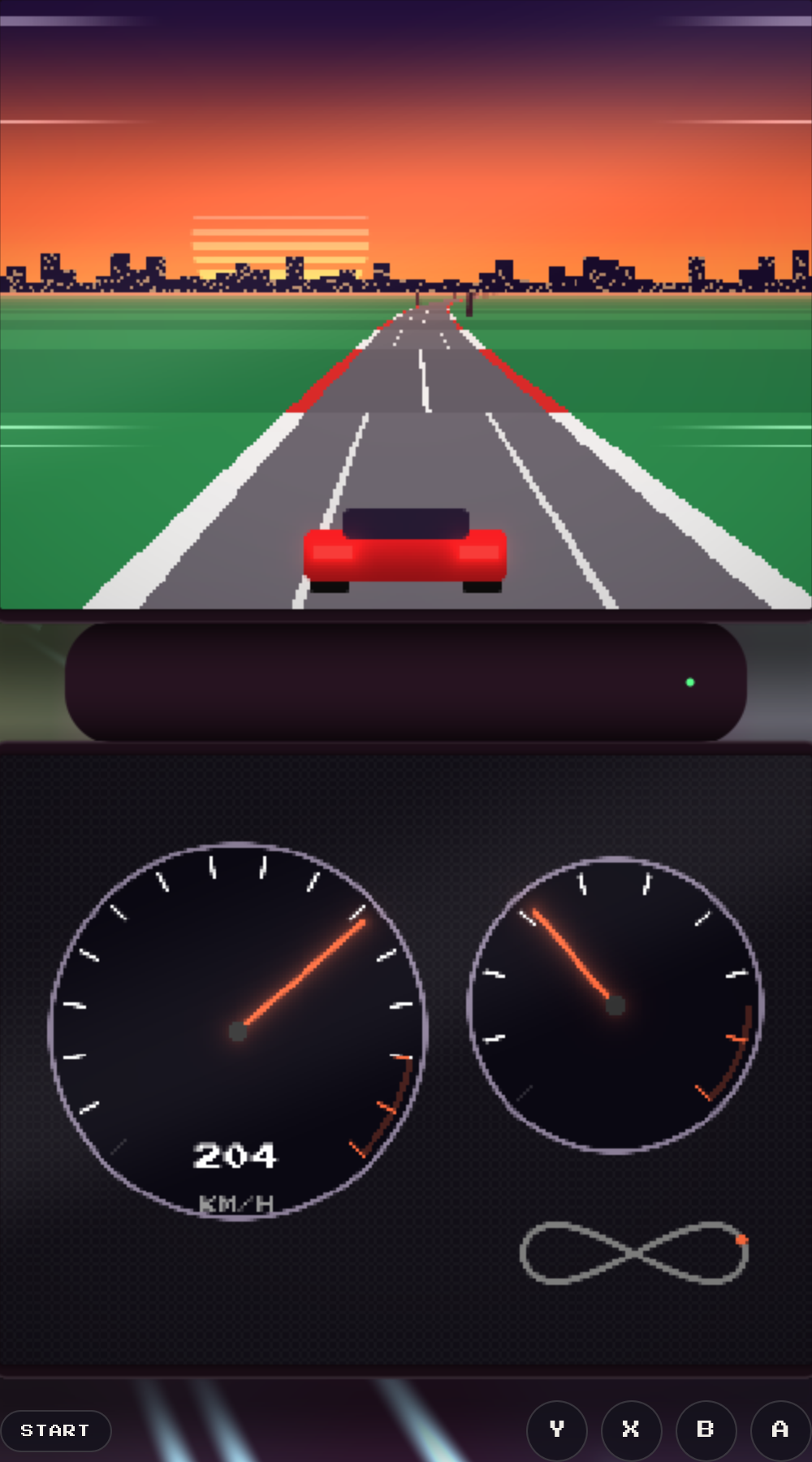
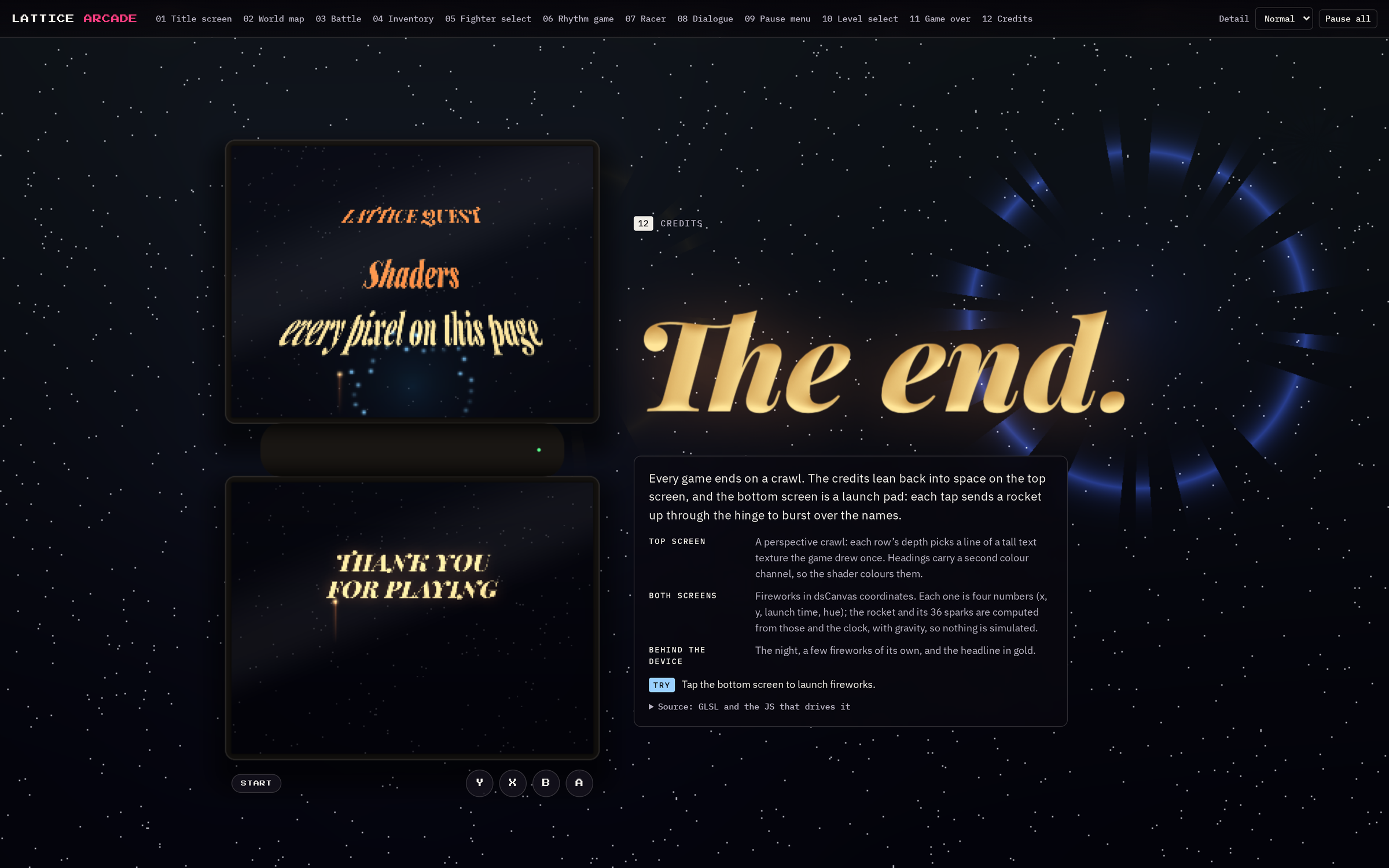
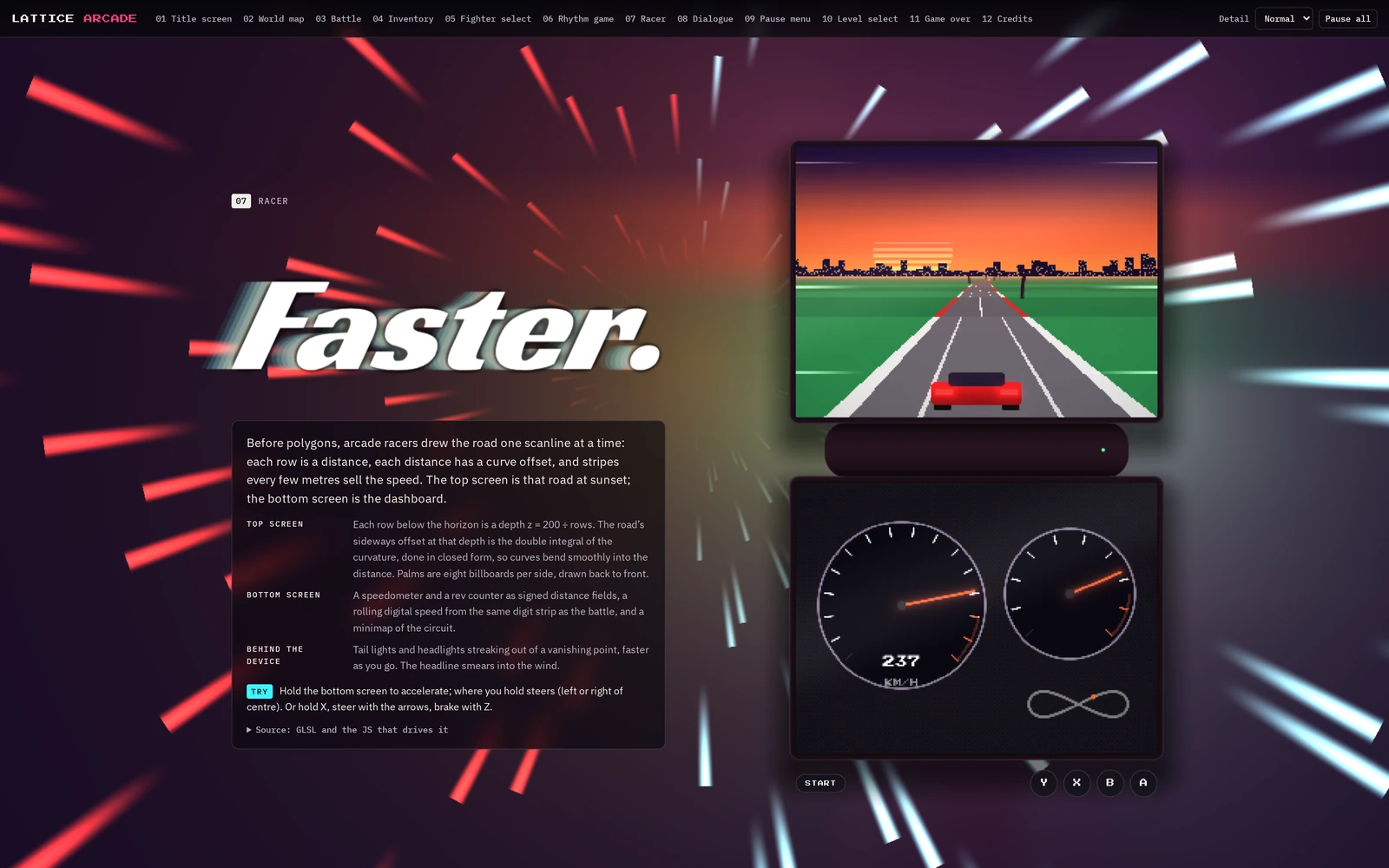
- Twelve screens: a title screen, a Mode 7 world map, an EarthBound-style battle, an inventory, a fighter select, a rhythm game, a scanline racer, a rainy visual-novel dialogue, a pause menu that shatters the frame, a galaxy level select, a game over on fire, and credits with fireworks.
- Play each one: tap or drag the bottom screen, or use the keys (arrows, X, Z, S, A and Enter). Set a course for the airship, bash an enemy before your HP rolls down, hit notes on the beat, race at sunset.
- Both screens are one world: the top screen sees your finger through the hinge, the neon floor runs from one screen into the other, and the notes of the rhythm game fall through the hinge to your thumbs.
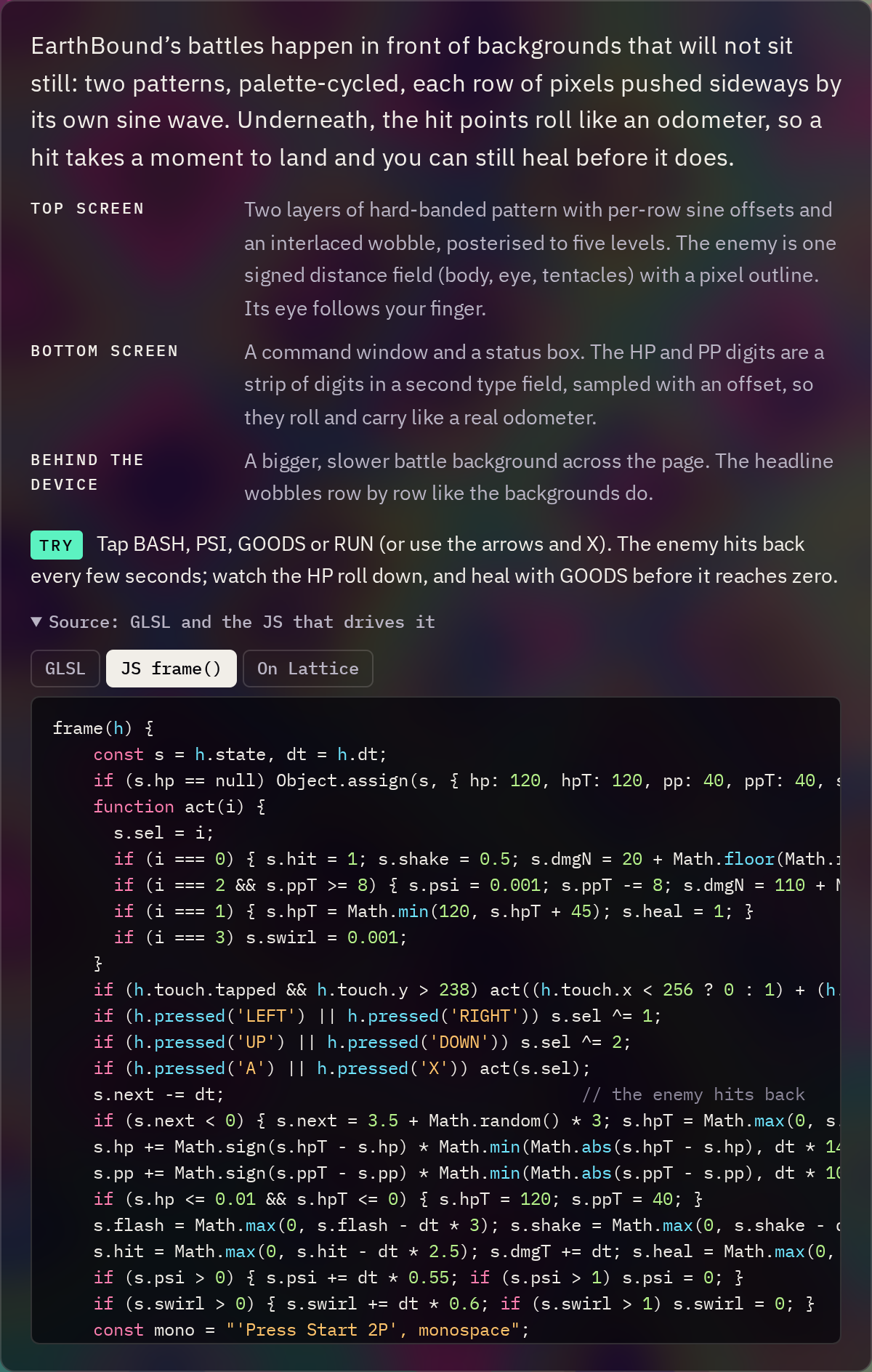
- Read how it works: each section explains its top screen, bottom screen and background, and opens its GLSL and the JavaScript that drives it. Some have sliders, such as the airship's speed and the chart's zoom.
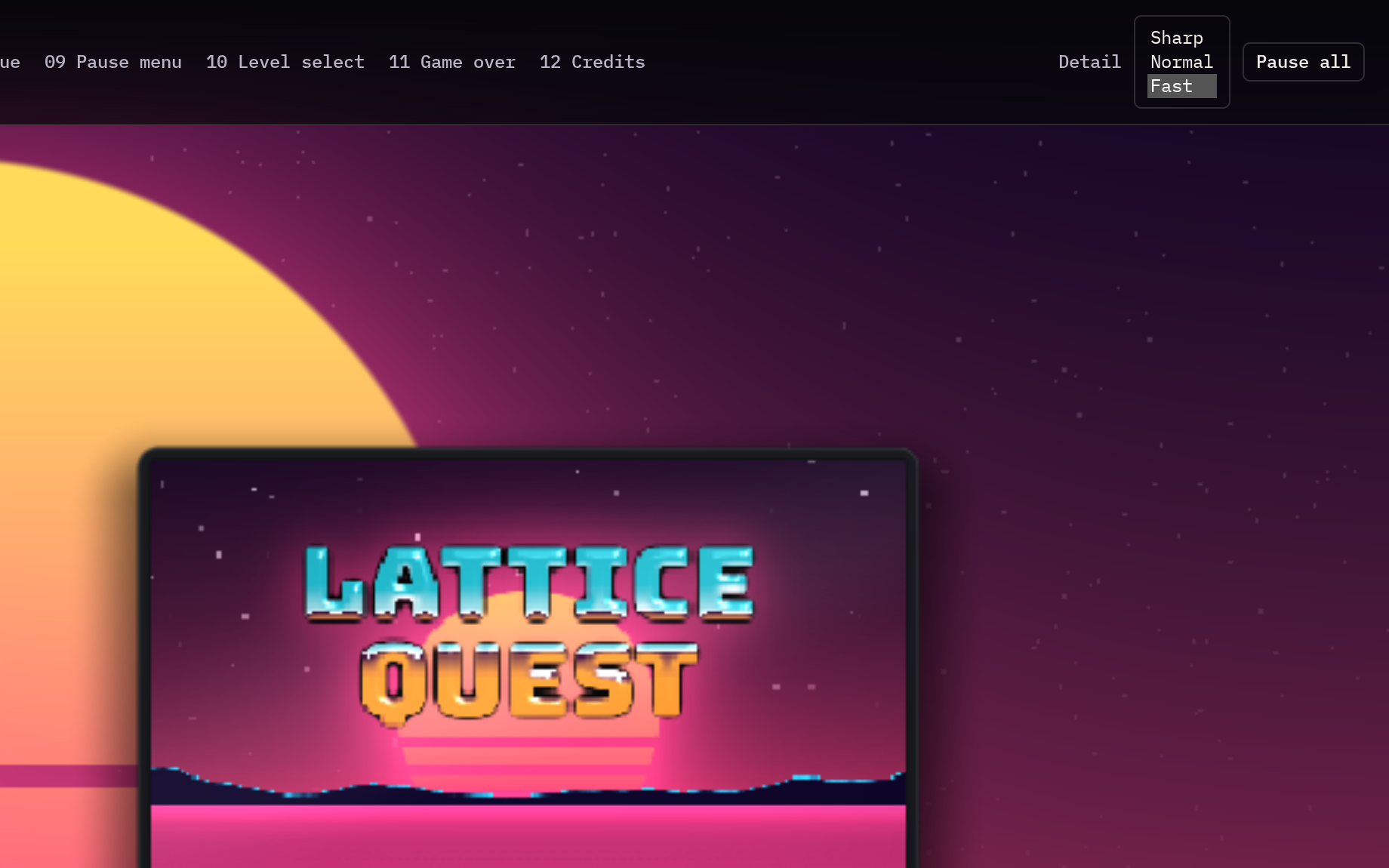
- Detail and pause: a detail menu (sharp, normal, fast) for slower machines, and a button that pauses every screen.
Lattice Rift and Lattice Phantasmagoria, also on this site, are single WebGL instruments and experiments; Lattice Arcade is a gallery of finished-looking game screens in the same two-screen format, written against the same DS screen contract as the DS Shader Sketchbook. Headlines use Google Fonts (Press Start 2P, Anton, Archivo Black, Audiowide, Bungee, Monoton, Pirata One, Playfair Display and others). It needs WebGL.