Live Embedding Viewer
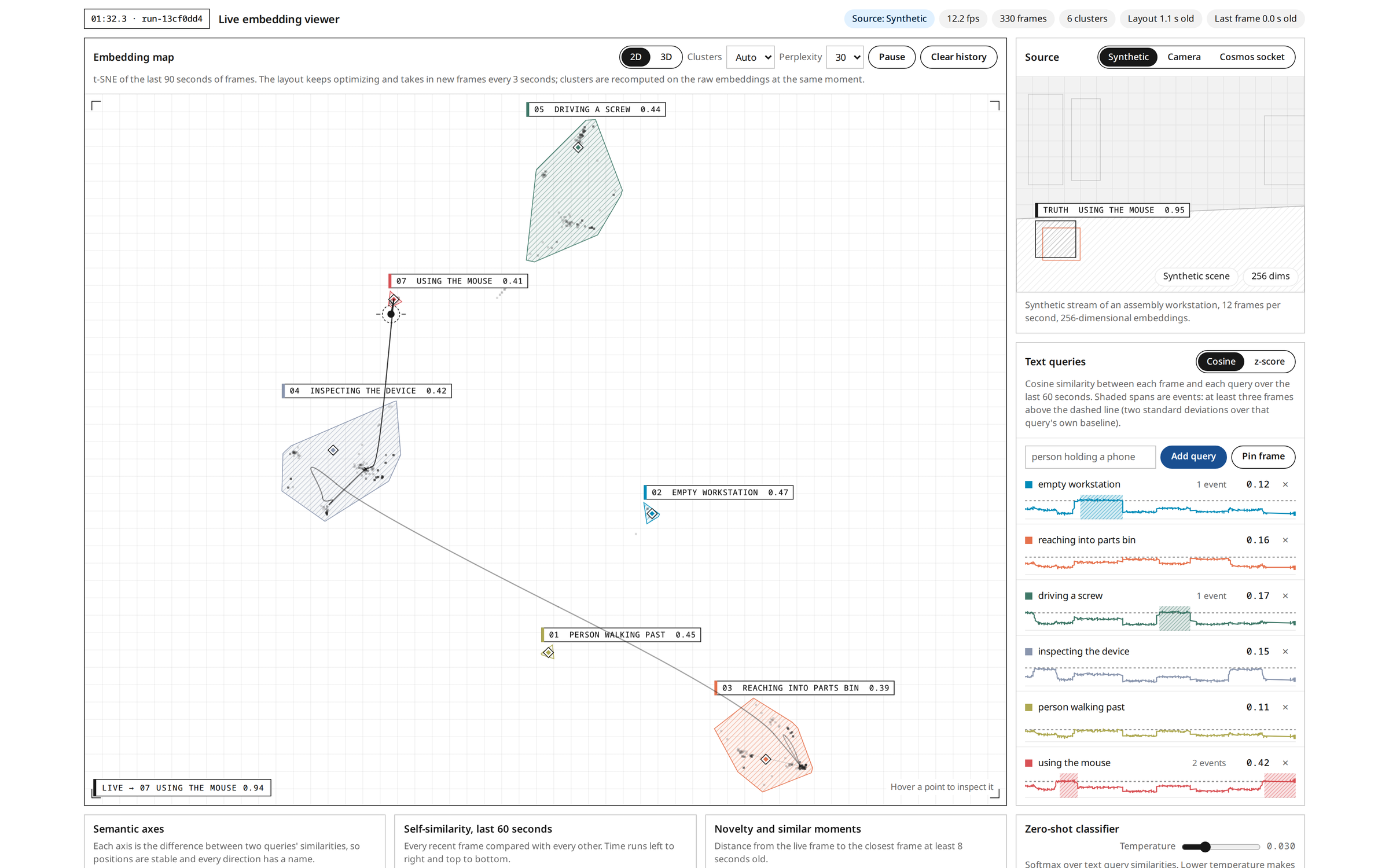
Watch a stream of video embeddings live: a running t-SNE map with clusters, text-query lanes, a zero-shot classifier, semantic axes, self-similarity and novelty.
In early access for subscribers until 22 November 2026. Subscribe to run it now.
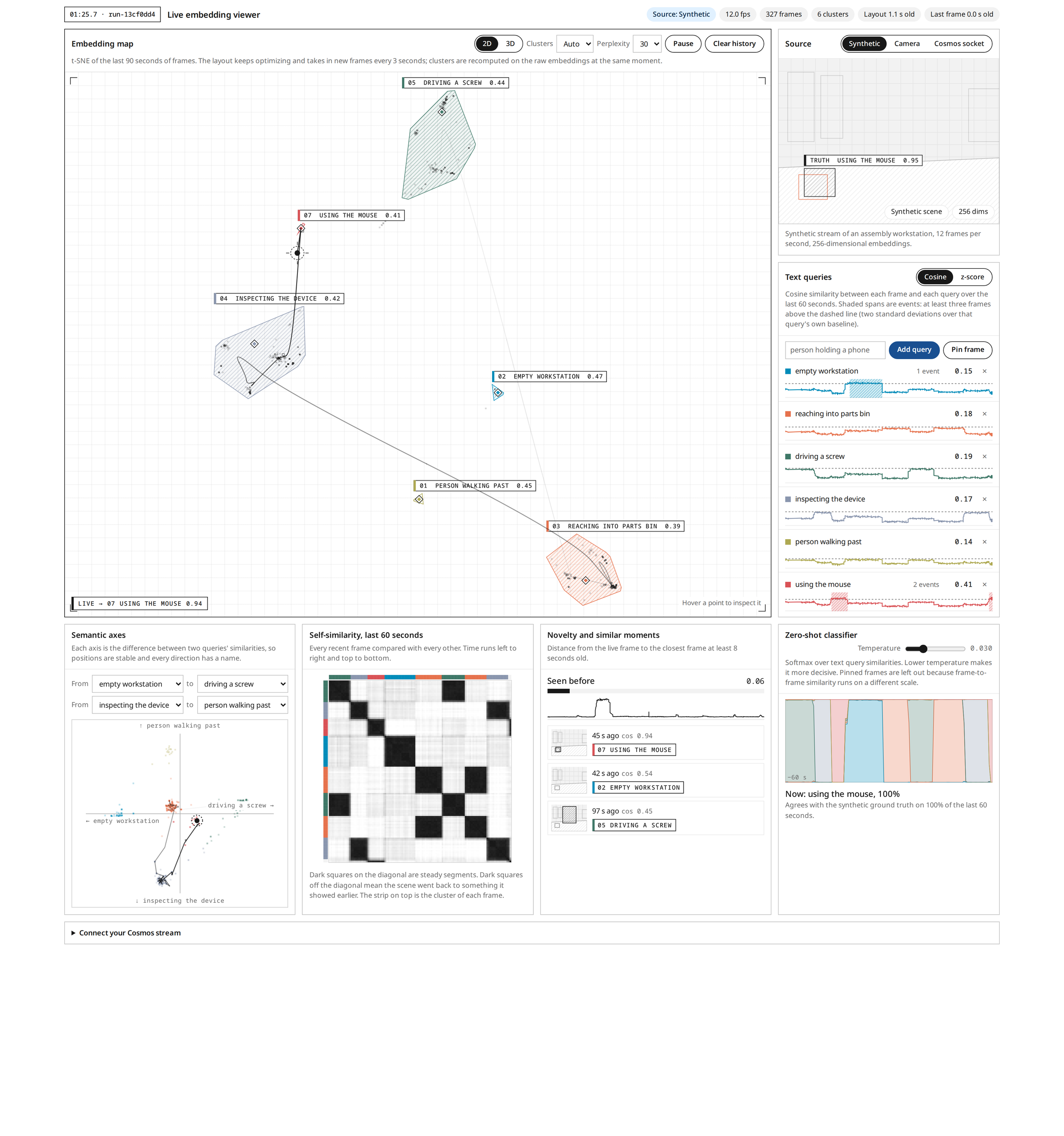
Subscribe →A live viewer for a stream of video embeddings. Frames arrive one after another; the page keeps the last minute or so, lays it out with a t-SNE that never stops optimizing, clusters it, and compares every frame with text queries you type. Out of the box it plays a synthetic, Cosmos-style stream of an assembly workstation (twelve frames per second, 256 dimensions), including the gap between text and video similarities, so you can see every view working without any hardware.
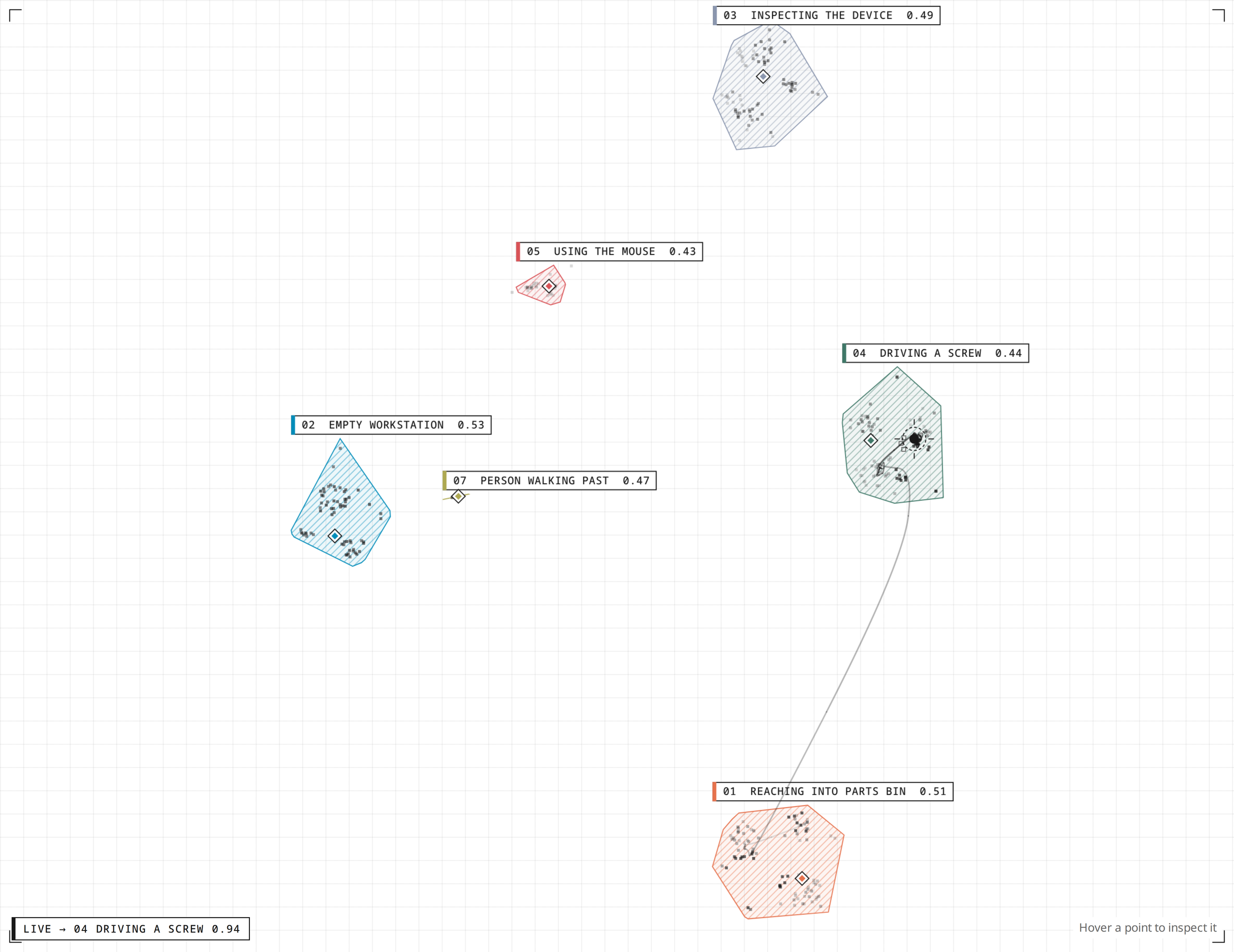
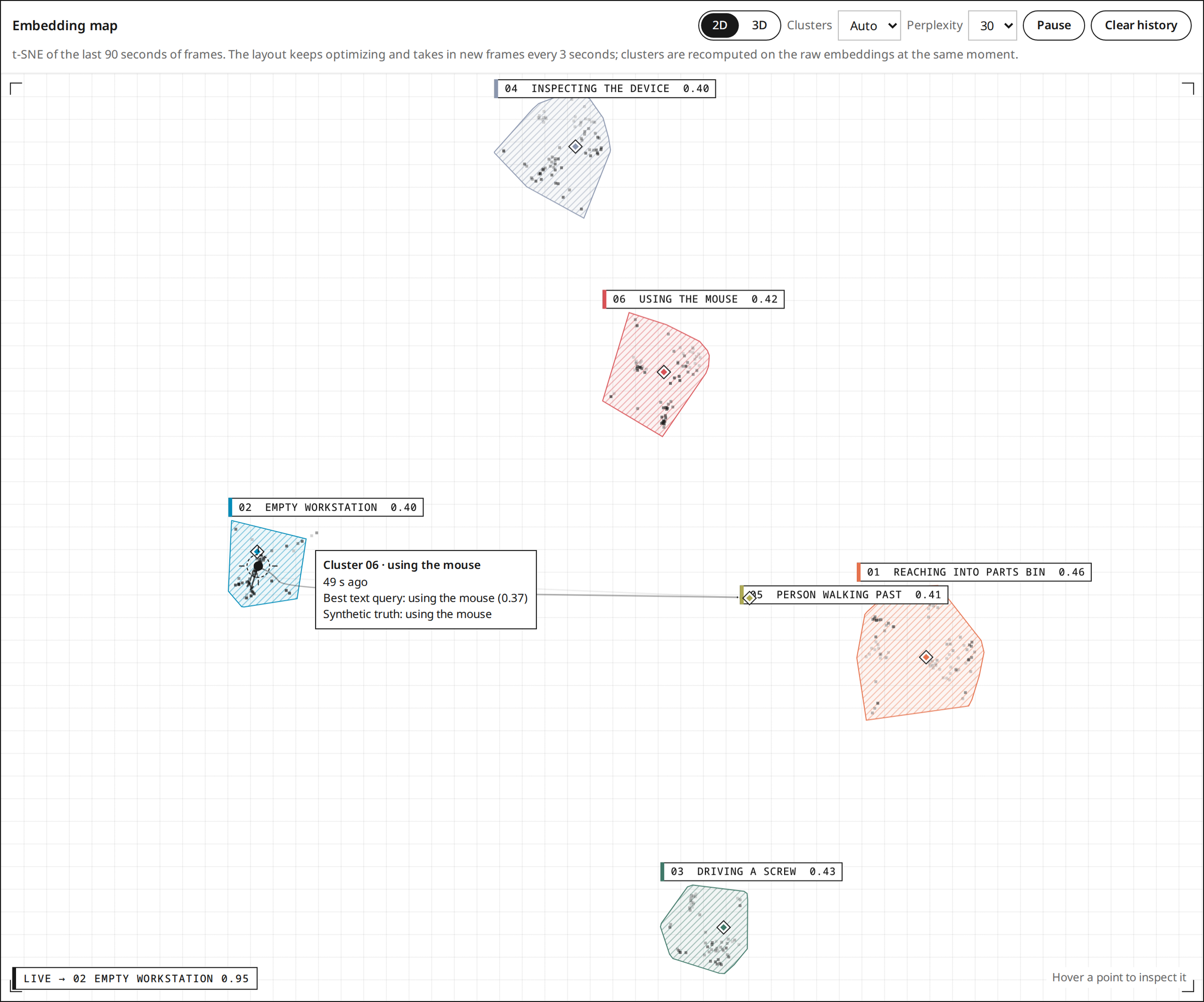
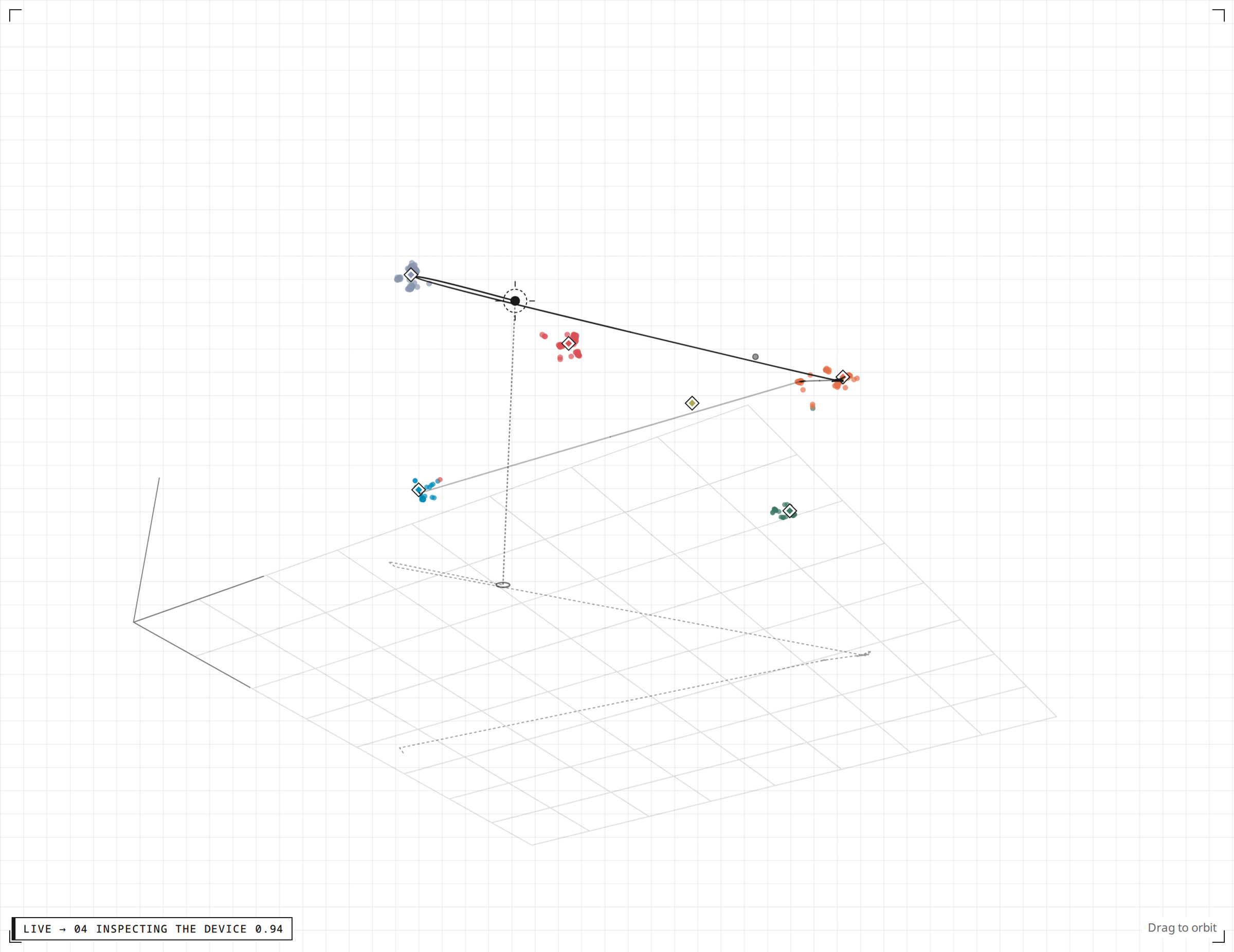
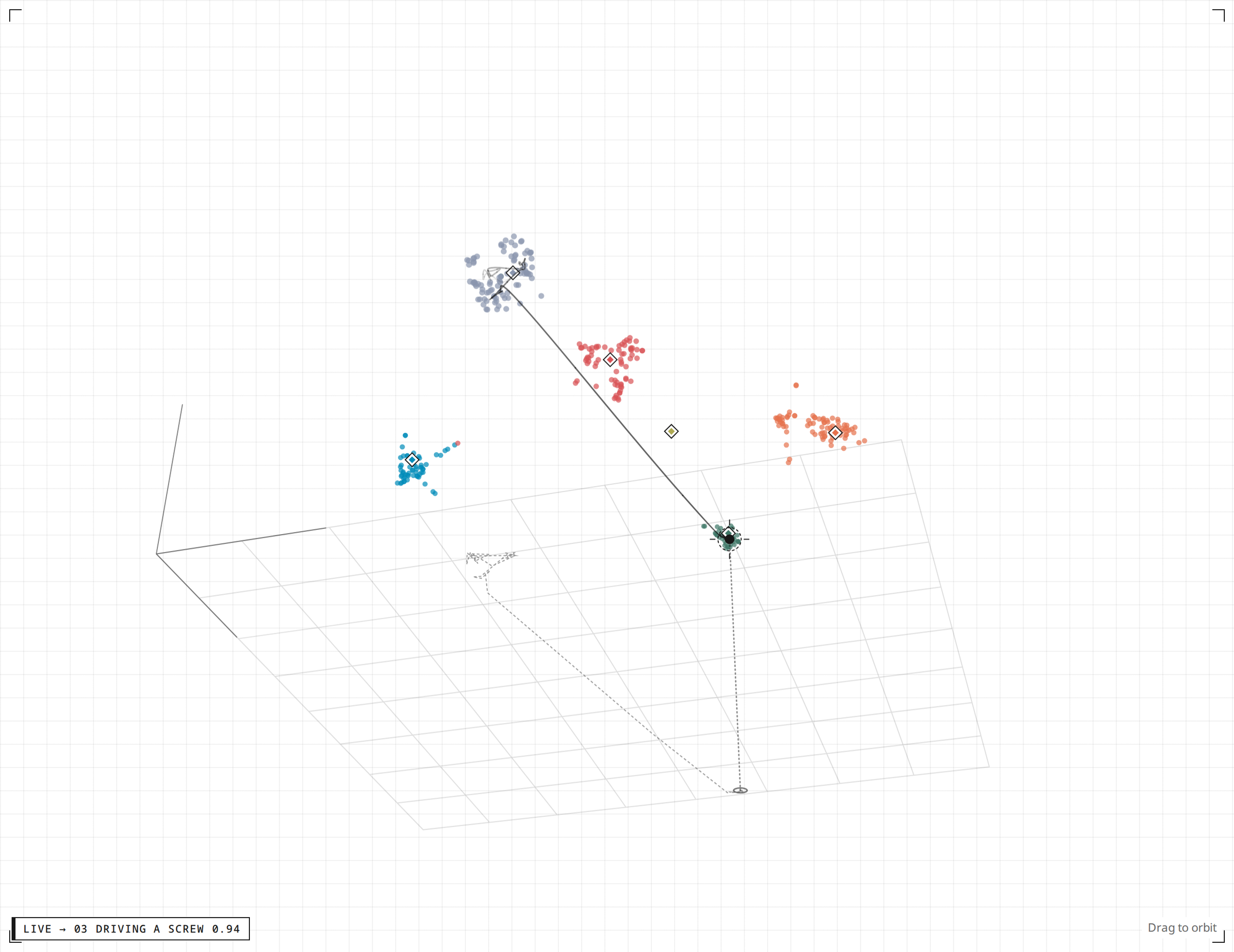
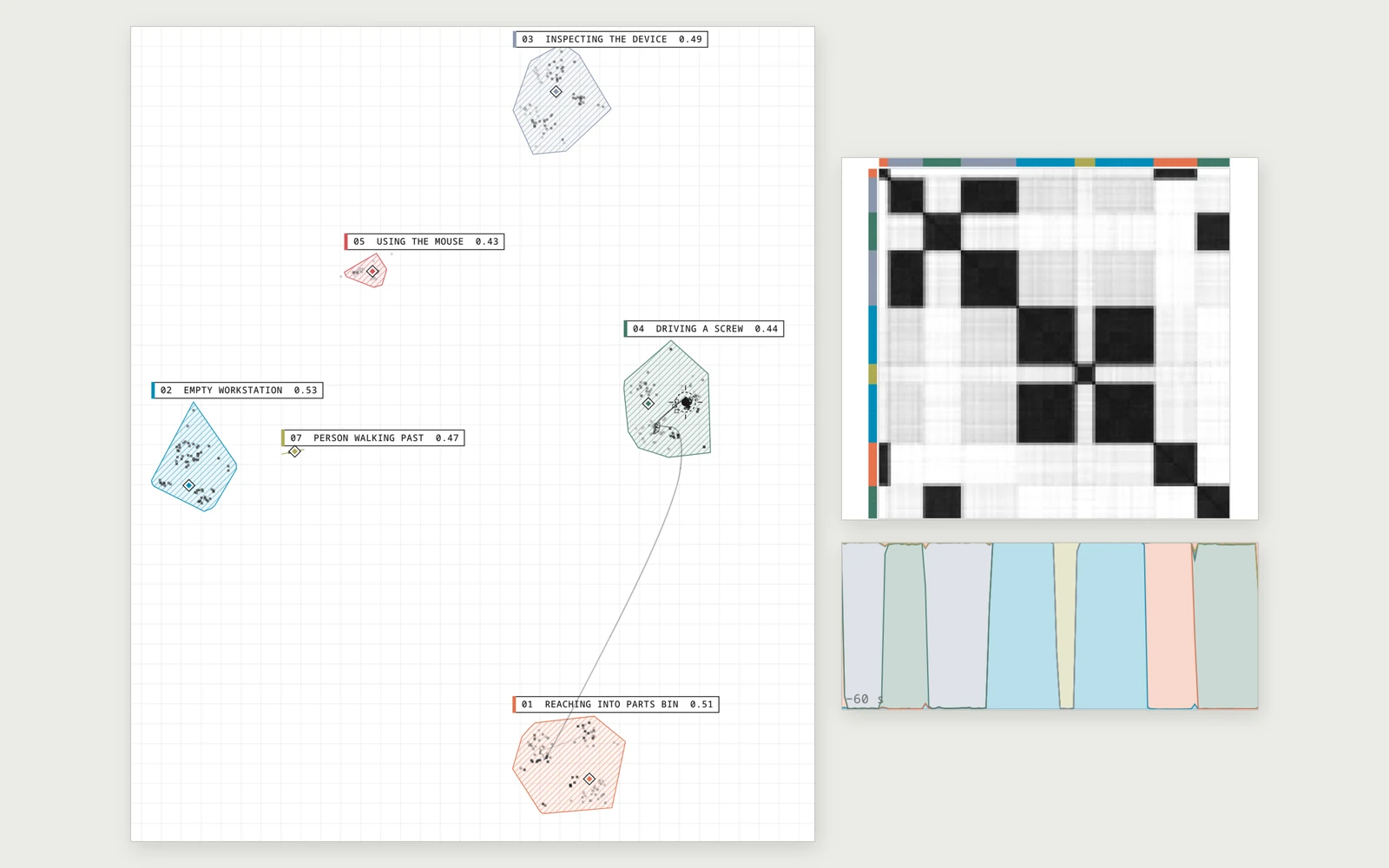
- Live embedding map: a warm-started t-SNE of the last 90 seconds in 2D or 3D, refreshed with new frames every 3 seconds. Clusters (k-medoids, picked automatically by silhouette or fixed from 2 to 8) are drawn as hulls and named after their closest query. Hover a point to inspect it.
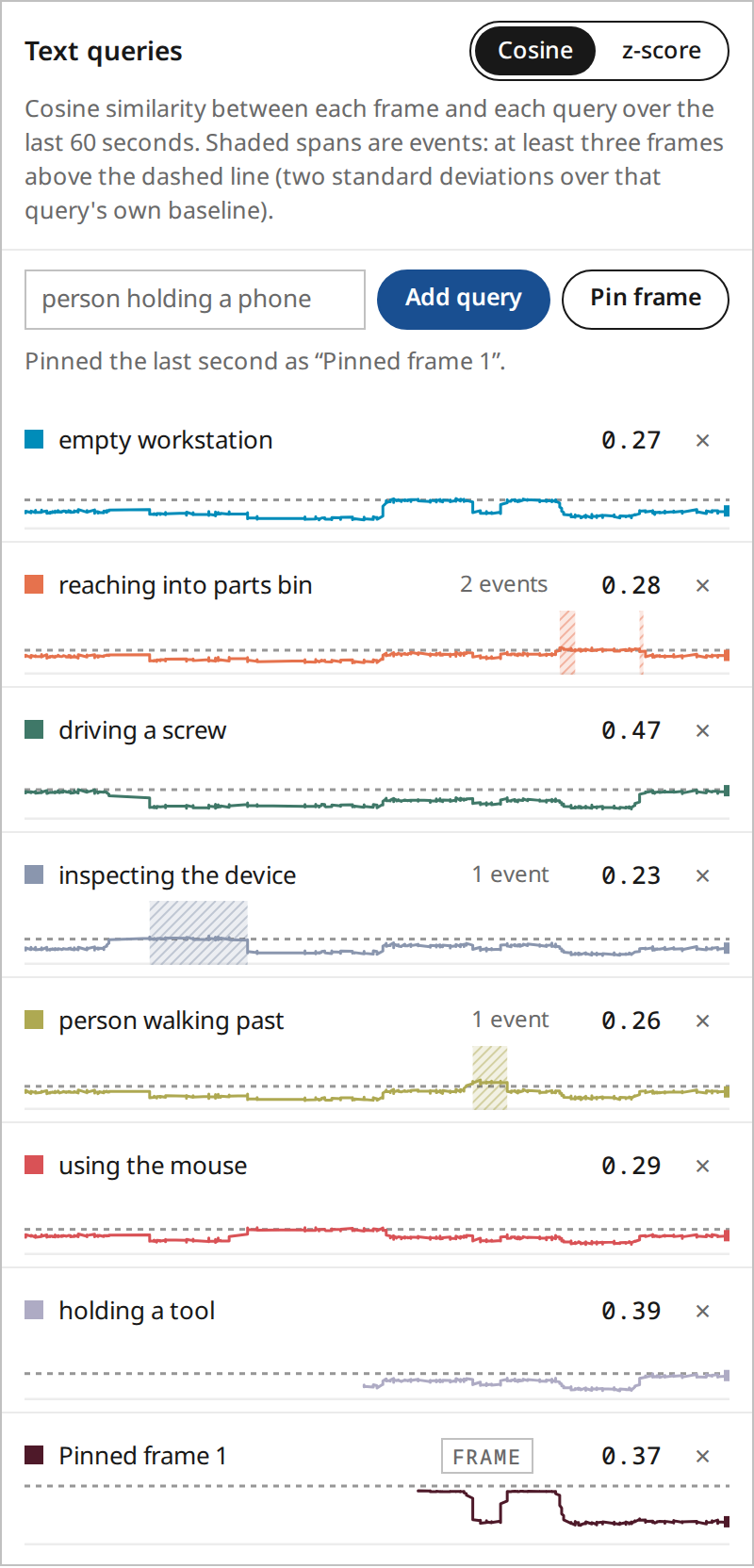
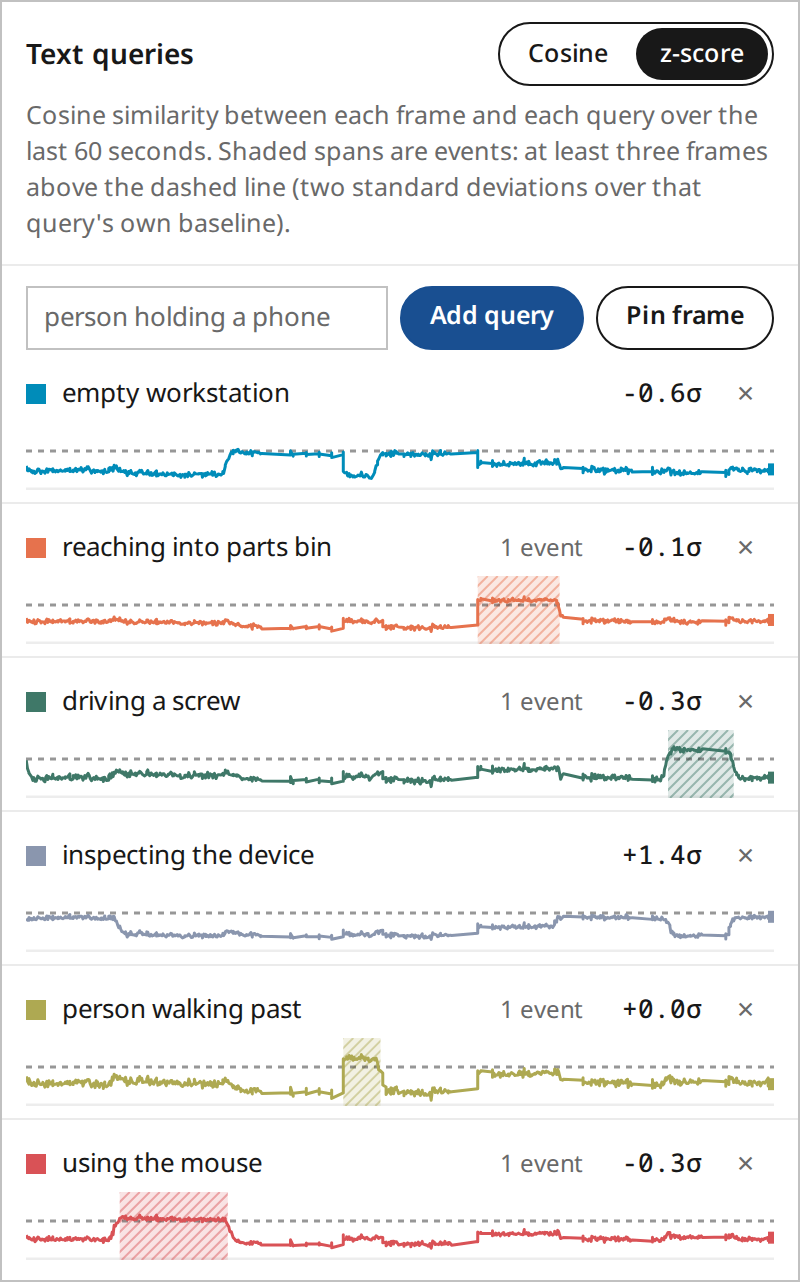
- Text queries and pinned frames: type what to look for and get a similarity lane per query, in cosine or z-score, with events marked when at least three frames rise two standard deviations above that query's baseline. Pin the last second of frames as a visual query.
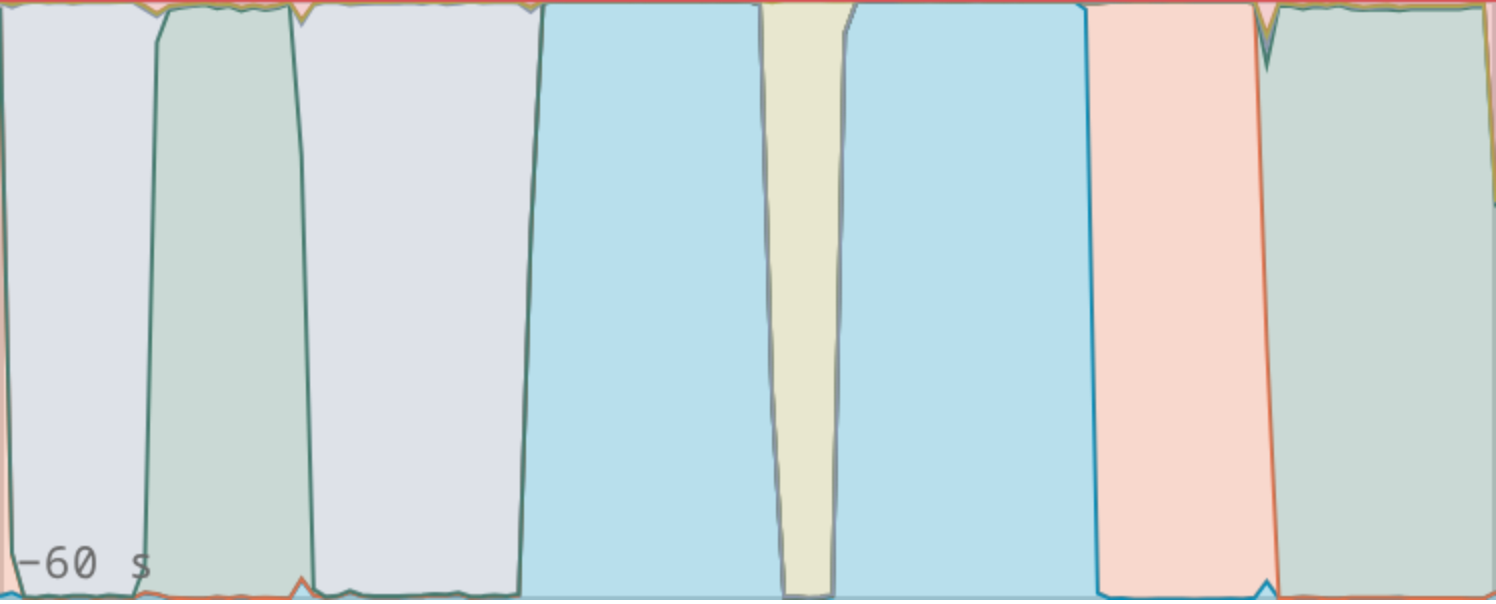
- Zero-shot classifier: a softmax over the query similarities, drawn as a stacked river, with a temperature slider and, for the synthetic stream, agreement with the ground truth.
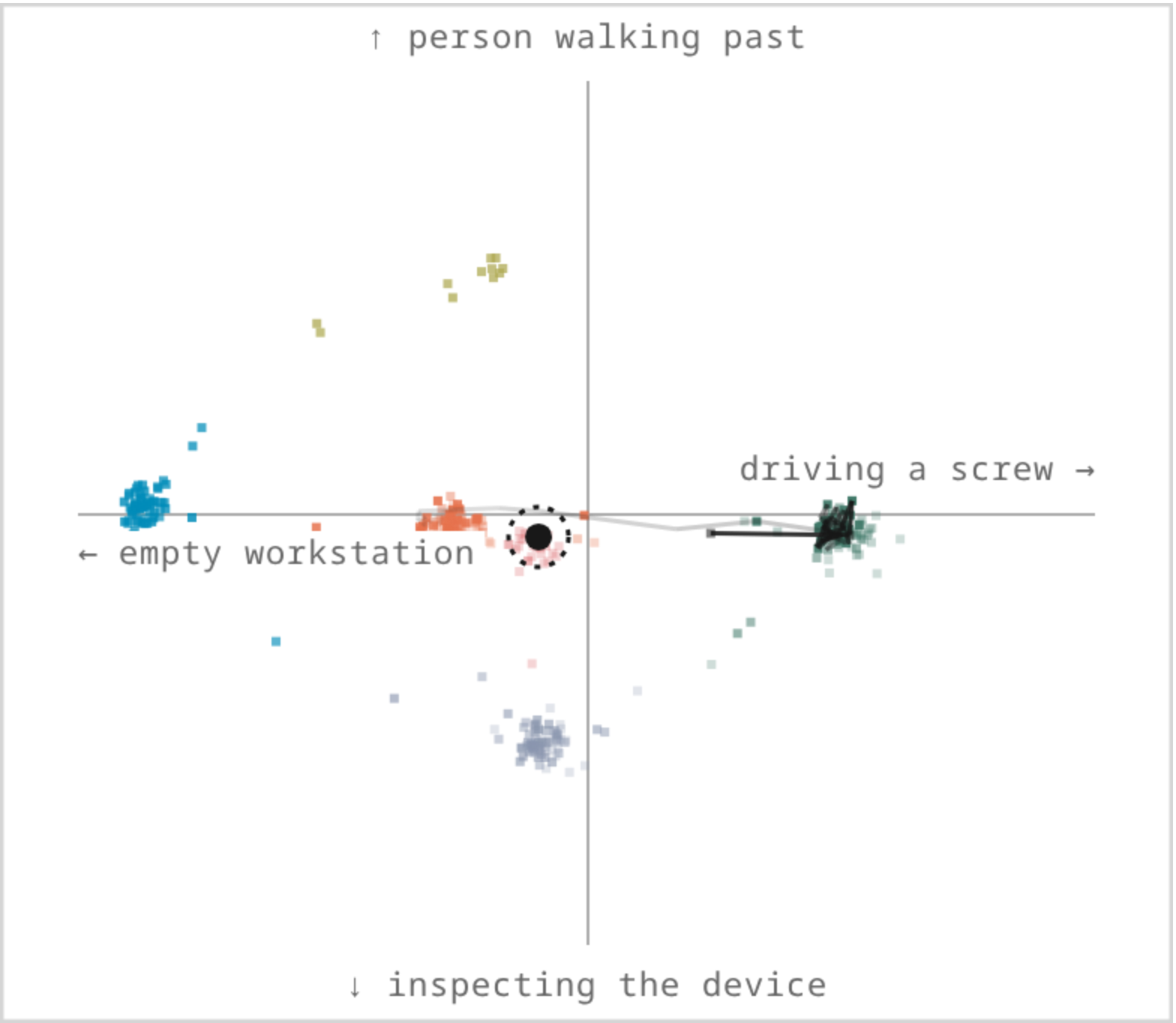
- Semantic axes: pick two pairs of queries and see recent frames on axes whose directions have names.
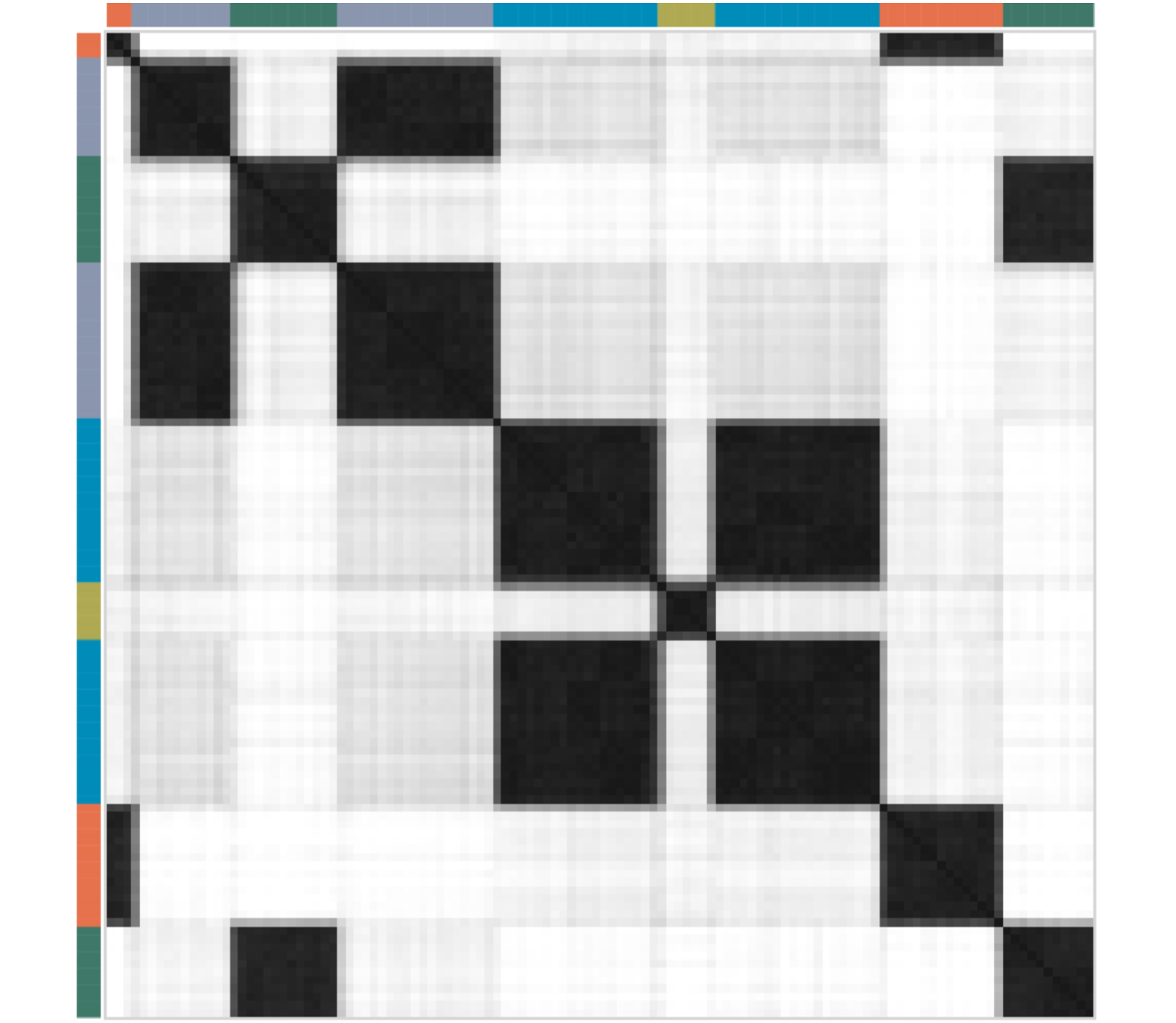
- Self-similarity and novelty: a recurrence matrix of the last 60 seconds, a novelty meter against frames at least 8 seconds old, and the most similar earlier moments.
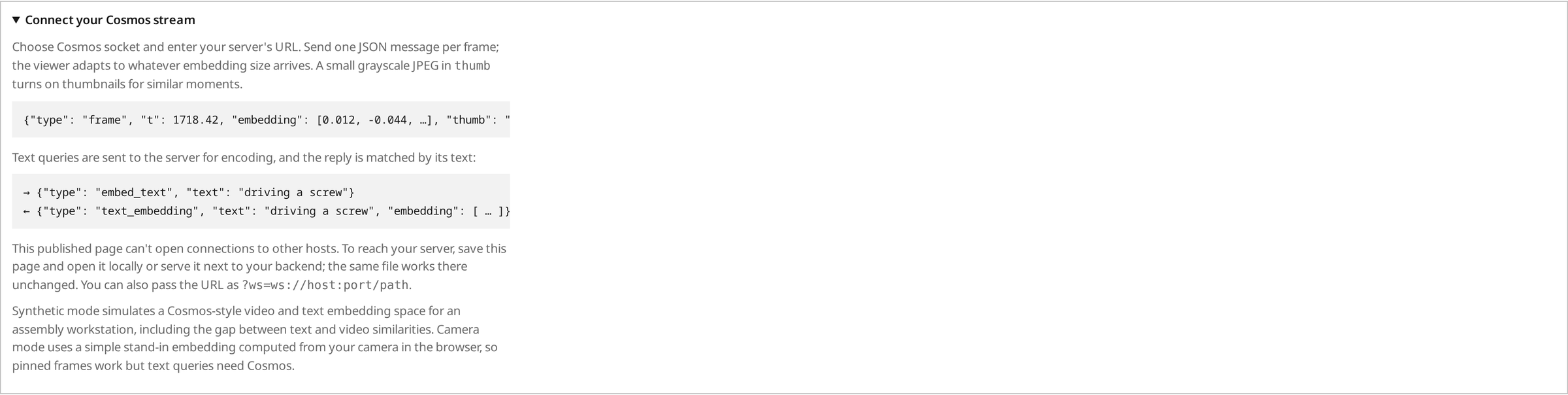
- Three sources: the synthetic stream, your camera (with a simple stand-in embedding computed in the browser), or your own server over a WebSocket. The page explains the JSON messages it expects for frames and text embeddings.
Six default queries come with it: empty workstation, reaching into parts bin, driving a screw, inspecting the device, person walking past and using the mouse.