SO(3) Playground
An interactive guide to the rotation group: turn an airplane from a ball of rotation vectors, compare geodesics with straight lines, watch composition depart from addition, and check Jacobians against the exact perturbation.
In early access for subscribers until 22 November 2026. Subscribe to run it now.
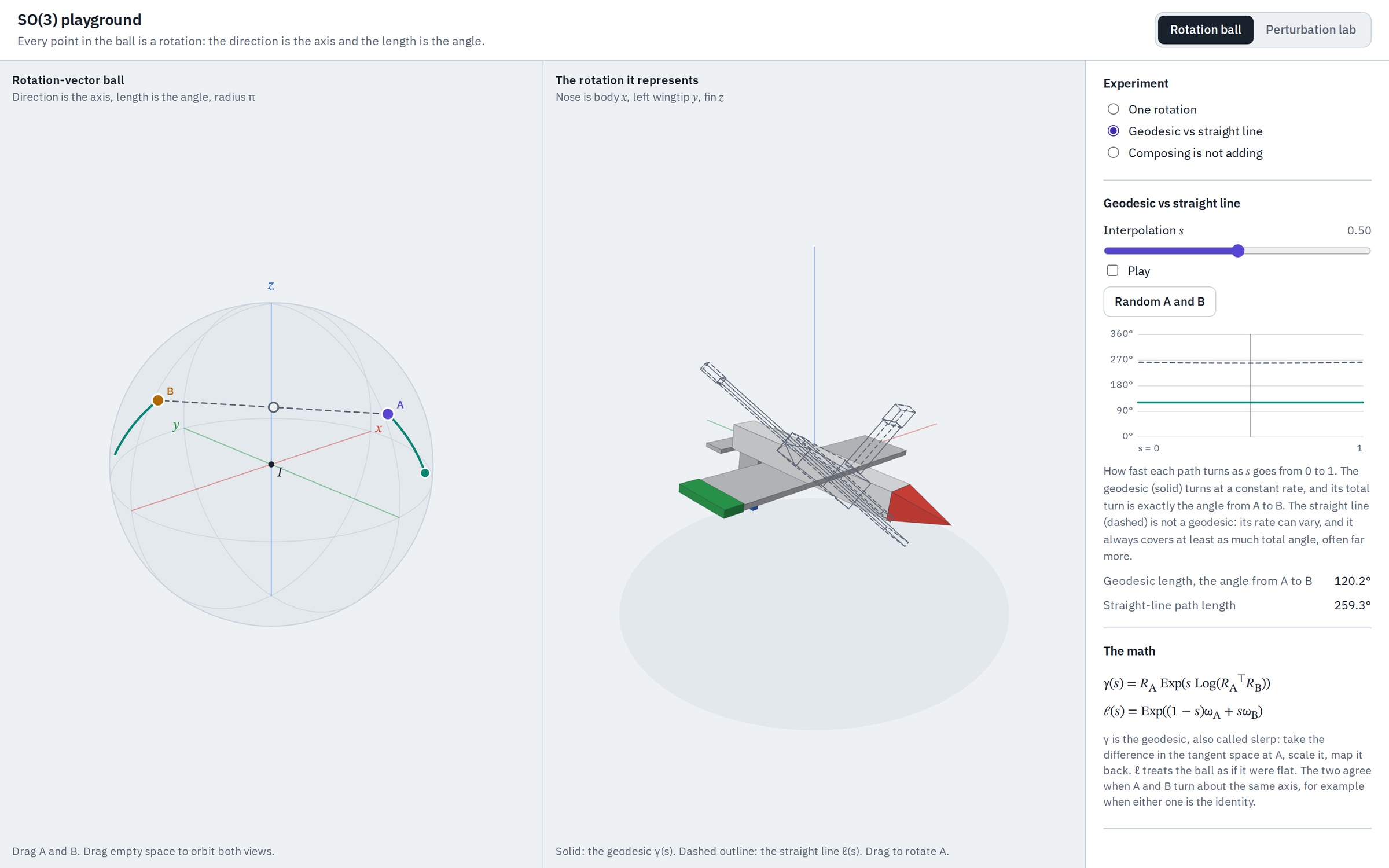
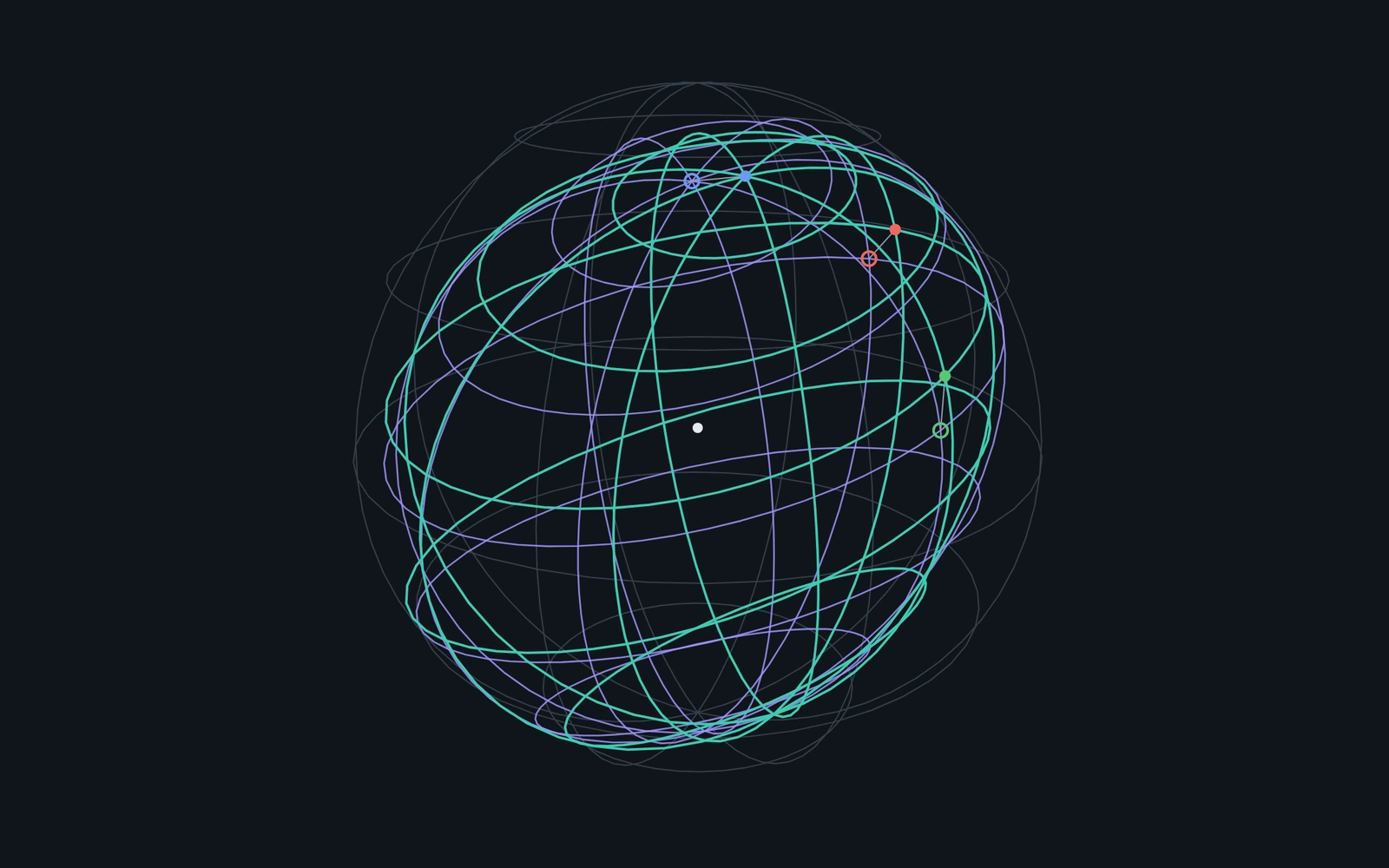
Subscribe →A hands-on guide to the rotation group SO(3), the maths behind robot arms, cameras and state estimators. Every point in a ball of radius π is a rotation: the direction is the axis and the length is the angle. Move a point and watch an airplane turn with it; then perturb a rotation and check the Jacobian against what actually happens.
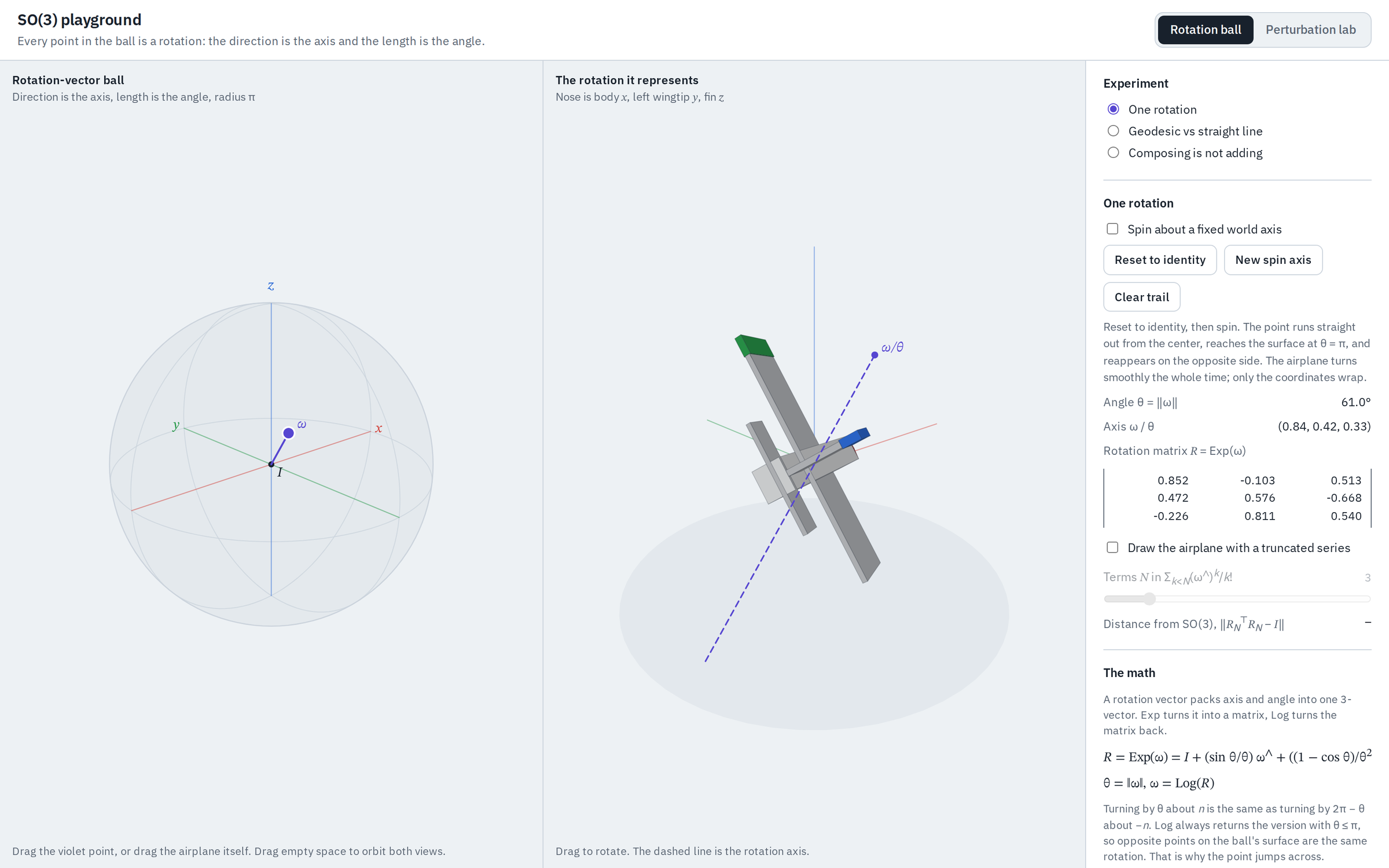
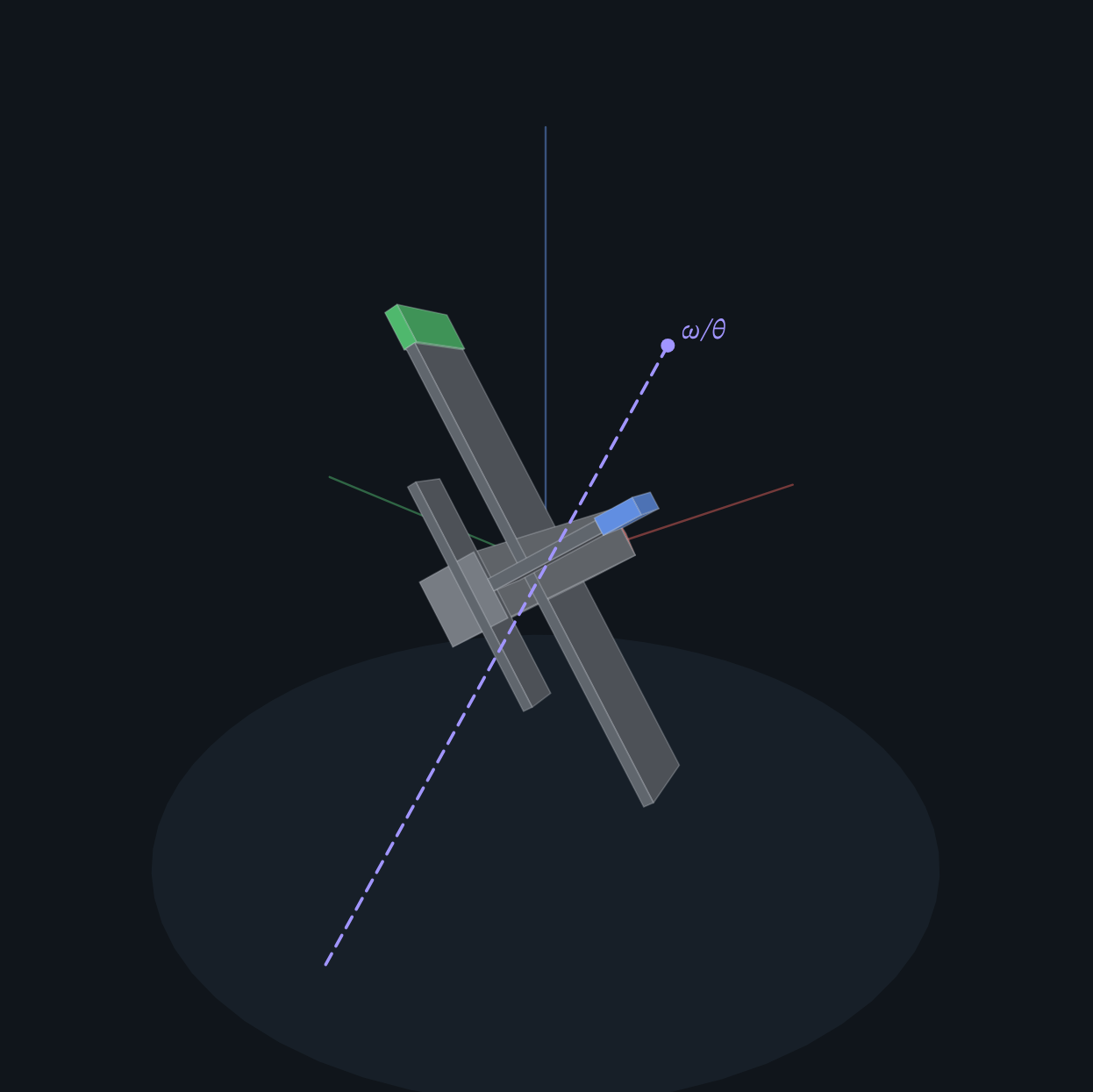
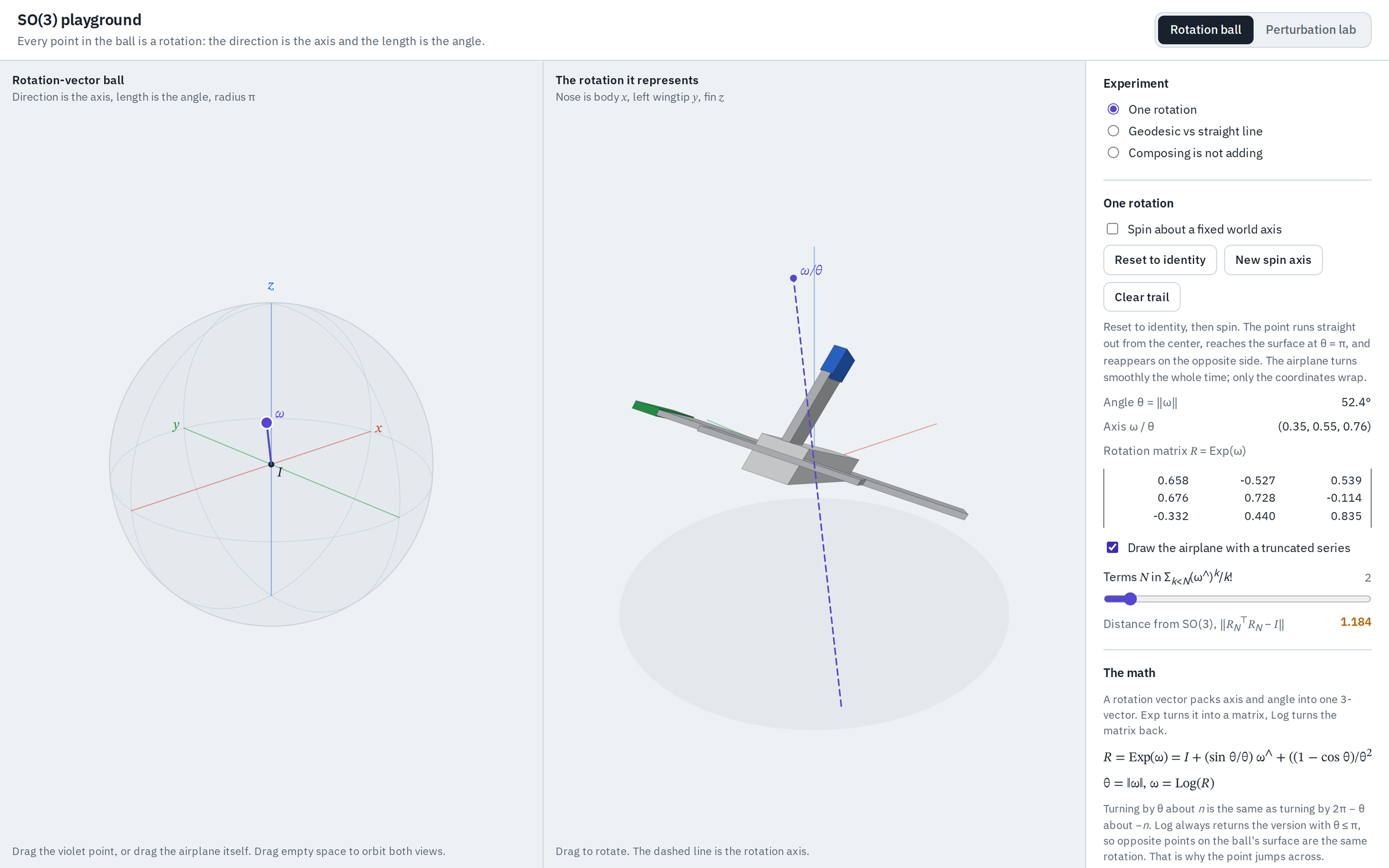
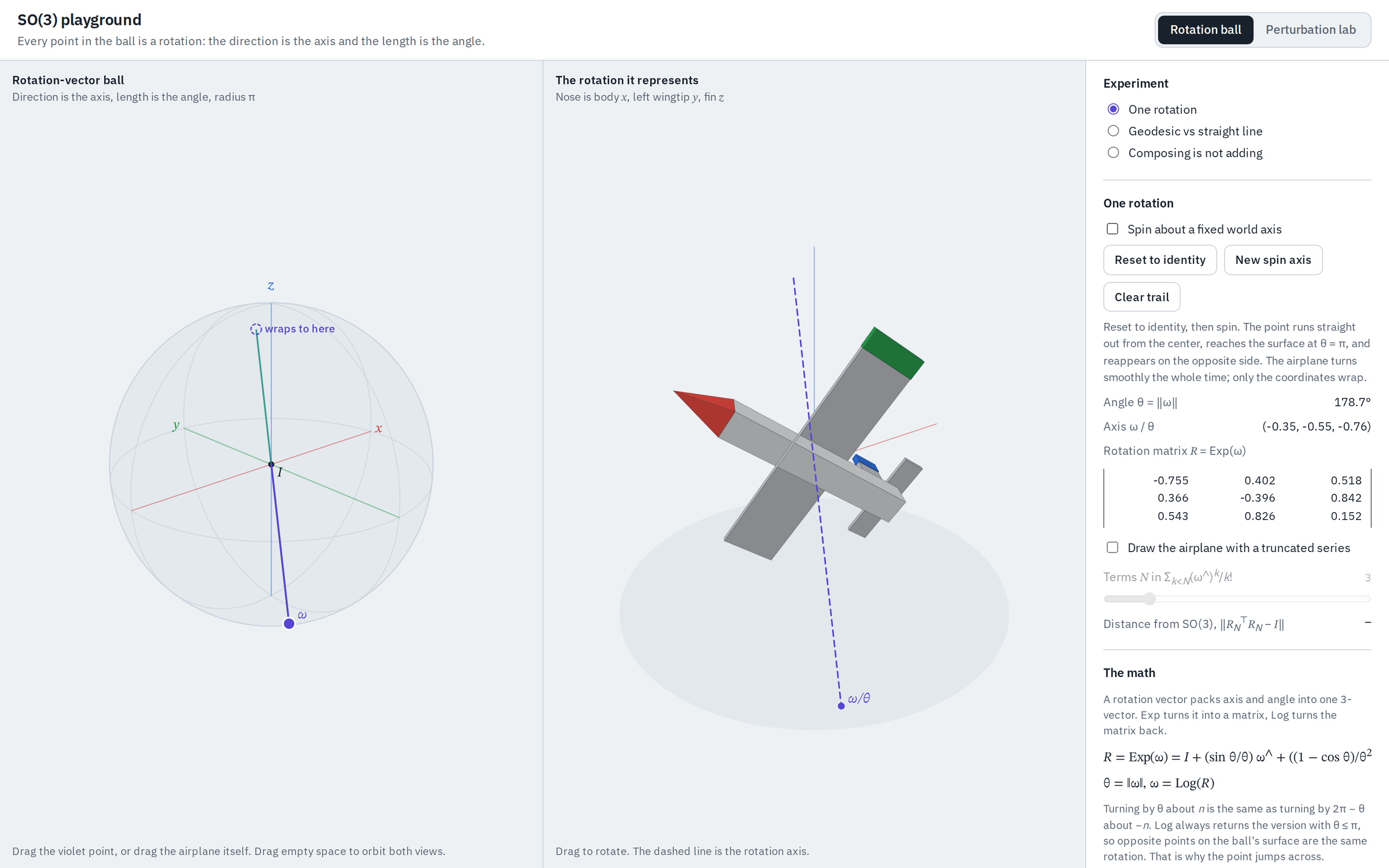
- The rotation-vector ball: drag the point or the airplane, spin about a fixed world axis, and watch the point reach the surface at 180° and reappear on the opposite side, with the angle, axis and rotation matrix read out live.
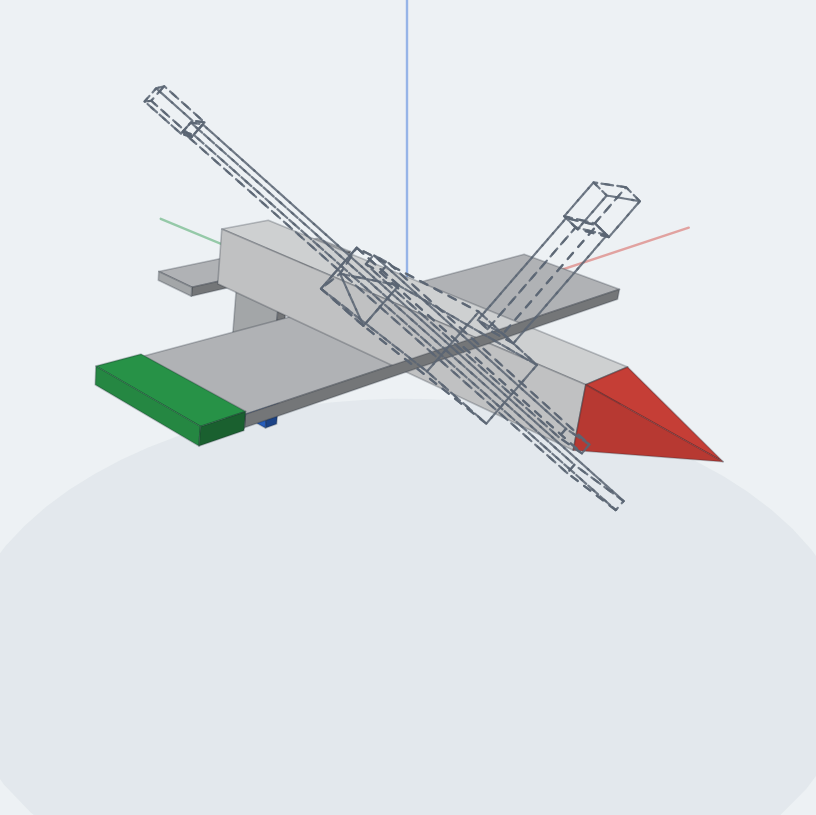
- Truncated series: draw the airplane with only N terms of the exponential series and see it shear, with its distance from SO(3) measured.
- Geodesic vs straight line: interpolate between two rotations along the geodesic (slerp) and along a straight line in the ball, with a plot of how fast each one turns and their total lengths.
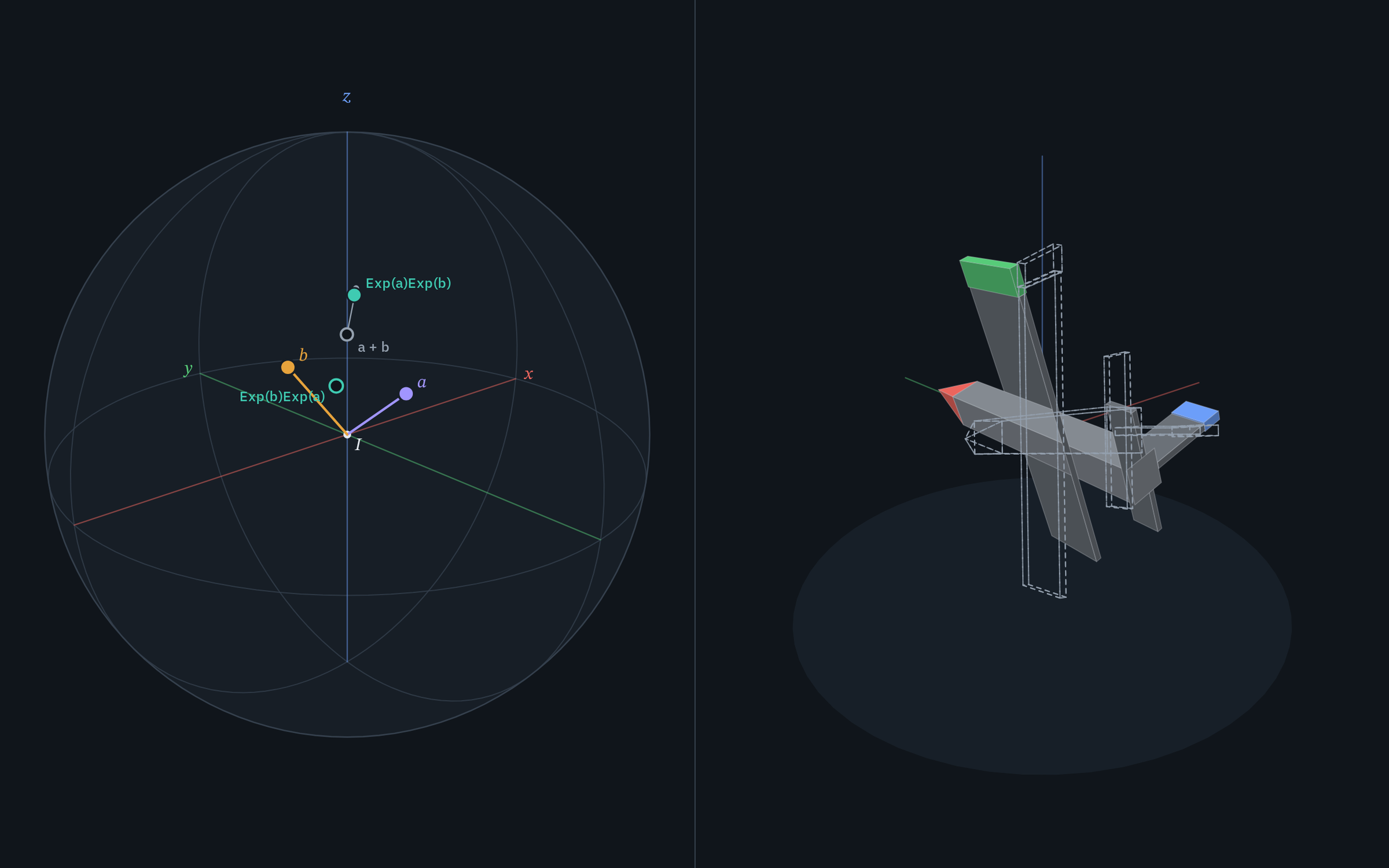
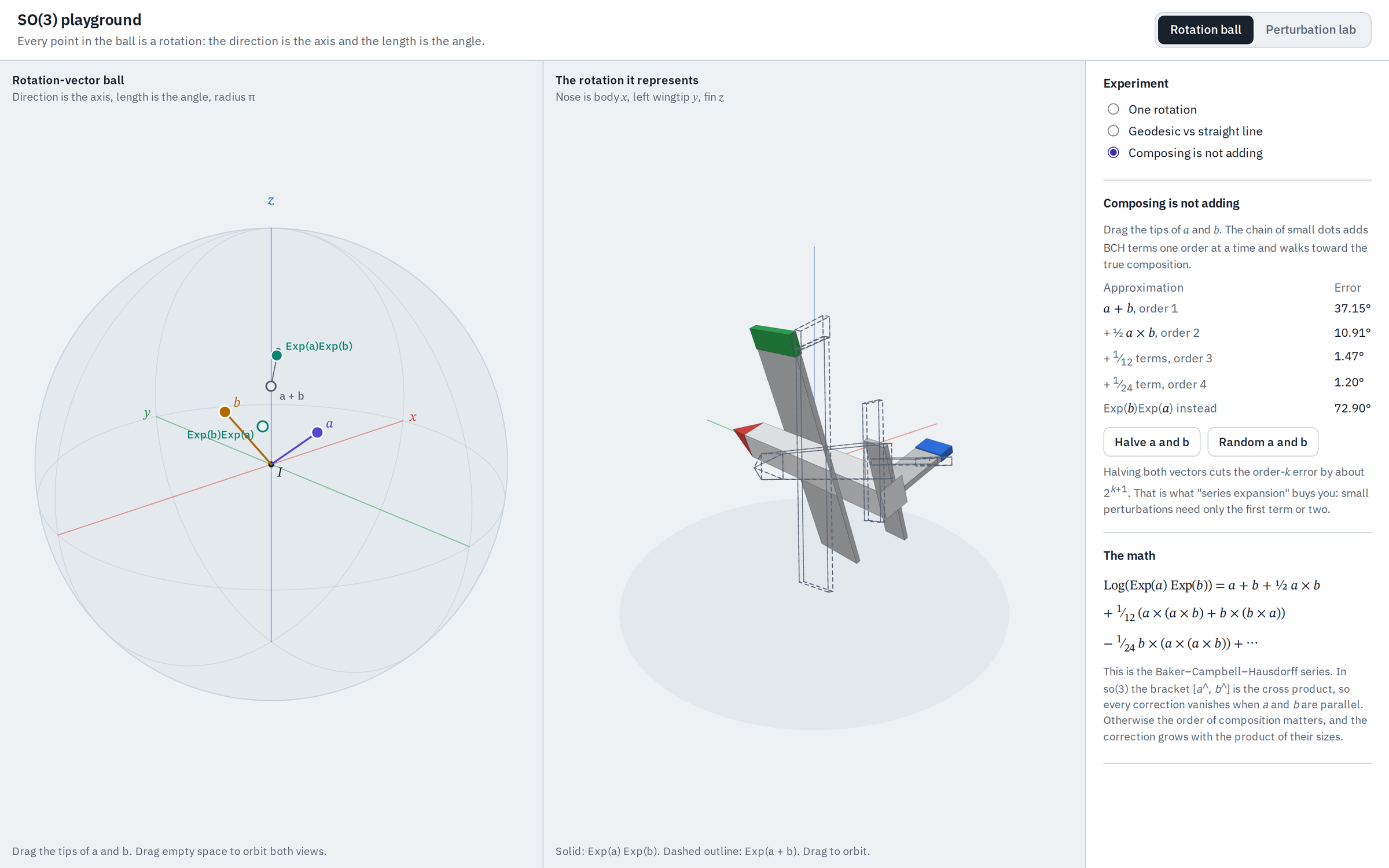
- Composing is not adding: drag two rotation vectors and watch the Baker–Campbell–Hausdorff series walk from a + b toward the true composition, order by order, with the error of each order and of the reversed product.
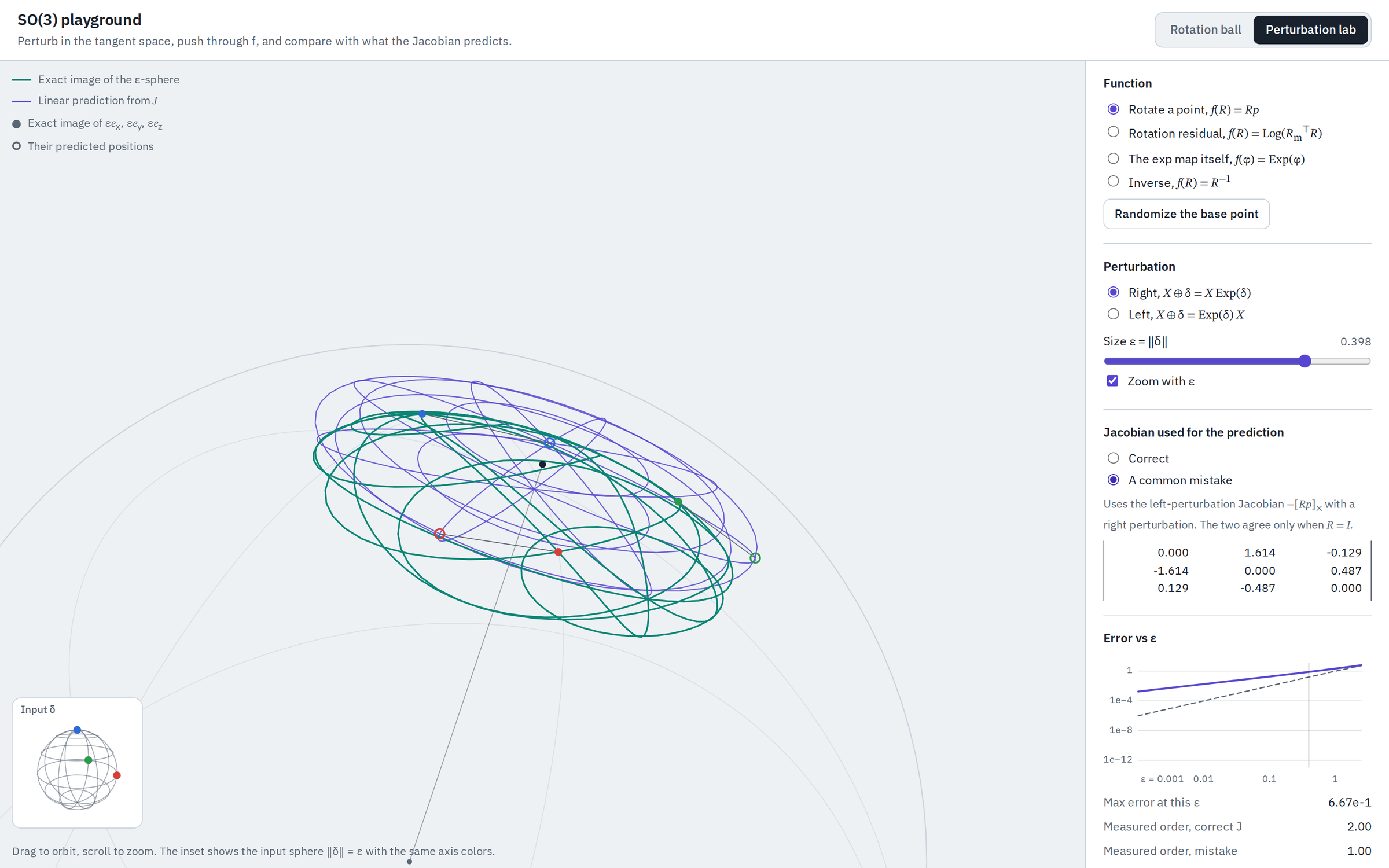
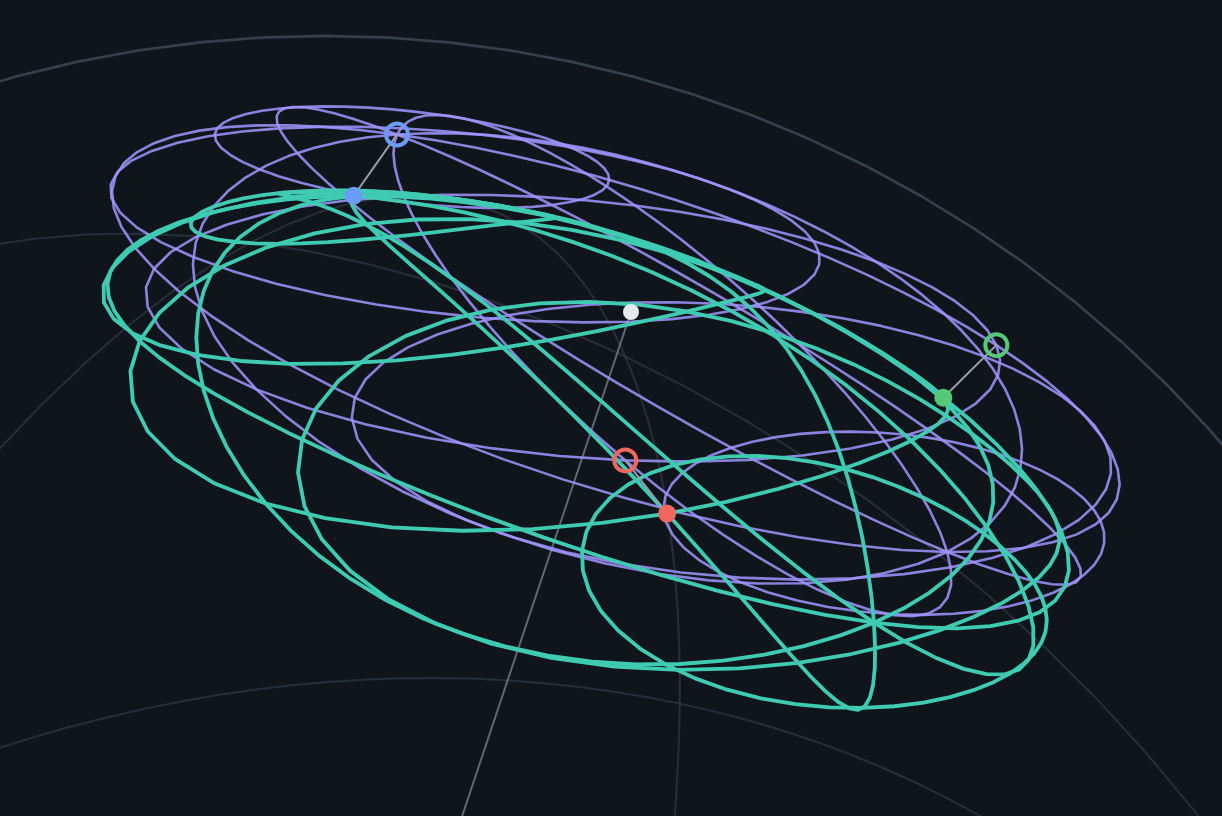
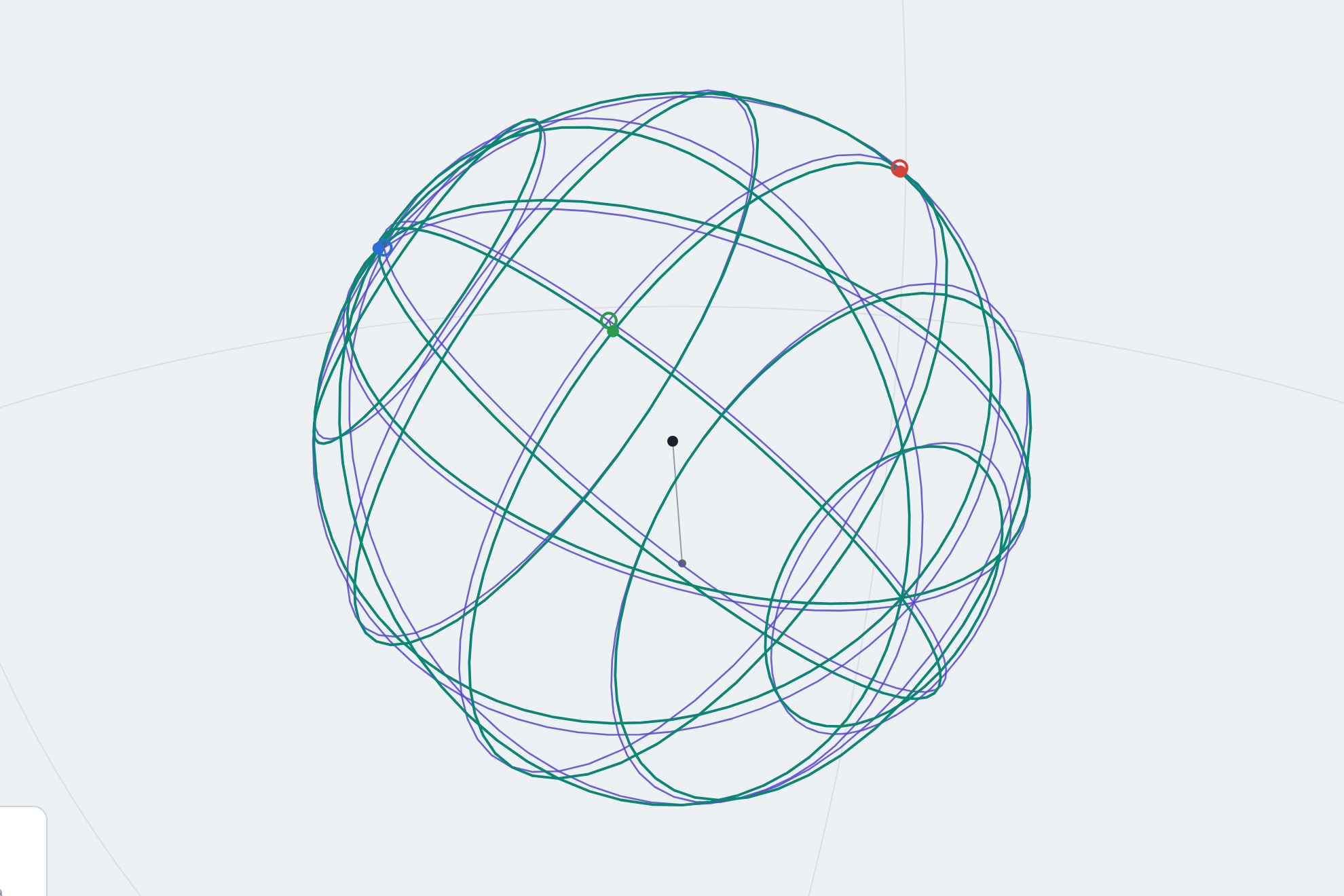
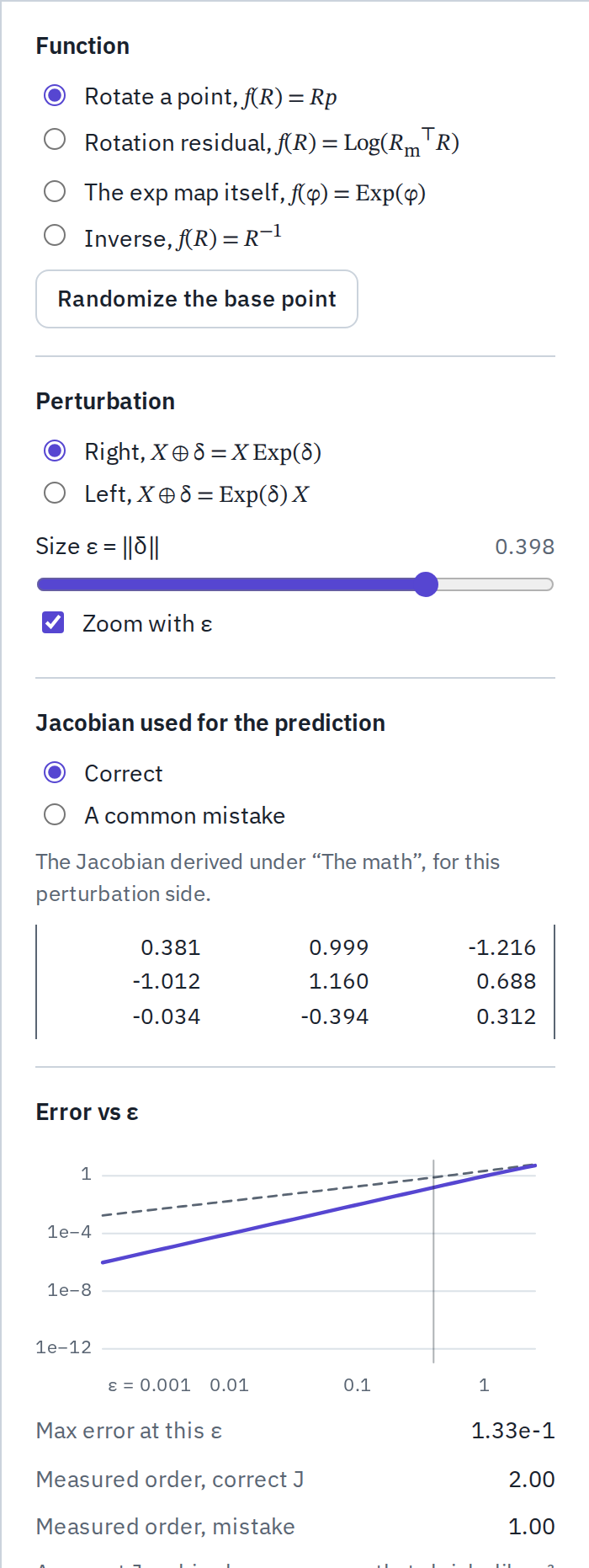
- Perturbation lab: push a small sphere of perturbations through rotating a point, a rotation residual, the exp map itself or the inverse, with right or left perturbations, and compare the exact image with the linear prediction from the Jacobian.
- Catch the common mistake: switch to a typical wrong Jacobian and the log-log error plot shows it, with the measured order dropping from 2 to 1. It is the numerical check to run on any Jacobian you derive by hand.
Every panel shows the formulas it uses, and the page follows your light or dark theme. Its sibling, the Lie Group IK Playground, uses the same maths to solve inverse kinematics for a robot arm.