Takt
Rethinking the notebook
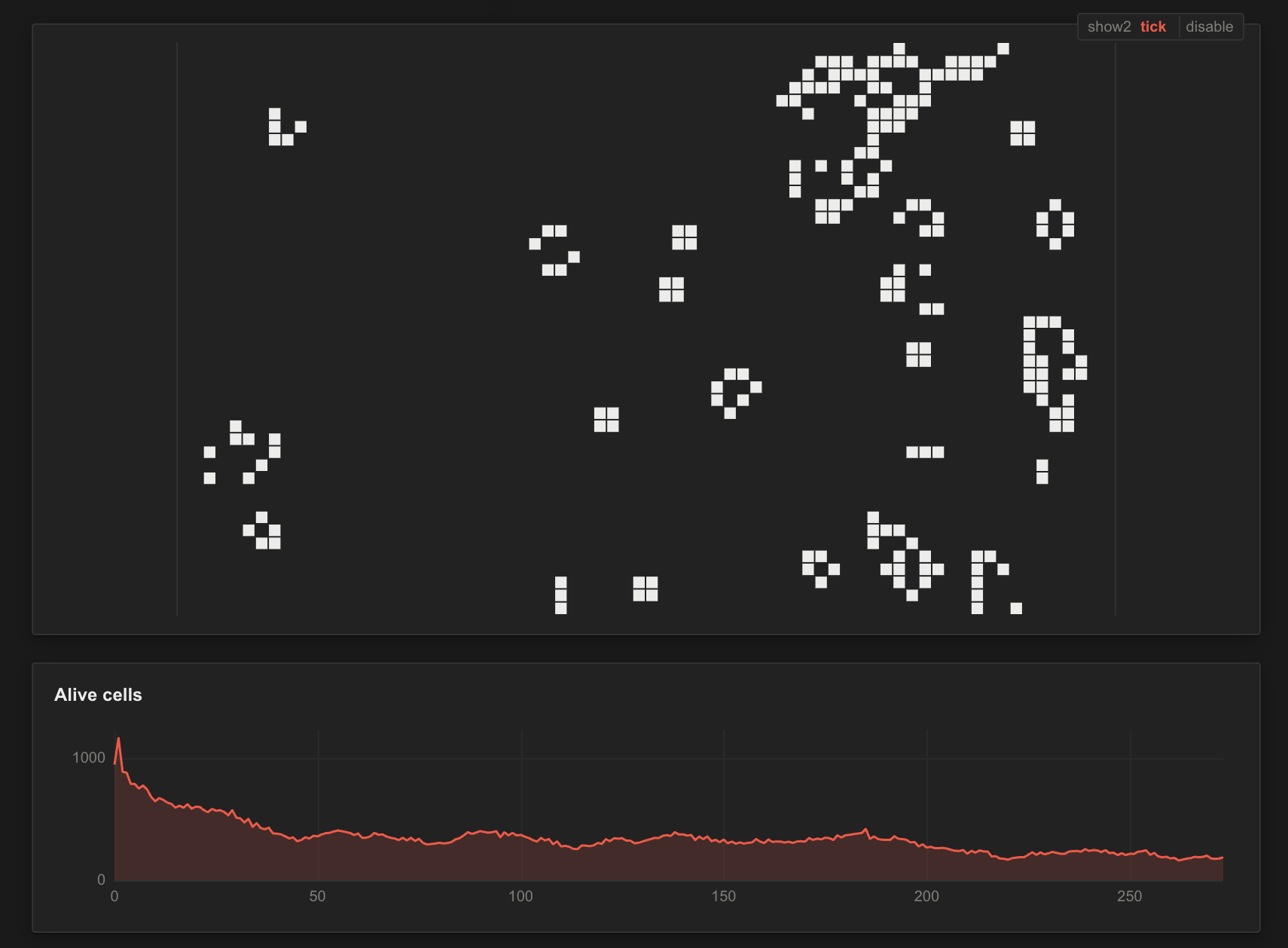
In early access for subscribers until 7 November 2026. Subscribe to run it now.
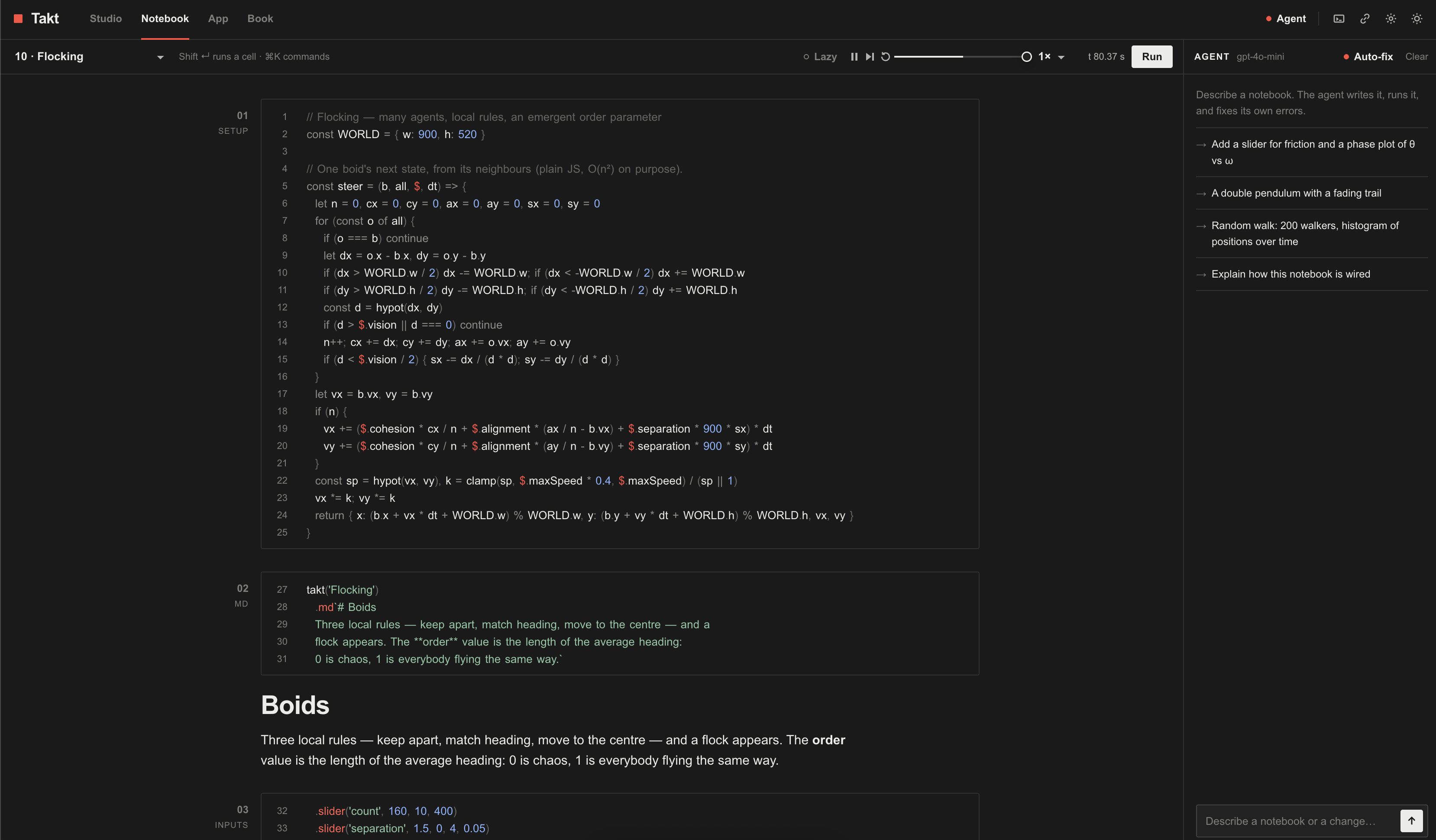
Subscribe →A notebook is a wonderful idea with a fragile implementation. You write code in cells, run them in any order, and the page fills with results. But the classic notebook keeps a hidden state: what you see depends on which cells you ran, in which order, and how many times. Change a cell and its dependents silently go stale.
The fix is not more discipline but a better model. Ask what a notebook is, with the language stripped away:
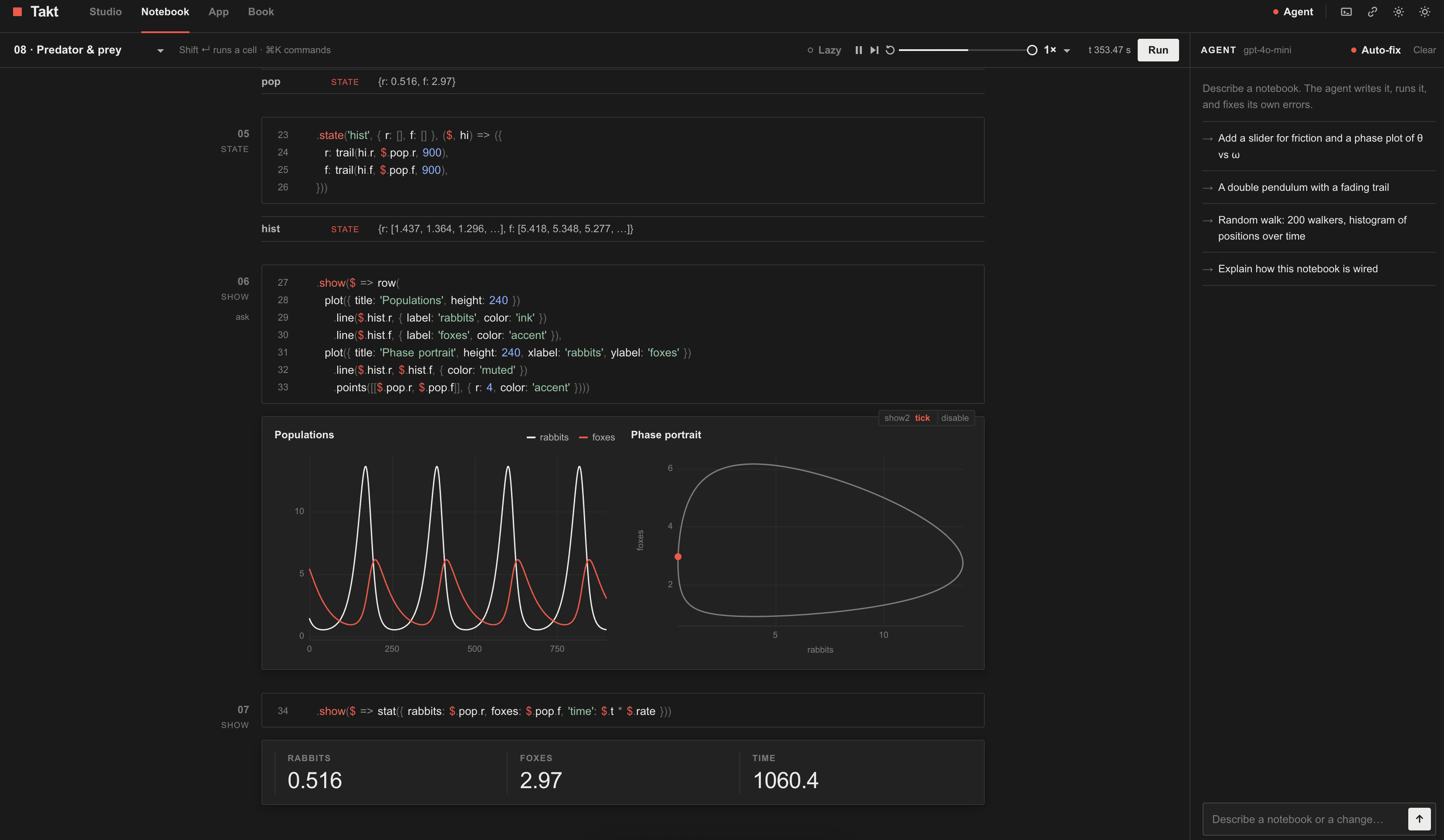
- Cells are nodes. Each one names a value or shows something.
- Reading a value is an edge. If cell B reads A, B depends on A.
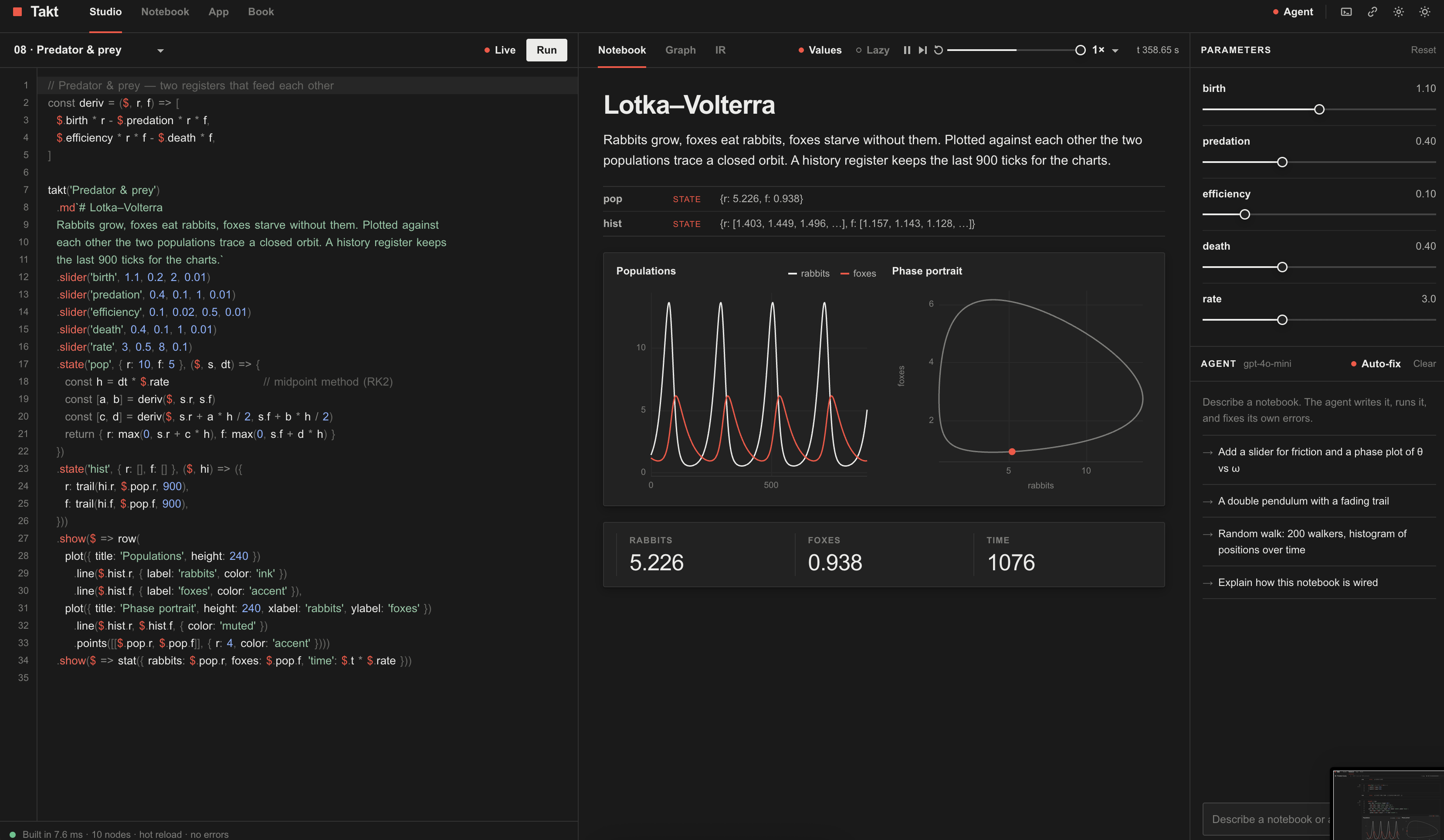
- Inputs are sources. Sliders and toggles are the only places values enter.
- Feedback needs memory. A value that depends on its own past is a register, updated on a clock.
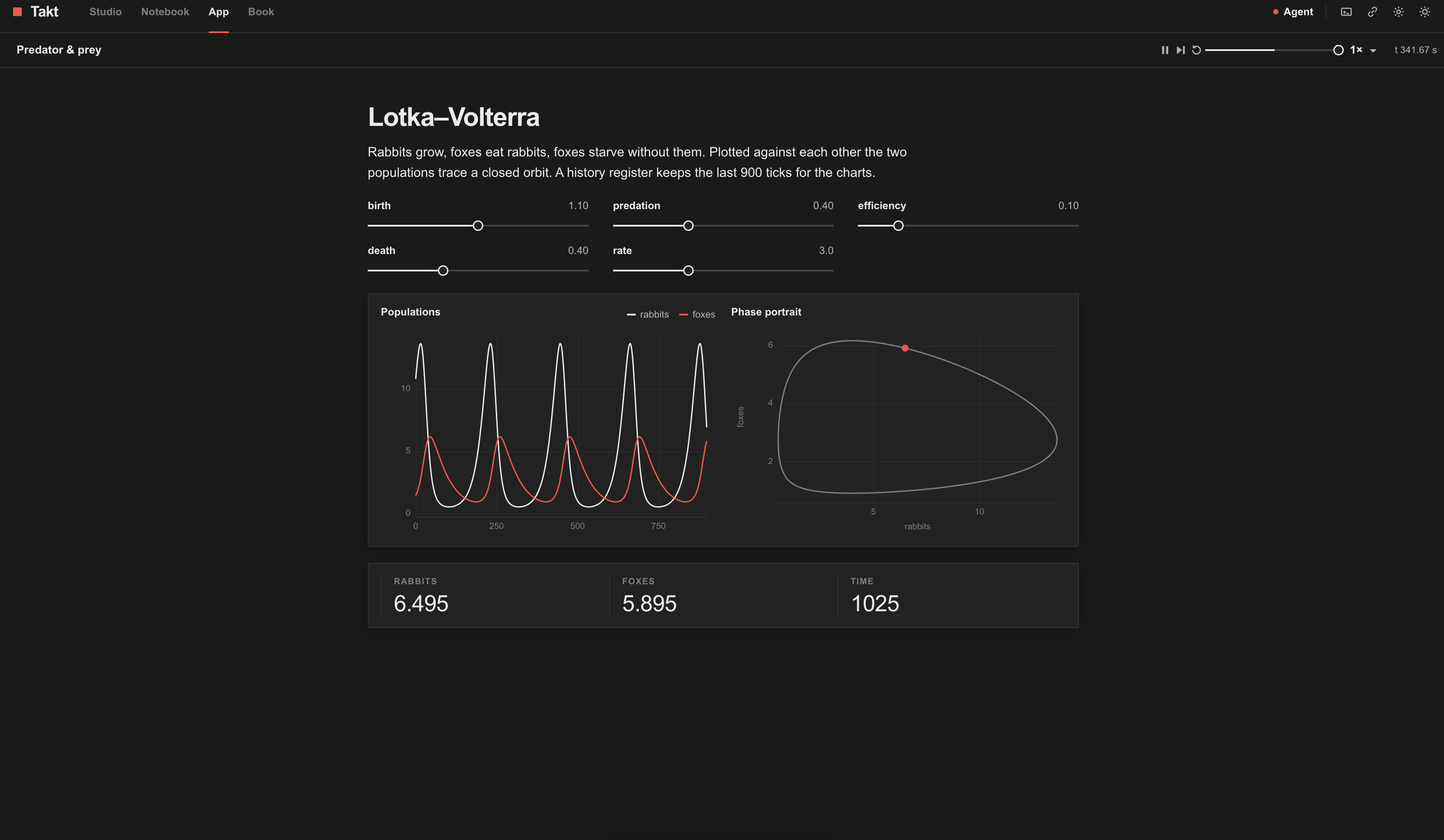
Put together, a notebook is a synchronous dataflow program — the same model as a spreadsheet, a circuit, or a game loop.
Screenshot 2026-10-25 at 00.45.58
Screenshot 2026-10-25 at 00.51.16